The Psychology of Pricing: Understanding Value
Why Price Feels Like Value
Price is the first story a piece tells before you ever touch its surface, feel its weight, or sense the maker’s intention. In the world of handcrafted art and decor, pricing is not only about materials and time; it is also about psychology—how our brains translate numbers into meaning. Understanding this psychology empowers you to collect with confidence, whether you’re drawn to sculptural ceramics or luminous glassware.
One of the strongest effects is the price–quality heuristic: when we see a higher price, we instinctively infer higher quality, scarcity, or mastery. Consider the singular presence of Noe Kuremoto’s sculptural figures. A warrior like Haniwa Warrior 93 (USD $1,700.00) signals gravitas before you even know the hours of hand-building and firing behind it. The price functions as a shorthand for rarity and intention—it tells you that this is a statement piece with artistic lineage.
Anchoring is another key principle. The first price you encounter sets a mental anchor that influences everything after. If you begin with the crystalline elegance of Golden Handle Paris Hobnail Jug (USD $286.00), the base model Paris Hobnail Jug (USD $202.00) can feel especially approachable—same craft lineage, a simpler configuration. Start with the base, and the premium editions feel like a considered step-up in colorwork and detail.
Precision also matters. Rounded numbers can feel symbolic; precise figures can feel researched. The nuanced pricing of pieces like Dogu Lady 104 (USD $1,356.00) and Crane Wife 7 (USD $1,347.00) communicates specificity—suggesting careful calibration to the piece’s scale, finishing, and rarity. These cues don’t replace the actual experience of the piece, but they do guide us toward a deeper reading of value.
Finally, scarcity and story amplify willingness to invest. Limited series, hand-finished textures, and maker signatures all build an emotional premium. When value feels both seen and felt—intellectually sound, emotionally resonant—the price becomes part of the artwork’s narrative rather than an obstacle to it.
What You’re Really Paying For: Craft, Time, Provenance
Handcrafted objects convert time into form. Each hour at the wheel, furnace, or workbench creates something that didn’t exist before—and cannot be reproduced by machine. That transformation is what you’re paying for.
Take the ceramic universe of Noe Kuremoto, where ancient archetypes inform modern silhouettes. The Haniwa and Dogu figures are rooted in early Japanese clay traditions, distilled into contemporary sculpture. The tactile surfaces and subtle asymmetries are not imperfections; they’re proof of the hand—the artist’s tempo visible in the clay. Within the Haniwa family, each piece is individually expressive: Haniwa Warrior 85, Haniwa Warrior 74, Haniwa Warrior 92, Haniwa Warrior 124, Haniwa Warrior 107, Haniwa Warrior 113, and Haniwa Warrior 126—each at USD $1,700.00—form a chorus of guardians. Their shared price underscores a consistent level of craft while inviting you to choose by resonance: stance, gaze, and gesture.
The Dogu series—feminine, enigmatic, often with stylized poise—offers a different register of intimacy and price accessibility. Consider Dogu Lady 91, Dogu Lady 93, and Dogu Lady 95 at USD $1,105.00 each, alongside the more rarefied Dogu Lady 74 (USD $1,236.00) and Dogu Lady 19 (USD $1,247.00). The nuanced pricing corresponds to individual scale and detailing, culminating in the meticulously finished Dogu Lady 104 (USD $1,356.00). Each Dogu invites a quieter encounter—less about stance, more about presence.
Then there is Kuremoto’s Crane Wife figures—poetic silhouettes with an otherworldly calm: Crane Wife 9 and Crane Wife 14 (both USD $1,356.00), and Crane Wife 7 (USD $1,347.00). Their pricing sits between Dogu and Haniwa, which reflects both complexity and scarcity, while remaining accessible to collectors seeking a signature piece with lyrical character.
On a different but complementary wavelength, Chala Toprak channels the textures of earth and fire into sculptural ceramics. The Ash Bloom series balances restraint with organic movement: Ash Bloom 02 (USD $1,430.00) shows a refined massing of form and glaze variation, while Ash Bloom 07 (USD $1,131.00) offers a gentler entry point without sacrificing presence. Here, price registers differences in size, kiln time, and finishing passes, but the emotional value—calm, grounded, elemental—runs through the entire series.
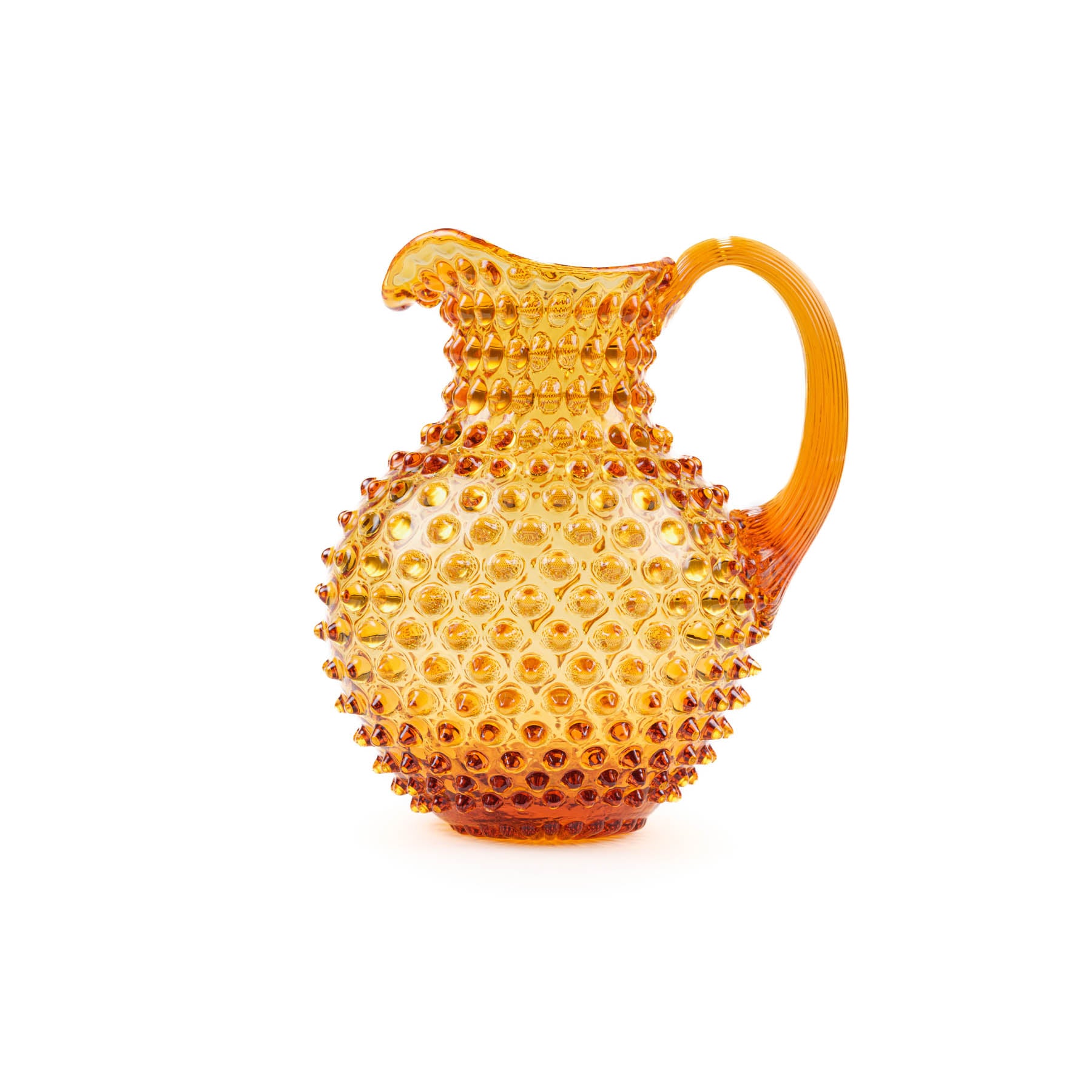
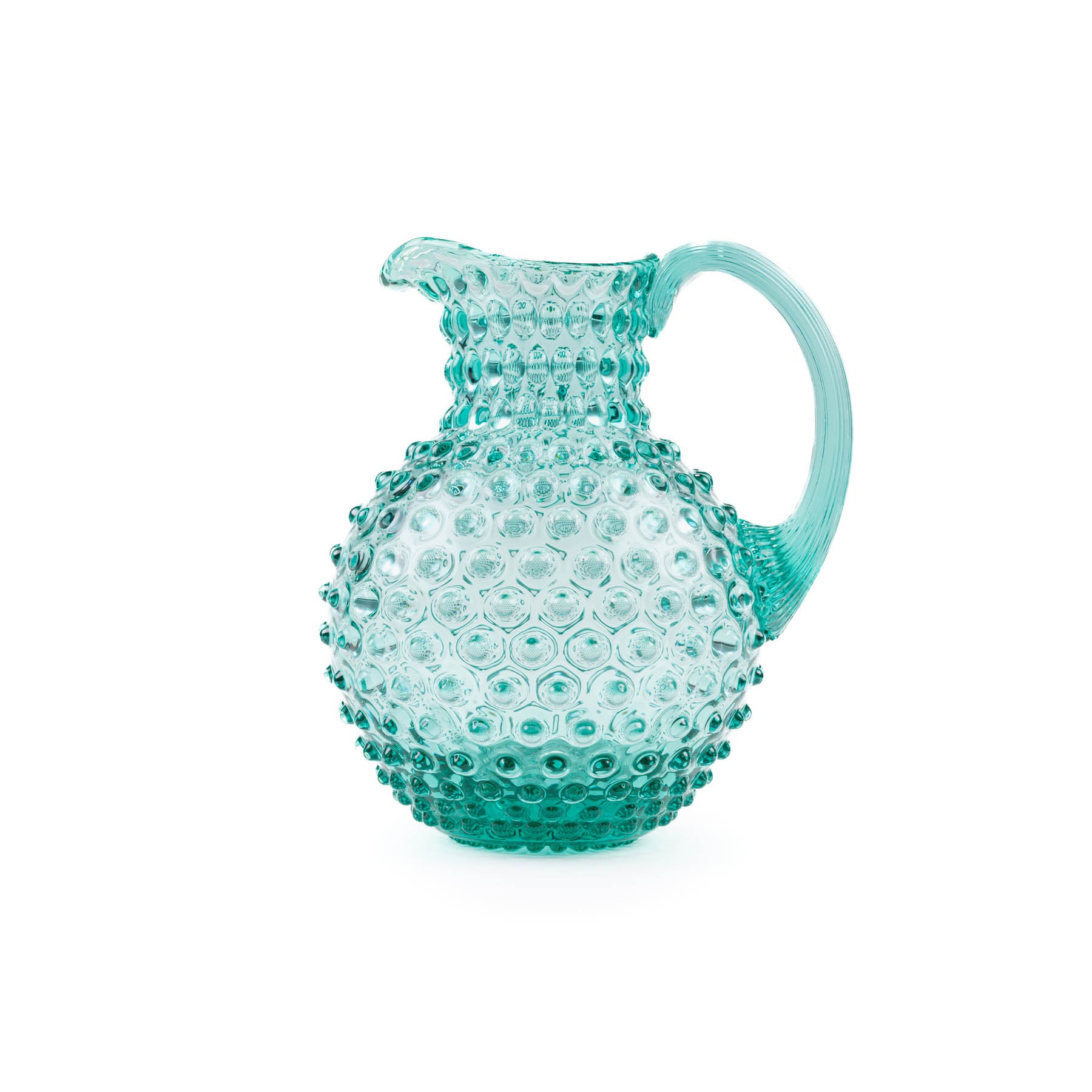
And then there is the luminous craft of Anna von Lipa, where mouth-blown glass meets playful tactility. The iconic hobnail pattern—each raised dot a point of light—creates a tangible rhythm on the table. Within the jug family alone, you’ll find a thoughtful ladder of options: the classic Paris Hobnail Jug (USD $202.00), the whimsical Colored Handle Paris Hobnail Jug (USD $214.00), the celebratory Confetti Paris Hobnail Jug (USD $269.00), the elegant Alice Paris Hobnail Jug (USD $252.00), and the luxe Golden Handle Paris Hobnail Jug (USD $286.00). Each price reflects additional colorwork, finishing, or design flourishes, letting you calibrate precisely where joy meets budget.
Beyond jugs, the table comes alive with companion forms: the sculptural Round Hobnail Blond Bowl (USD $233.00), the light-catching Blonde Hobnail Vase (USD $160.00) and Confetti Blonde Hobnail Vase (USD $236.00), the classic Hobnail Bowl (USD $158.00), and glassware sets like Hobnail Short Glasses (set of 6) at USD $267.00 and Hobnail Tall Glasses (set of 4) at USD $342.00. Each piece is individually blown—no two dots are perfectly alike—which means the price carries the memory of breath, heat, and hand.
Anchors, Thresholds, and Smart Comparisons
Anchors help you create context. If you’re considering a centerpiece sculpture, begin by setting three anchors: an aspirational anchor (a piece that makes your heart race), a comfortable anchor (a piece you could purchase today), and a reference anchor (a comparable piece in size or significance). For instance, within Kuremoto’s world, a Haniwa like Haniwa Warrior 93 (USD $1,700.00) can serve as an aspirational anchor. A Dogu such as Dogu Lady 93 (USD $1,105.00) becomes a comfortable anchor, while a Crane Wife—say Crane Wife 9 (USD $1,356.00)—functions as a reference anchor in the middle.
Thresholds are the points where spending “feels” different. Under $300, you’ll find lifetime-worthy glass staples: the Paris Hobnail Jug (USD $202.00), the Hobnail Bowl (USD $158.00), the Blonde Hobnail Vase (USD $160.00), and the joyful Confetti Paris Hobnail Jug (USD $269.00). Under $1,200, you step into the realm of original sculpture: Dogu Lady 91, Dogu Lady 95 (each USD $1,105.00), and Ash Bloom 07 (USD $1,131.00). Between $1,300 and $1,450, nuanced works like Crane Wife 7 (USD $1,347.00), Crane Wife 14 (USD $1,356.00), Crane Wife 9 (USD $1,356.00), Dogu Lady 104 (USD $1,356.00), and Ash Bloom 02 (USD $1,430.00) occupy a sweet spot of museum-grade presence without leaping to a marquee price tier. Above that, the $1,700 Haniwa warriors—85, 74, 92, 124, 107, 113, and 126—announce a collecting milestone.
Smart comparisons avoid apples-to-oranges. If you’re comparing two jugs—say the Alice Paris Hobnail Jug (USD $252.00) and the Golden Handle Paris Hobnail Jug (USD $286.00)—note the difference is in finishing and perceived luxury. If you’re comparing across categories (glass vs. ceramic), consider not only material and size but also narrative weight: a table jug is used daily, while a sculpture stages the room itself.
Be aware of the decoy effect: mid-tier options often showcase the value of a premium or entry piece. The Confetti Paris Hobnail Jug (USD $269.00) highlights the exceptional value of the classic Paris Hobnail Jug (USD $202.00) while also validating the upgrade path to the Golden Handle (USD $286.00). Neither is a trick; both are simply tools to help you articulate what you personally value—color complexity, material richness, or classic clarity.
Finally, remember that context changes perception. A $342.00 set of Hobnail Tall Glasses (set of 4) may feel premium until it’s placed alongside a $1,700 warrior; then it becomes a highly accessible way to bring artisan craft into daily ritual. Anchors and thresholds are personal; use them to guide, not to decide for you.
Sculptures vs. Glassware: Two Paths to Lasting Value
Collectors often ask whether they should begin with a signature sculpture or build a foundation with functional glass. The answer depends on how you experience value: through daily touch and use, or through presence and narrative.
Sculptures like Haniwa Warrior 93 (USD $1,700.00) and Crane Wife 9 (USD $1,356.00) transform a room’s gravitational center. They signal intention: this is a space curated for meaning. Their value is partly aesthetic, partly cultural—an interplay of form, archetype, and the artist’s voice. Pieces like Dogu Lady 74 (USD $1,236.00) and Ash Bloom 02 (USD $1,430.00) elevate shelves and consoles with a quiet but undeniable authority, even when not in use.
Glassware, by contrast, creates value through repetition—the daily pleasure of weight, sparkle, and touch. The Paris Hobnail Jug at USD $202.00 can become a morning ritual, a guest’s conversation starter, and a seasonal vase in one. Pair it with the Round Hobnail Blond Bowl (USD $233.00) and the Hobnail Short Glasses (set of 6) (USD $267.00) for a table that feels curated but never precious. For a bolder statement, the Confetti Paris Hobnail Jug (USD $269.00) and the Confetti Blonde Hobnail Vase (USD $236.00) punctuate a neutral space with color and light.
Value isn’t either/or; it’s both/and. Many collectors begin with a functional anchor—say the Hobnail Bowl (USD $158.00) or Blonde Hobnail Vase (USD $160.00)—then build toward a signature sculpture. Others invest first in a cornerstone piece like Haniwa Warrior 124 or Haniwa Warrior 113 (each USD $1,700.00), and later round out the home with glassware that harmonizes without competing.
Both paths lead to lasting value because both are rooted in craft. Whether it’s the hand that coaxes clay into archetype or the breath that shapes molten crystal into a jug, these works are designed to be lived with—and loved—over years.
Price Accessibility at Trove Gallery
Price accessibility is not about racing to the lowest number; it’s about clarity, curation, and respect—for you, for the maker, and for the work. At Trove, we curate ranges within each maker’s collection so you can find your place on the ladder of value without sacrificing authenticity.
If you’re exploring Anna von Lipa, you’ll discover entry points under USD $250—like the Hobnail Bowl (USD $158.00), Blonde Hobnail Vase (USD $160.00), and Paris Hobnail Jug (USD $202.00)—that deliver extraordinary craft per dollar. Mid-tier options like the Alice Paris Hobnail Jug (USD $252.00) and Confetti Paris Hobnail Jug (USD $269.00) let you dial up color and character while remaining comfortably accessible.
Within Noe Kuremoto’s universe, accessibility shows up as an arc from USD $1,105.00 to $1,700.00. The Dogu series—Dogu Lady 91, Dogu Lady 93, and Dogu Lady 95 at USD $1,105.00—invites first-time sculpture collectors. From there, more intricate or larger pieces like Dogu Lady 74 (USD $1,236.00) and Dogu Lady 19 (USD $1,247.00) offer additional presence, culminating in the refined Dogu Lady 104 (USD $1,356.00). The apex—Haniwa warriors such as Haniwa Warrior 92 and Haniwa Warrior 107 (both USD $1,700.00)—represents a commitment to heirloom-level sculpture.
With Chala Toprak, accessibility is about sculptural calm at a balanced price. Ash Bloom 07 (USD $1,131.00) provides an elegant entry into the artist’s language, while Ash Bloom 02 (USD $1,430.00) adds scale and glazing nuance. This tiering allows you to align your budget with the exact energy you want in your space.
Across all collections, we emphasize transparency, clear photography, and detailed descriptions so price becomes a helpful signal—not a mystery. Price accessibility, in our view, means meeting you where you are while honoring the maker’s voice and labor.
A Collector’s Framework: How to Buy with Confidence
Start with feeling, then validate with facts. When a piece moves you, note what specifically creates that response: silhouette, texture, color, story, or function. Then test that emotion against useful reference points.
First, pick an anchor. If you’re moved by Kuremoto’s guardians, open a tab with Haniwa Warrior 124 (USD $1,700.00) and one with Crane Wife 14 (USD $1,356.00). Notice how the price difference reads against posture, presence, and scale. Do the same with glass: compare the Paris Hobnail Jug (USD $202.00) to the Golden Handle (USD $286.00). Which details earn their keep for you?
Second, consider use and visibility. If your table is a daily stage, a trio like the Alice Paris Hobnail Jug (USD $252.00), Round Hobnail Blond Bowl (USD $233.00), and Hobnail Short Glasses (set of 6) (USD $267.00) yields enormous return on joy. If your focal point is a mantle or plinth, a single sculpture—say Haniwa Warrior 85 or Dogu Lady 19—might be the most efficient way to transform the room.
Third, embrace precision pricing. A figure like Crane Wife 7 at USD $1,347.00 invites you to ask: what refinements distinguish it from Crane Wife 9 at USD $1,356.00? When pricing is this exact, it often reflects nuanced differences in finish or complexity rather than arbitrary jumps.
Fourth, plan your tiers. Create a list of now, next, and later. Your “now” might be the Hobnail Bowl (USD $158.00). Your “next” could be Ash Bloom 07 (USD $1,131.00) or a Dogu like Dogu Lady 93 (USD $1,105.00). Your “later” might be a Haniwa—perhaps Haniwa Warrior 126 or Haniwa Warrior 74 (each USD $1,700.00)—when you’re ready for a definitive statement.
Finally, listen to longevity. Value compounds with time. A glass you use each weekend or a sculpture you notice every morning accrues meaning. In this sense, a USD $236.00 Confetti Blonde Hobnail Vase that delights you fifty times a year may be as powerful an investment as a larger sculpture admired across decades. The best collection blends both: utility that elevates daily life and icons that hold the room.
If you want a curated starting point, explore maker pages—Anna von Lipa for color and luminosity on the table; Noe Kuremoto for archetypal sculpture with soul; and Chala Toprak for elemental forms that bring calm to contemporary spaces.
Bring Value Home
Understanding the psychology of pricing turns numbers into tools. Anchors, thresholds, and precision become ways to navigate—not to intimidate. Most importantly, price becomes a lens for appreciating the human labor and artistic intention embedded in each piece.
Start with what moves you, then choose the tier that honors your budget and your taste. Explore Haniwa and Dogu sculptures by Noe Kuremoto, discover the Ash Bloom series by Chala Toprak, and light your table with the hobnail world of Anna von Lipa. Your collection doesn’t have to happen all at once; it simply has to begin.
Ready to find your anchor? Browse our latest arrivals, compare pieces side by side, and bring home the one that feels like you. When value is understood, price becomes an invitation.