Under £100: Starting Your Collection
Begin with what you love, not what you fear you should collect
There is a quiet thrill in bringing a first handcrafted piece into your home. It changes the way you see shelves, tables, even the light that lands on your mantel. Starting your collection under £100 isn’t about compromise; it’s about intention. Small-scale works—thoughtfully chosen—can set the tone for a lifelong relationship with artful living. At Trove Gallery, we curate artisan-made decor and design objects that celebrate skill, material, and story. This guide will help you choose well under £100, understand quality, and build momentum piece by piece.
Collecting is often framed as an all-or-nothing hobby: either museum-grade or nothing at all. But the most enduring collections rarely begin with a statement piece. They begin with a bud vase that catches the sun, a hand-poured candle that changes the atmosphere of a room, or a quietly perfect stoneware cup that earns your attention every morning. By focusing on accessible craftsmanship under £100, you establish your taste, learn how categories and materials perform in everyday life, and create a foundation that supports larger investments in time.
As you read, keep a simple rule in mind: buy fewer, better pieces. When a maker’s work resonates with you, let it guide your next step. Affordable doesn’t have to mean anonymous; under £100 can still mean heirloom-worthy, especially when materials, technique, and the maker’s vision align.
Why price accessibility matters for collectors (and makers)
Price accessibility is a bridge. For emerging collectors, it offers an approachable way to learn: to compare glazes, finishes, weight in the hand, colour saturation, and how materials age. For makers, accessible price points create entry paths to their work—vital, sustainable support that allows studios to experiment, refine, and invest in new ideas. When you choose handcrafted decor under £100, you’re participating in a living ecosystem: studios, apprenticeships, tools, kilns, and workshops powered by real people.
There’s also a practical rhythm to beginning under £100. You can test how a piece performs in your daily rituals—coffee, evening reading, dinner with friends—without the pressure to get everything right at once. You’ll also tune your eye to signs of quality: the way a glaze pools at an edge, the polish on a carved surface, the clarity of hand-blown glass, or the balance of a small metal object. These lessons travel with you as your budget grows.
And finally, accessibility helps you collect with confidence. A smaller spend still deserves rigor. When you apply the same standards you’d use for a higher-ticket item—asking about materials, technique, and care—you elevate your collection from the start.
What to buy first: under-£100 ideas that build taste and texture
Begin with pieces that invite daily use and quiet observation. Everyday contact turns design into relationship: when something feels right in the hand, throws a gentle shadow, or reframes a simple ritual, it trains your eye to notice finesse.
Consider a small ceramic vase for seasonal stems. Under £100, you’ll find studio-made pieces with subtle forms and glazes that shift in natural light. They’re a masterclass in proportion and surface, and they teach you how form interacts with flowers and foliage—how a narrow throat holds a single stem with grace, or a rounded belly welcomes a looser bouquet.
Hand-poured candles or incense holders are another smart entry. They alter mood with scent and outline an ambiance for evenings in. Pay attention to the vessel as much as the fragrance; the container becomes part of your decor long after the wick is gone. Refills extend its life, making it both sustainable and expressive.
Textiles—tea towels, napkins, or compact woven pieces—add tactility and colour at modest cost. In small formats, weaving and dye techniques are easier to appreciate up close. You’ll feel the weight of a good linen, notice selvedge edges, and see how colours layer or fade beautifully over time.
Small glassware is a powerful introduction to material clarity and form. A single tumbler with pleasing weight, a petite bud vase, or a minimalist tealight holder teaches you to read the qualities of glass: transparency, thickness, and how edges catch light. These pieces often fall under £100 and instantly elevate a table or shelf.
Don’t overlook carved or turned objects—spoons, trays, or coasters in wood or stone. These teach lessons in tooling, finish, and grain. You’ll learn to spot the difference between hasty sanding and a considered, silky surface, between a decorative idea and one executed with purpose.
The best part? These under-£100 choices interlock. A bud vase next to a carved tray; a single glass beside a linen runner. Together, they form little conversations across your space—an early sketch of the collection you’re building.
How to recognise quality at any budget
Quality announces itself quietly. You don’t need a loupe—just attention and a few guiding questions. Ask what the piece is made of and why. Ask how it was formed, finished, and meant to be used. Look for evidence of the maker’s hand and the discipline of their process.
Start with materials. In ceramics, look for consistent walls, a well-fitted foot, and glazes that feel integrated with the clay body rather than sitting like a separate skin. A refined rim suggests a maker who cares how the piece meets your mouth or displays a flower. In glass, clarity and even thickness are useful tells; a good piece will feel balanced when you lift it, neither too fragile nor clumsy. For wood, a smooth, even finish that respects grain direction speaks to careful tool work. For metal, clean edges and even polish (or deliberate texture) indicate intentional craft.
Finish is next. Are there burrs, bubbles, or drips that distract from the form? Imperfection can be beautiful—in fact, it’s part of the charm of handmade work—but there’s a difference between organic character and flaws that compromise function. Look for joinery that sits flush, handles that feel secure, and surfaces that are pleasant to touch.
Proportion matters. A small object with good proportion will sit confidently, neither top-heavy nor timid. If you find yourself moving it around and it looks good from several angles, that’s a sign the design is resolved.
Provenance deepens value. A maker’s signature, stamp, or studio card isn’t just sentimental; it’s a record. In years to come, that connection helps you remember why you chose the piece, and it helps future caretakers understand its origin. When possible, keep any maker notes or care instructions with your household documents. They become part of the piece’s story.
Finally, sustainability and care. Ask how to clean and maintain the work. Pieces that invite repair or refurbishment—re-waxing wood, conditioning leather, refilling candles—represent both ecological and emotional longevity. The best collections grow older with you.
Spotlight maker: a modern classic from Nate Cotterman
As your collection takes shape under £100, you may also want a focal point that anchors your eye and suggests where your taste might be headed. For many collectors, glass offers that anchor: luminous, sculptural, and timeless. Explore the elegant clarity and geometry from glass artist Nate Cotterman, whose work pairs modern lines with everyday functionality.
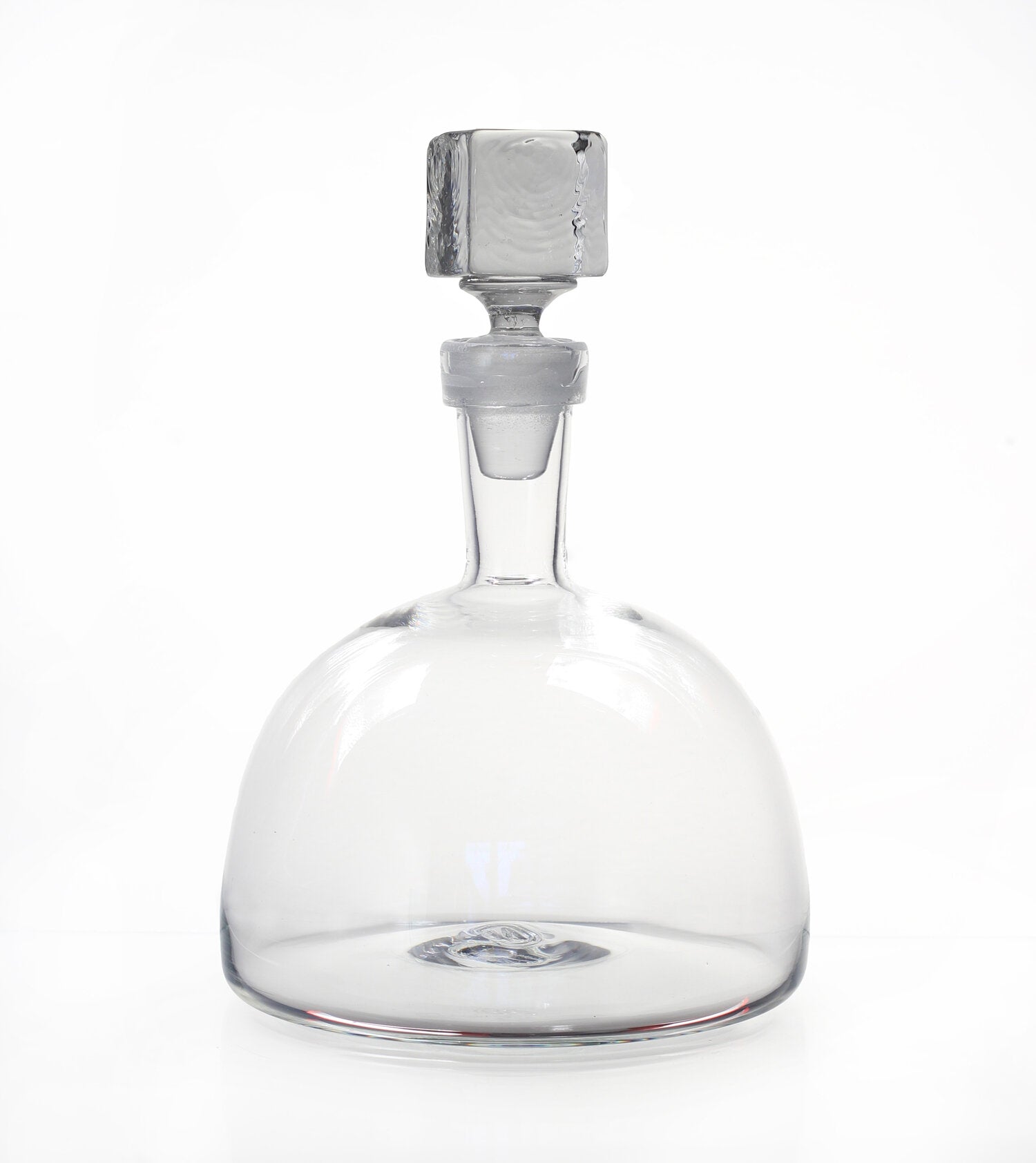
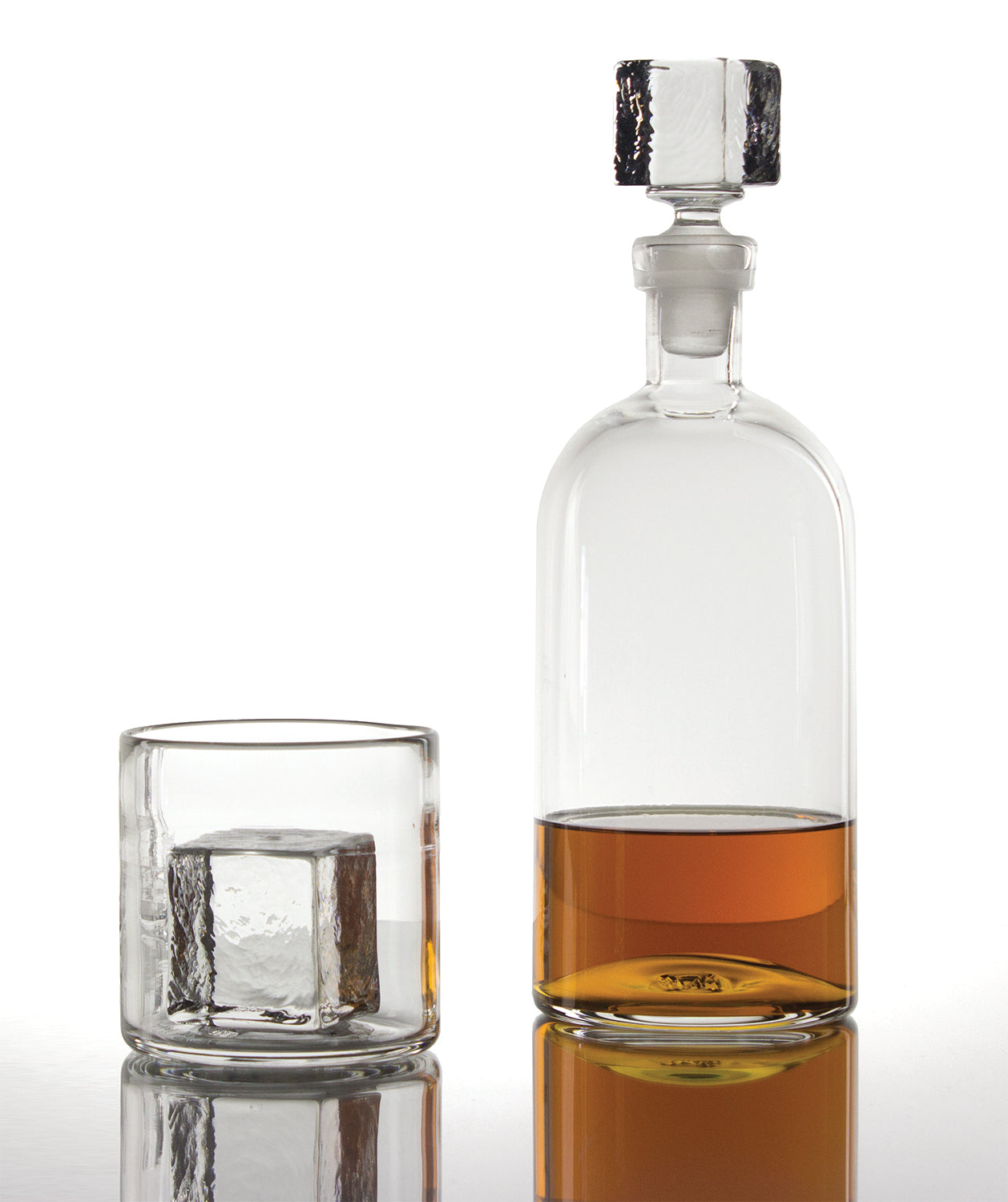
We’re especially drawn to the Cube Series Low Cube Decanter, a striking piece with a calm, architectural silhouette. Priced at $143.00 USD, it sits just beyond this guide’s under-£100 focus, but the design illustrates an essential collecting principle: learn from pieces that speak to you—even when they require a later step-up in budget. Not every collection evolves in straight lines; sometimes you develop your eye with accessible objects, then make one focused investment that ties them together.
What makes a decanter like this a worthy addition? Form, balance, and presence. A well-conceived decanter discovers a harmony between volume and line—quiet enough for a weekday evening, special enough for gatherings. While you continue to build your under-£100 foundation with votives, coasters, textiles, and small vases, a central glass object provides a sense of destination. It asks you to consider how light moves through your space, how a reflective plane interacts with matte surfaces, and how clarity can be as expressive as colour.
When collecting within a budget, think in concentric circles. The decanter becomes the calm centre; around it, you add under-£100 accents that celebrate craft: a handwoven runner to soften the table’s sound, a carved stone rest to cradle a stirrer, a pair of studio-made tumblers to echo the decanter’s geometry. Each element is modest on its own; together, they form a complete story. If you’re drawn to glass, browsing more from Nate Cotterman can help you understand how a maker explores a theme across forms, scales, and functions—a valuable lesson for any collector.
Styling and care: make the most of modest pieces
Styling under-£100 pieces is an art of framing. Because smaller works can be visually delicate, give them room to breathe. Group in odd numbers—three or five objects with varying heights—and leave negative space around the arrangement. A small vase, a candle, and a carved dish can form a vignette that feels intentional rather than cluttered. Place reflective pieces where they meet natural light; place textured pieces where hands will reach them.
Think about rhythm. If your space includes strong geometry—rectangular frames, straight shelves—introduce rounded forms for balance. If your palette is neutral, let a glaze or dyed textile carry a whisper of colour. And if a surface feels busy, edit down to one or two objects. Your collection should feel like a conversation, not a chorus.
Care extends the life and beauty of your collection. Most handcrafted glass prefers a gentle hand wash with warm water and mild soap; dry with a lint-free cloth to avoid spots. Ceramics with matte glazes appreciate soft sponges and non-abrasive cleaners. For wood, a natural oil or wax once or twice a year will nourish the grain; wipe spills quickly, and use coasters under anything that sweats or steams. Textiles benefit from air and light—shake them out, rotate their placement, and follow the maker’s laundering guidance carefully.
When you store pieces, avoid stacking heavy items on delicate ones, and keep silica packets around if humidity is high. If a piece chips or cracks, many studios offer repair advice or refurbishment. Repair doesn’t diminish a piece; it adds another layer to its narrative.
Build a year-long plan: from first piece to confident collector
A plan doesn’t have to be rigid. Think of it as a loose calendar that keeps your collecting purposeful. In the first month or two, choose a daily-use object under £100 that you’ll touch often. In months three and four, add a contrasting material so you can study how textures converse—glass and wood, ceramic and linen. Month five could be for a small lighting accent like a votive holder; month six for a serving element such as a tray or pair of coasters.
As your eye sharpens, revisit the makers and materials that moved you most. Perhaps a small glass bud vase leads you back to the clarity and balance you admired in the Cube Series Low Cube Decanter. Even if a piece sits outside the initial under-£100 window, the groundwork remains the same: you now know what you value and what you’ll use. That knowledge prevents impulse purchases and helps you save for the right piece at the right time.
Keep notes. Record where you encountered each work, the maker’s name, the price, and what drew you to it. Over time, patterns emerge—certain silhouettes, glazes, or finishes recur. Those patterns are your collecting voice. They’ll help you pass on pieces that don’t align and say yes when the perfect work appears.
Finally, share your collection with others. Talk to friends about the pieces you love, gift handcrafted objects under £100 to celebrate milestones, and ask guests which objects they noticed first. The more you engage, the more your collection invites conversation—and the more confident you become in your choices.
Where to look, and how to act with care
When browsing online, read product pages closely. Seek clear photography from multiple angles, dimensions that help you visualise scale, and care guidance that anticipates questions. Transparent pricing is another marker of respect, along with honest descriptions that emphasise materials and process over hype.
On Trove Gallery, we pair beautiful images with context that honours each maker’s voice. You’ll find artisan stories, material notes, and thoughtful curation—so your under-£100 choices feel purposeful and personal. When a piece resonates, pause to ask: does it support a daily ritual? Does it add texture or light? Does it harmonise with what I already own? If yes, you’re not just buying decor; you’re building a collection.
And when your eye keeps returning to a signature object—like the luminous geometry of Nate Cotterman—listen to that instinct. Keep collecting under £100 to strengthen your foundation, then let a single, slightly higher investment focus your narrative when the time is right. Consider the Cube Series Low Cube Decanter at $143.00 USD as a North Star: an elegant anchor around which affordable, handmade accents can revolve.
Whether you’re buying your first bud vase or planning a future centrepiece, the path is the same: attention, care, and curiosity. The rest is practice.
Start your collection today
Begin with one thoughtful, handcrafted piece under £100 and build from there. Explore makers whose work aligns with your rituals, and let quality—not quantity—guide the pace. For a luminous focal point as your collection grows, discover glasswork by Nate Cotterman and consider the sculptural clarity of the Cube Series Low Cube Decanter. Your home doesn’t need more; it needs meaning. Start small, choose well, and watch your collection become a living portrait of what you love.