The Portugal Influence: Shaping Modern Ceramics
Portugal’s Ceramic Soul: Where Coastlines Shape Clay
Stand anywhere in Portugal and you feel it—the quiet pull of clay, kiln, and sea light. The country’s ceramic story is woven into daily life: sun-warmed azulejo facades, terracotta cookpots, and whitewashed villages punctuated by cobalt blue. It’s a culture that regards ceramic not only as function or decor, but as a living language. Today, that language is being spoken anew by studio artists who translate Portugal’s deep traditions into modern, sculptural forms that feel effortless in contemporary homes.
At Trove Gallery, we seek out makers who carry this lineage forward with intention. Their pieces honor craft while slipping easily into a modern rhythm of living—quietly luxurious, beautifully tactile, and designed to be lived with. In this origin story, we explore how Portugal’s heritage influences today’s most resonant ceramic work and spotlight two Trove exclusives that capture the country’s unmistakable point of view.
From Azulejos to Atelier: A Heritage Reimagined
Few national identities are as vividly expressed in ceramic as Portugal’s. The Portuguese word azulejo evokes centuries of artistry, evolving from Moorish geometric panels to Renaissance narratives and Baroque blue-and-white tableaus. Walk Lisbon or Porto and you’ll see how these hand-painted tiles knit neighborhoods together—storytelling in glazed light. That visual cadence, the balance of geometry and gesture, deeply informs modern studio ceramics emerging from Portugal and beyond.
Contemporary makers reframe those cues in subtle ways. You’ll notice restrained palettes that nod to cobalt seas and chalky limestone cliffs; understated textures echoing weathered facades; and forms that feel both architectural and intimate. Rather than replicating historic motifs, today’s artists distill their essence—clarity of line, reverence for surface, an intuitive understanding of light—into sculptural objects that resonate in minimalist and layered interiors alike.
There’s also a material mindset at play: an insistence on touch. Portuguese ceramic tradition privileges tactile honesty—glazes that invite the hand, surfaces that reveal the maker’s pace, quiet asymmetries that make a vessel feel alive. In a world of perfect, machine-smooth decor, this grounded tactility reads as modern luxury: pieces that do less, but mean more.
Featured Work: Symbiosis by Vania R. Goncalves
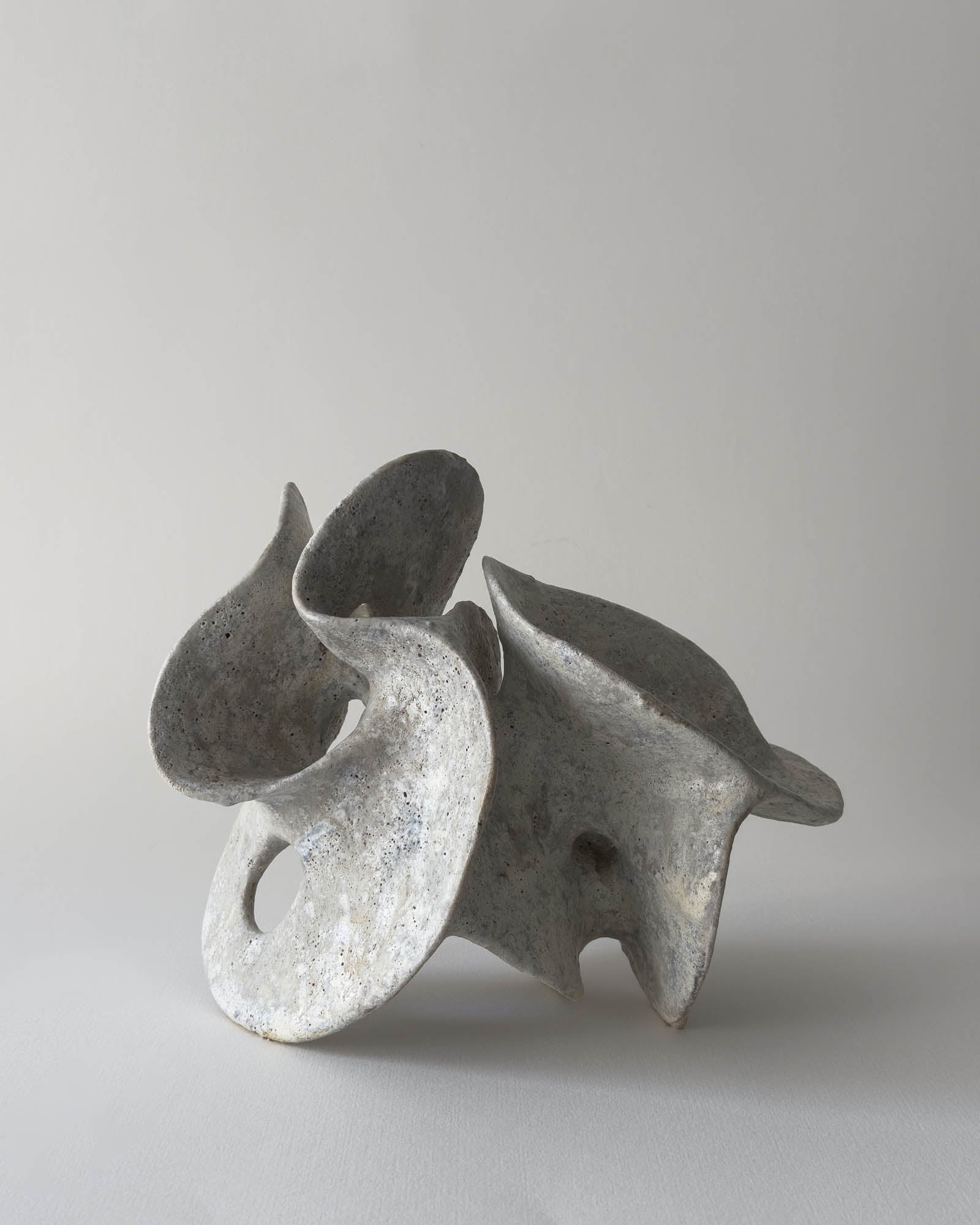
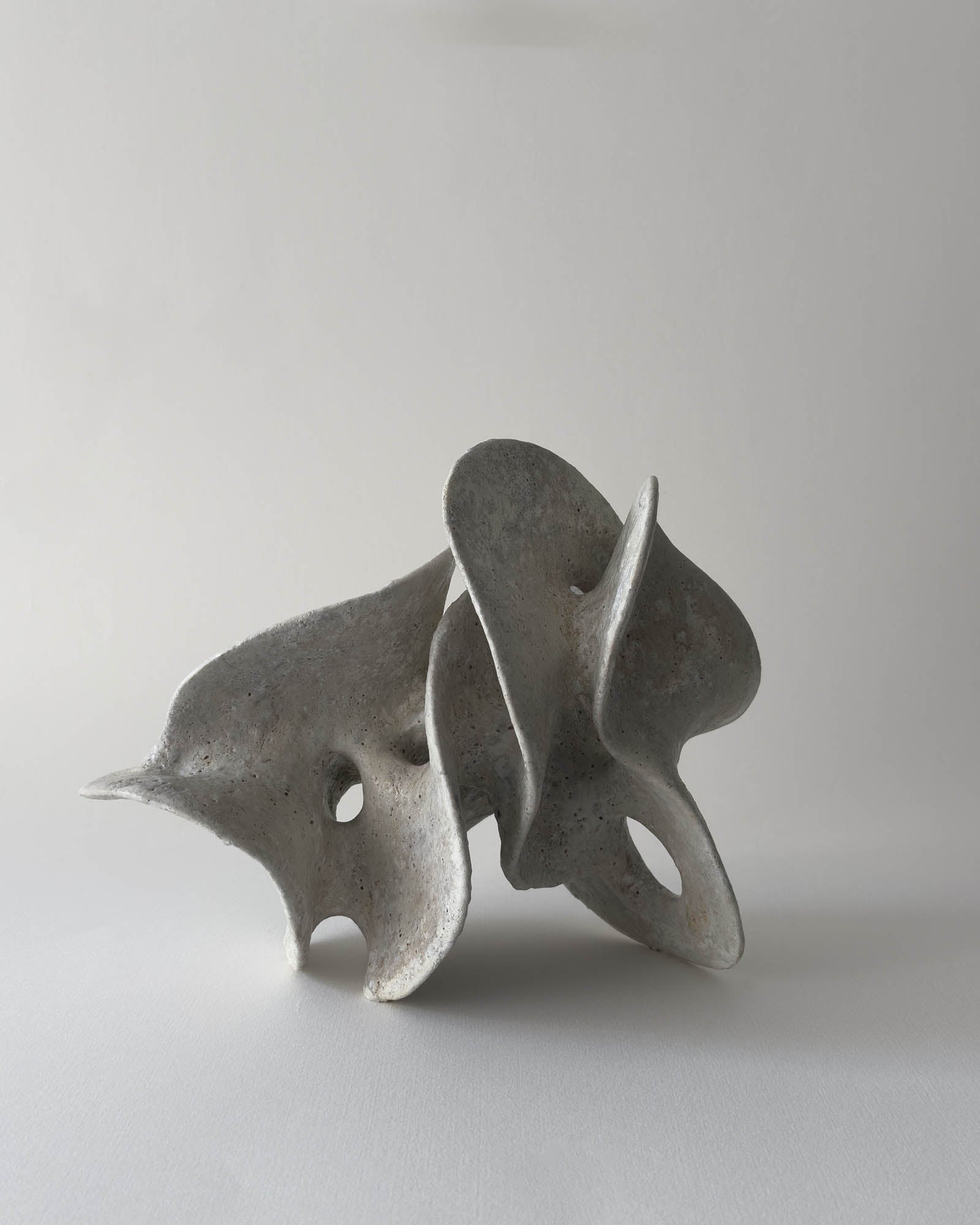
Consider Symbiosis by Vania R. Goncalves, a sculptural ceramic work available exclusively at Trove Gallery for $1,260.00. The title reveals the piece’s intent: a pairing of volumes that lean toward one another, held together by a quiet equilibrium. Nothing here shouts, yet everything is purposeful—the way the bolder form anchors the silhouette, the way a softer partner intercepts light, the slender seam where the two converse. It’s a study in balance that feels both ancient and current.
Symbiosis reflects Portugal’s design temperament—measured, refined, and deeply sensitive to light. Place it near a window and you’ll see its surfaces shift across the day, from morning matte to late-afternoon glow. This is the kind of sculptural ceramic that brings architecture to a shelf or console, acting as a focal point without overwhelming the room. Its presence is felt first, seen second.
What makes Symbiosis especially compelling is its human cadence. The piece carries the subtle irregularities that define true studio work: edges that soften rather than sharpen, planes that settle rather than insist. These hand-formed nuances are where emotion lives. They keep the sculpture from becoming an object lesson in symmetry and instead allow it to breathe—just like the Portuguese tradition that inspires it.
Collectors often ask how to style a sculptural piece like Symbiosis. The shortest answer: give it air. Let the work live on a clean plane—a walnut console, a plaster mantle, a stone shelf—where its contours can speak. Pair it with a single low vessel or a slender book stack to echo its lines. In a dining room, Symbiosis sits beautifully under a pendant, its dual forms catching the downlight like a whispered conversation. In an entryway, it becomes a quiet signature to your space—an index of taste that registers without fanfare.
Explore Symbiosis and the broader work of the maker through the Vania R. Goncalves collection. It’s an invitation to live with balance—Portuguese in spirit, universally at home.
Featured Work: Light Echos Indigo I by Catarina Pacheco
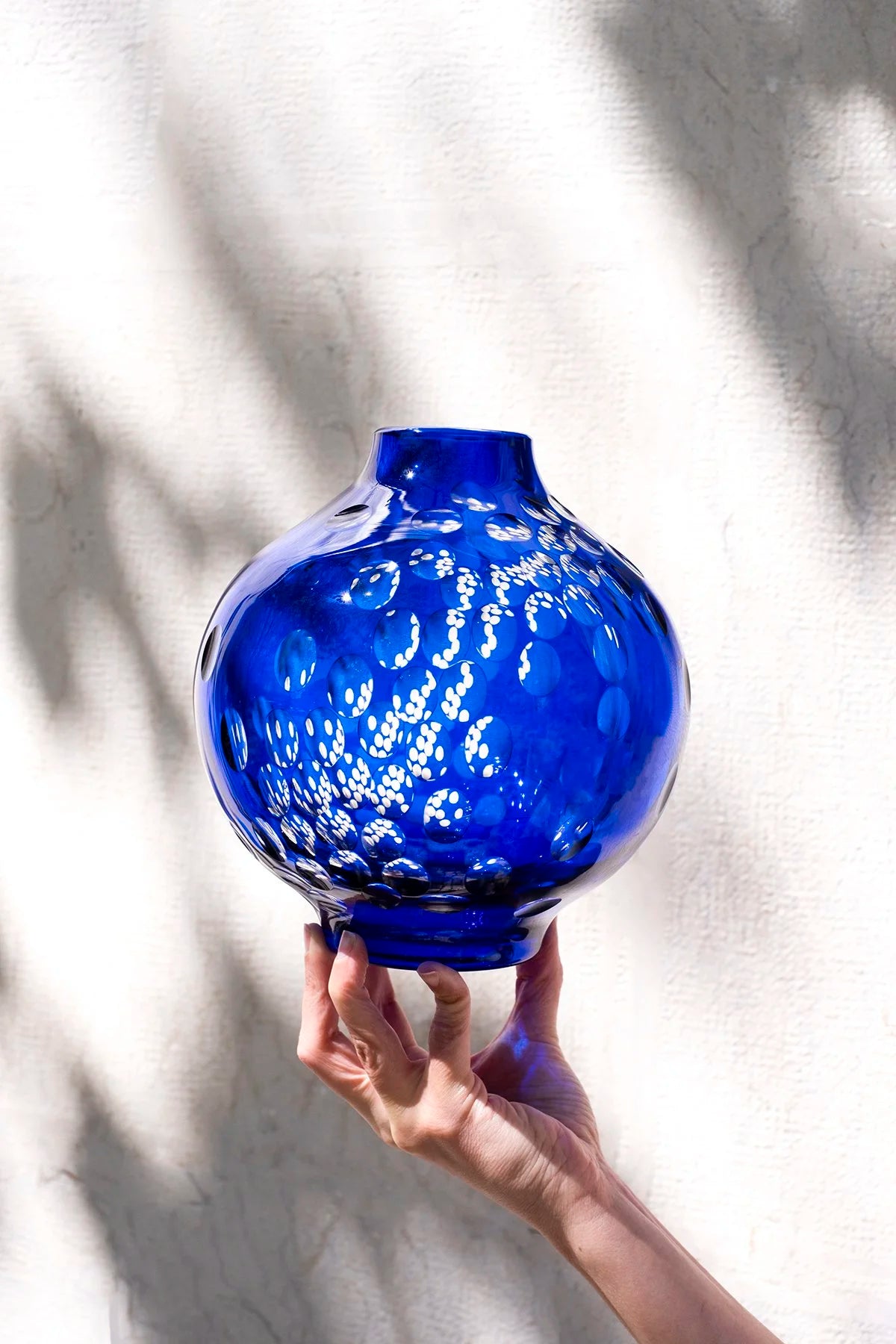
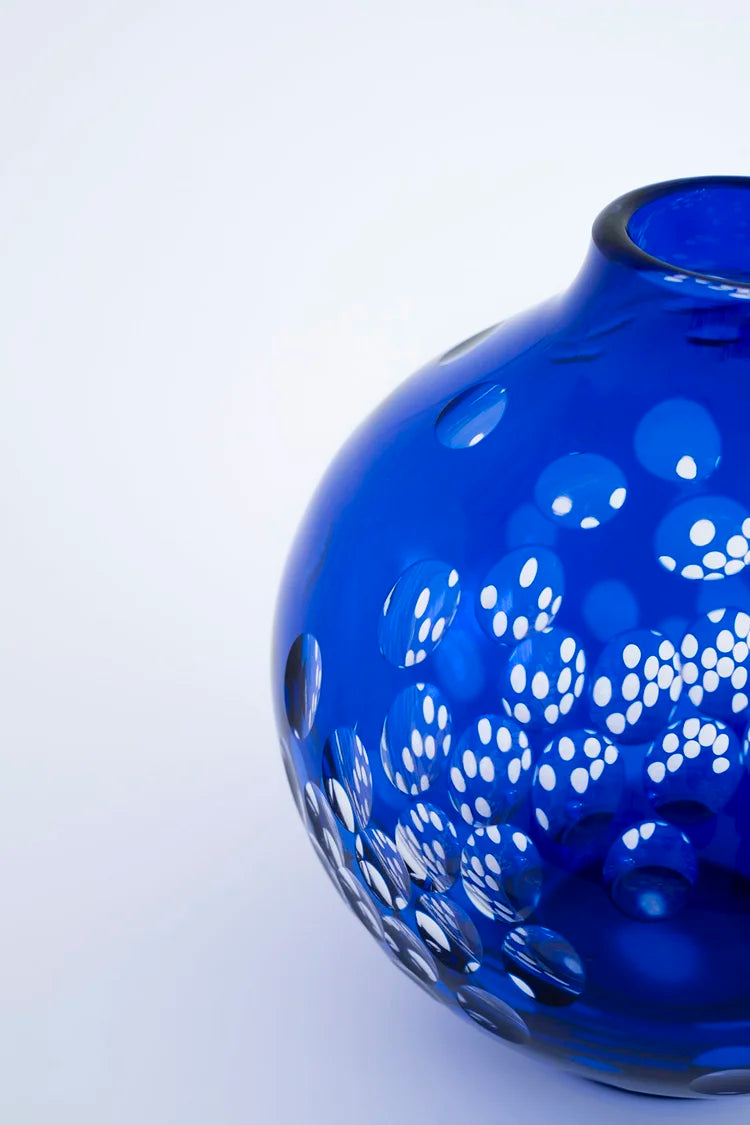
In Portugal, indigo carries memory. It’s the color of tilework after rain, of ocean on a windless day, of shadow slipping around a corner at dusk. Light Echos Indigo I by Catarina Pacheco distills that sensation into a striking ceramic statement piece, available at Trove Gallery for $525.00. Its surface reads like light translated into glaze—deep blues meeting softened edges, a meditative palette that holds the room the way a song holds a pause.
At first glance, Light Echos Indigo I feels painterly. But give it a moment and the structure reveals itself: calibrated curves, intentional transitions, a rim that guides the eye. The work is an exploration of luminosity—how a ceramic surface receives and releases light. It’s poetry rendered in clay, where each tonal shift evokes the Portuguese coastline’s changing sky.
For a home, this piece is both artwork and atmosphere. On a coffee table, it anchors a seating area with quiet intensity. On a bookshelf, its indigo field becomes a visual resting point amid spines and objects. In a bedroom, it invites a slower gaze—perfect atop a low dresser or perched on a niche shelf where morning light can trace its gradients. However you style it, Light Echos Indigo I gives you what the name promises: echoing light, held and released with grace.
To see more of this sensibility, explore the Catarina Pacheco collection. You’ll notice a throughline of clarity and restraint—qualities that define modern Portuguese ceramics and make them so adaptable across interior styles.
Five Makers, One Conversation: The Portugal Influence
Contemporary ceramic art is, at its best, a conversation—across regions, methods, and ideas. The Portugal influence doesn’t sit behind glass; it moves through studios worldwide, guiding decisions about form, color, and touch. The following Trove Gallery makers demonstrate how this lineage can expand and refine modern design without becoming nostalgic.
Catarina Pacheco: In works like Light Echos Indigo I, Pacheco leans into the chromatic depth that defines Portuguese tile heritage while stripping away ornament. Her approach is about resonance over reference—glaze as atmosphere, silhouette as rhythm. The results slot elegantly into contemporary interiors, offering an understated center of gravity.
Vania R. Goncalves: With Symbiosis, Vania articulates one of Portugal’s quiet truths: the balance of dualities. Coastal and urban, old and new, soft and strong—these pairings shape the country’s visual culture. Vania’s forms often read like dialogues, where volumes are invited into relationship and light negotiates the space between them.
Marie-Laure Davy: Davy’s work engages materially with stillness and surface—the kind of visual hush you feel in Portugal’s cloisters and courtyards. While not tied to a single locale, her practice embodies the same patient pacing that Portuguese ceramics model: edits over excess, texture over spectacle. Pieces from the Marie-Laure Davy collection sit beautifully in layered, quiet interiors, bringing forward the room’s architecture rather than competing with it.
Pareidólia Design: The studio’s name hints at the practice—seeing images in shapes, discovering narratives in forms. Their pieces channel a Portuguese sensibility through gently architectural silhouettes and a preference for honest materials. In the Pareidólia Design collection, you’ll find functional objects that double as sculpture—vessels that organize space the way a structured facade organizes a street.
Anna Demidova: Demidova’s ceramics speak to the universal aspects of the Portugal influence: clarity, tactile restraint, and a willingness to let quiet moments carry the work. Her pieces, featured in the Anna Demidova collection, prize proportion and the intimate scale of the hand. They feel calm yet potent—objects that slow the room to a liveable tempo. In this way, they echo the meditative presence found in Portugal’s historic ceramic traditions.
Across these makers, you’ll notice shared values: the primacy of touch, a dialogue with light, and respect for material truth. These values—more than any motif—are what carry Portugal’s ceramic DNA into the present. They let a piece feel contemporary in New York, Kyoto, or Lisbon while maintaining a lineage you can sense and never fully pin down.
Design Language: Color, Light, and Line
How does Portugal, specifically, show up in modern ceramic design? Three languages emerge—color, light, and line—and the most compelling pieces are fluent in all of them.
Color: Portugal’s blue is not a single note. It ranges from soft mineral wash to saturated cobalt, often sitting near warm whites and sandy neutrals. In Light Echos Indigo I, indigo behaves like a shadow in motion—never flat, always breathing. Meanwhile, the neutral composition of Symbiosis echoes stone and sunbaked plaster, offering a gentle counterpoint to deeper hues. For interiors, this palette is generous: it pairs seamlessly with woods, linens, and natural stone, and it invites textural layering without visual noise.
Light: Portuguese ceramic tradition is deeply attuned to light—how it glances off tile, pools in courtyards, and softens across the day. In studio practice, this sensitivity becomes a design tool. Subtle transitions in sheen, softly broken edges, and volumes that invite shadow help a piece animate the room. You’ll feel this most when a work is given breathing space; the interplay between object and daylight becomes a quiet performance.
Line: Architecture is the country’s invisible collaborator, and modern ceramics often take cues from its clarity. Clean verticals, generous radiuses, and the gentle meeting of planes yield forms that feel inevitable rather than forced. Symbiosis channels this with its interdependent silhouettes, while Light Echos Indigo I shows it through disciplined curvature. Good ceramic design doesn’t announce its lines; it trusts you to find them.
Collecting with Intention: Living with Portuguese Ceramics
Collecting ceramic is an exercise in noticing. You begin to observe how light behaves in your home, where your eye rests, which textures invite your hand. The Portugal influence is particularly rewarding to live with because it’s cumulative—small, daily encounters that deepen over time. Here are a few ways to cultivate that experience.
Start with a focal piece: Choose one sculptural work as a visual anchor, such as Symbiosis. Place it where you move past often—an entry console, the end of a bookshelf, a dining credenza. Let it set the tonal and tactile standard for the room, then layer complementary pieces around it.
Layer with color field ceramics: Add a chromatic counterpoint like Light Echos Indigo I. This color field approach creates visual depth without clutter, much like a well-considered painting. In spaces with a neutral palette, indigo ceramics introduce sophistication without stridency.
Edit generously: Portugal’s ceramic legacy favors restraint. Rather than a crowded shelf of many small statements, edit to a few significant ones. Group works by dialogue—shape speaking to shape, matte to gloss, quiet to quiet—so harmony leads and the room breathes.
Place for light: Give your ceramics a partner in daylight. A piece placed near a window or beneath a skylight will change subtly through the day, revealing the artist’s decisions in surface and line. Night lighting should be soft and directional; think lamp glow crossing a rim, not a direct spotlight.
Care as ritual: One of the pleasures of studio ceramic is the intimacy of care. Dust gently with a soft, dry cloth and avoid abrasive cleaners. Move pieces with both hands, supporting the base. Rotate their placement seasonally to experience how different light shifts their presence—an easy way to keep your home feeling renewed.
Mix tradition with modern: Don’t shy away from placing a contemporary sculptural object near a vintage vessel or a fragment of antique tile. Done thoughtfully, this juxtaposition underscores the continuity of Portuguese ceramic culture and draws a line between past and present that feels alive.
The Trove Gallery Edit: Portugal, Now
At Trove Gallery, we champion makers whose work carries the warmth of human touch and the clarity of strong design. Portugal—its color sense, its quiet architecture, its devotion to craft—continues to be a wellspring for modern ceramic practice. Pieces like Symbiosis by Vania R. Goncalves and Light Echos Indigo I by Catarina Pacheco exemplify why: they’re deeply grounded yet open, effortlessly sophisticated yet welcoming. They make space for your life to unfold around them.
If you’re beginning a collection, start with what you feel. Let a curve, a shadow, or a field of color choose you. Then seek coherence—forms that converse, palettes that harmonize, textures that bring your hand back again and again. Explore the makers featured here—Catarina Pacheco, Vania R. Goncalves, Marie-Laure Davy, Pareidólia Design, and Anna Demidova—to see how a shared influence can yield beautifully distinct voices.
Ready to bring Portugal’s ceramic spirit home? Shop our Portugal-inspired edit and discover the work that speaks your language. Begin with the quietly commanding Symbiosis ($1,260.00) and the luminous Light Echos Indigo I ($525.00), or browse our full maker collections for pieces that will anchor your spaces for years to come. Your next heirloom is waiting—crafted with care, made to be lived with, and destined to feel inevitable in your home.