Artisans of Germany: Precision and craft
A quiet revolution: why German craftsmanship feels different
Stand in front of a well-made German object and you sense something steady, almost musical: the rhythm of precision, the humility of discipline, and the courage to let materials speak. From time-honored ateliers to contemporary studios, artisans of Germany work with tools as old as the craft itself, yet think with an elegance that feels disarmingly modern. Their pieces carry the signatures of patience and rigor—edges that are exact without being cold, forms that invite light, surfaces that age with dignity. This is not ornament for ornament’s sake; it is integrity you can hold in your hand.
At Trove Gallery, we seek makers who embody this ideal, and few do so as completely as German ceramic artist Marina Necker. Her sculptural vases reveal a language that’s both thoughtful and tactile—objects designed to anchor a room, to hold space, to frame a single stem in a way that feels inevitable. In these works, the promise of German craftsmanship becomes personal: honest materials, disciplined form, and a touch of lyrical surprise.
Germany pottery has long been praised for its balance of function and form, a tradition that stretches from medieval kiln towns to Bauhaus modernism. Today’s Germany artisans inherit that lineage, but they also extend it—cutting new silhouettes, exploring expressive textures, and insisting on processes that value the maker’s hand. The result is work that is unmistakably contemporary yet grounded in history, made for daily living and lasting beauty.
There’s also a cultural truth at play: precision here is not a posture; it’s a practice. In Marina Necker’s studio, precision means listening—to the clay body, to the arc of a curve, to the way a vessel will meet light at noon in a quiet room. It’s not about control so much as stewardship. When the kiln opens, the object feels less manufactured than discovered, as though it had always intended to exist.
For collectors seeking meaningful objects for the home, this distinction matters. You don’t simply acquire a vase; you welcome a point of view. You select a partner for your flowers, your shelves, and your sense of calm. You choose pieces that can stand empty without apology and then transform when a single branch is introduced. This is the alchemy of well-made ceramics, and it’s particularly vivid in German work—understated, exacting, profoundly alive.
In the following portraits of Marina Necker’s Physalis, Root, and Ice series—each available now in our Marina Necker collection—you’ll find not only beautiful objects, but also an invitation to slow down and see more.
Consider this your guide to living with Germany pottery at its finest: vessels that honor precision, objects that hold space with grace, and forms that return us to the pleasures of looking closely.
Meet the maker: Marina Necker and the poetics of discipline
Marina Necker’s practice rests on a simple yet demanding premise: the hand can be both instrument and interpreter. She builds vessels that reconcile opposites—soft with sharp, movement with stillness, structure with spontaneity. In that balance is the unmistakable spirit of German artisanship: attentive, exact, generous. Each piece channels a sculptor’s eye and a ceramicist’s patience, designed to last in both body and relevance.
Working in deliberate series, Marina explores families of forms the way a composer returns to a theme. Variation reveals nuance; repetition reveals truth. The Physalis, Root, and Ice series form a triptych of ideas—containment and bloom, growth and grounding, clarity and chill—each rendered with a tactile intelligence that reads beautifully in a home setting.
What sets her work apart is restraint coupled with feeling. Surfaces are refined without sterility; profiles are assertive yet human. In the curve of an opening or the cadence of a facet, you’ll recognize a quiet conversation between material and maker. It’s the kind of conversation Germany artisans sustain across disciplines: an allegiance to process that invites surprise within clear boundaries.
Marina’s philosophy also honors the everyday ritual. Vases should not wait for grand occasions; they should dignify the morning light, a kitchen table, a favorite windowsill. Pour water, place a single stem, adjust the angle by a breath—suddenly the room arranges itself around the vessel. This care for the intimate scale of living is where precision matters most. The work doesn’t shout; it clarifies.
Collectors often remark that Marina’s pieces feel like architecture in miniature: volume, proportion, and line come together with an engineer’s logic and a poet’s sensitivity. That’s the soul of German craftsmanship at its best—not merely making a thing well, but making it with an inner structure that sustains beauty over time.
Explore more of her work—and the full story of this practice—in our curated Marina Necker collection. Each piece is kiln-fired, finished by hand, and offered in limited quantities through Trove Gallery.
The Physalis series: vessels for light, shadow, and single stems
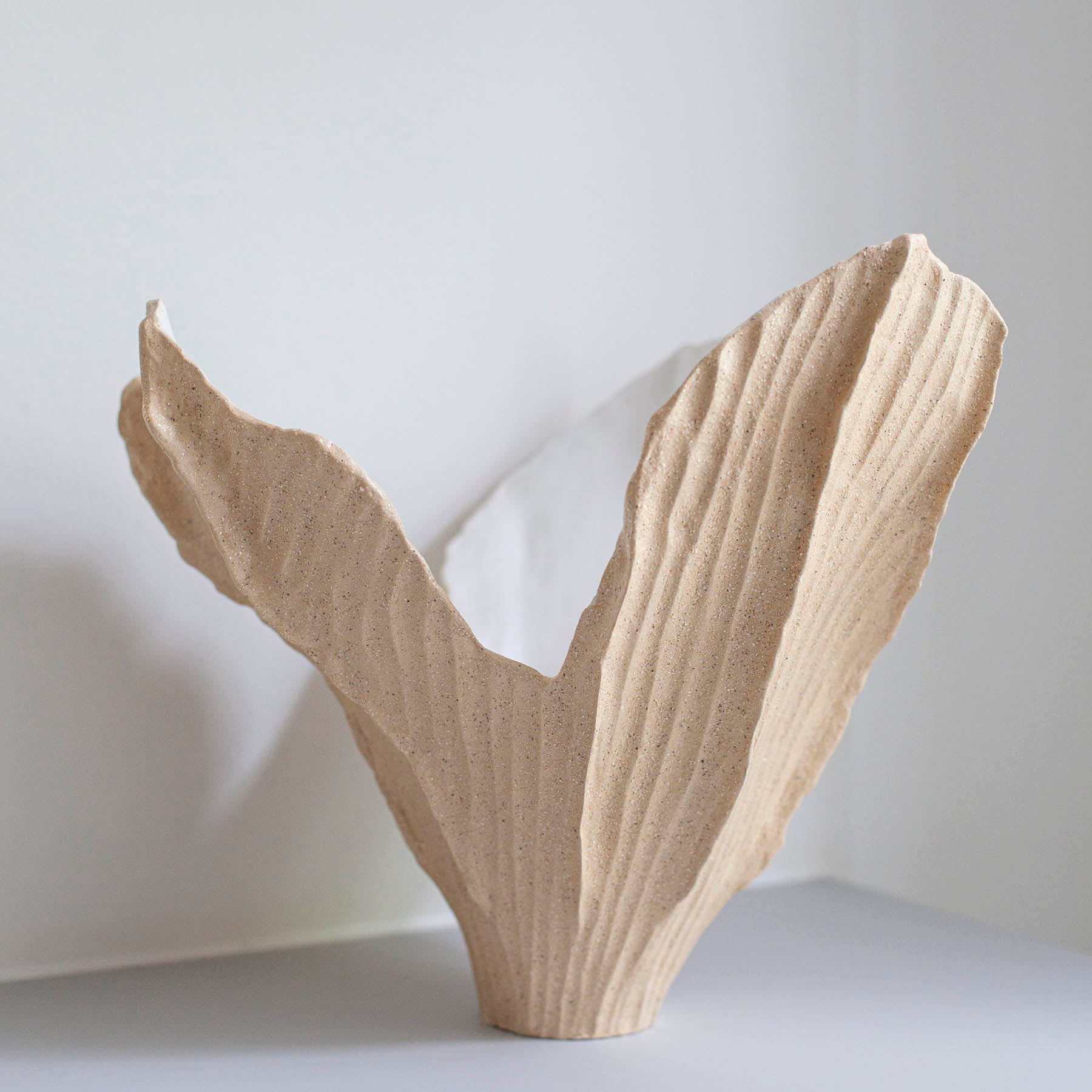
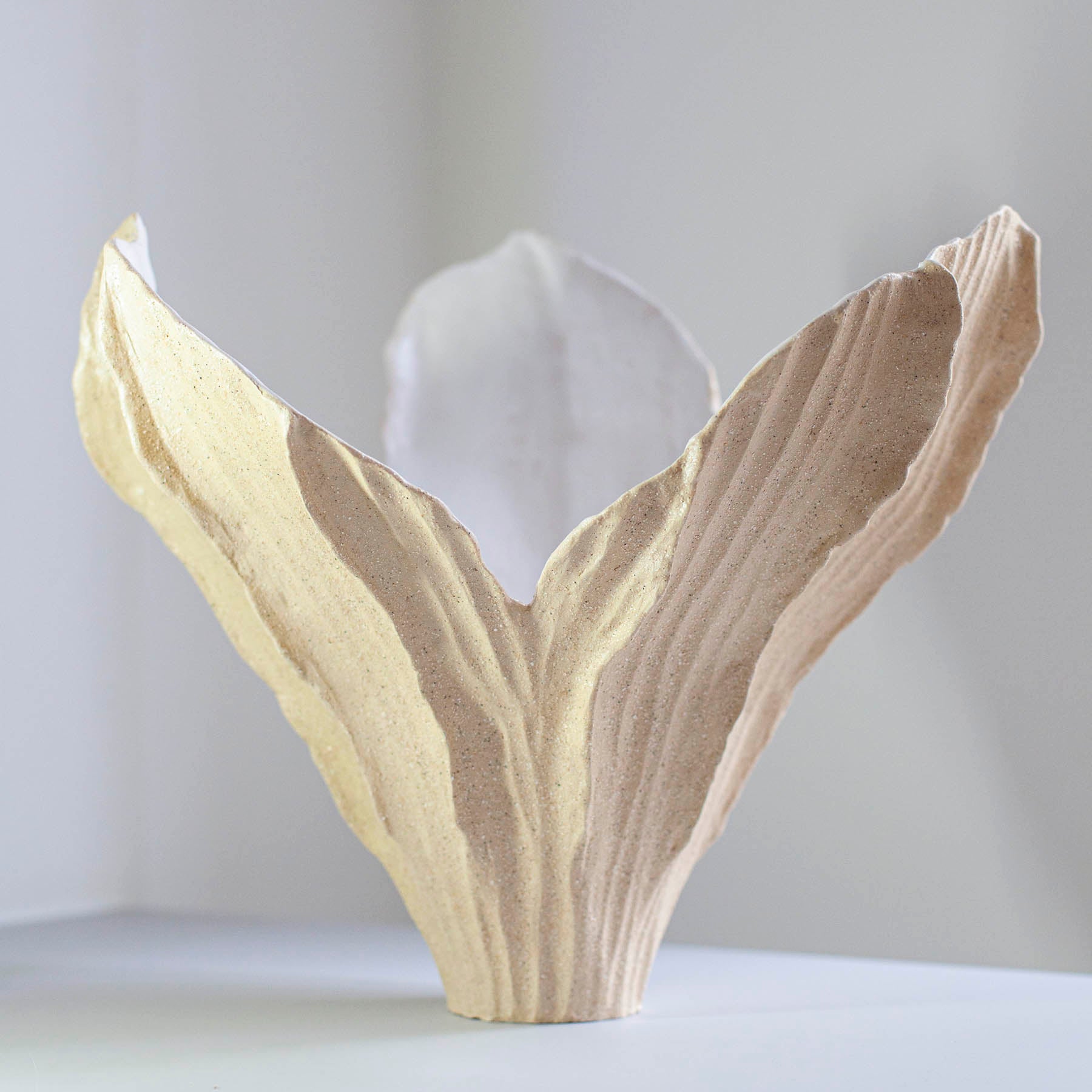
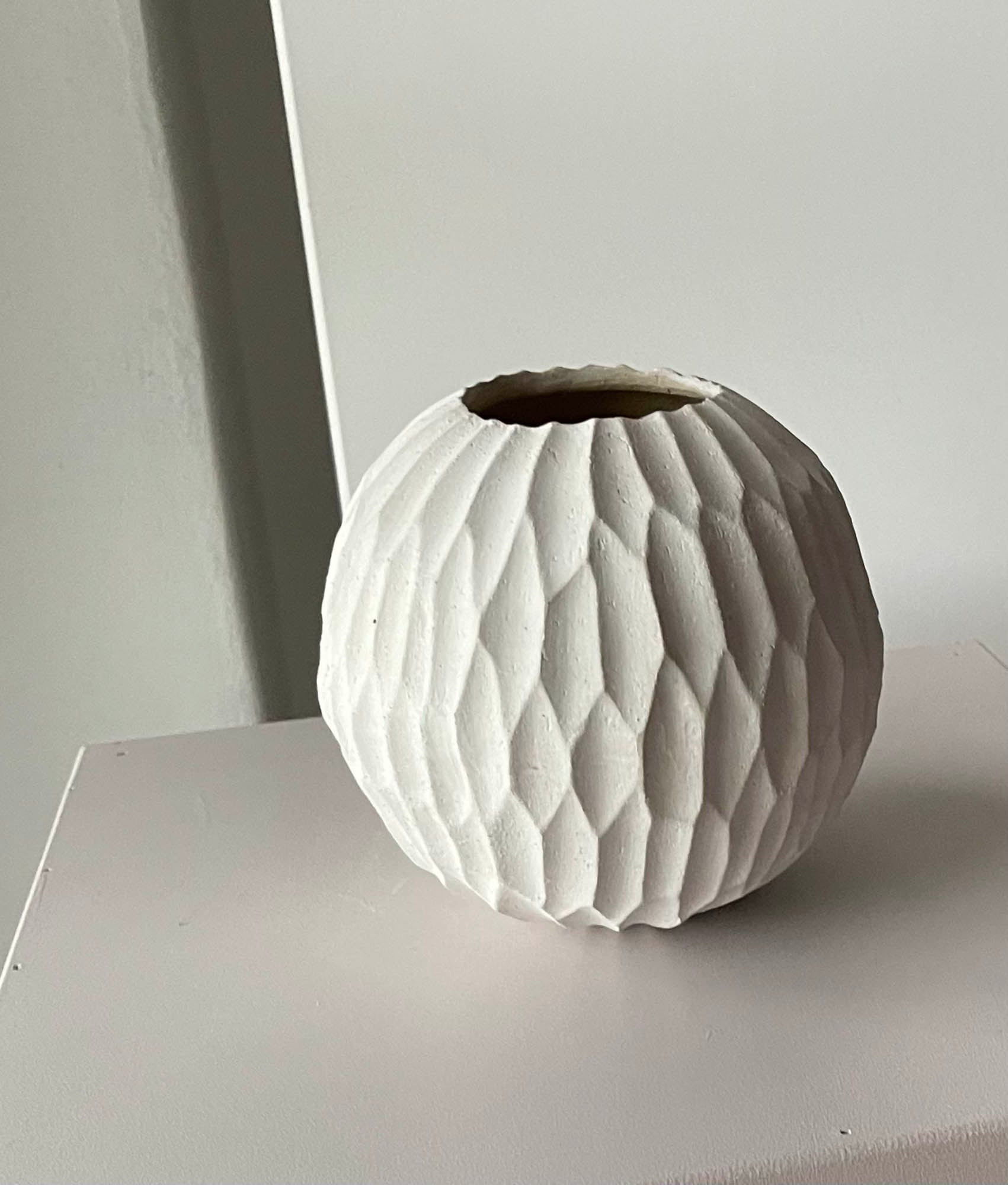
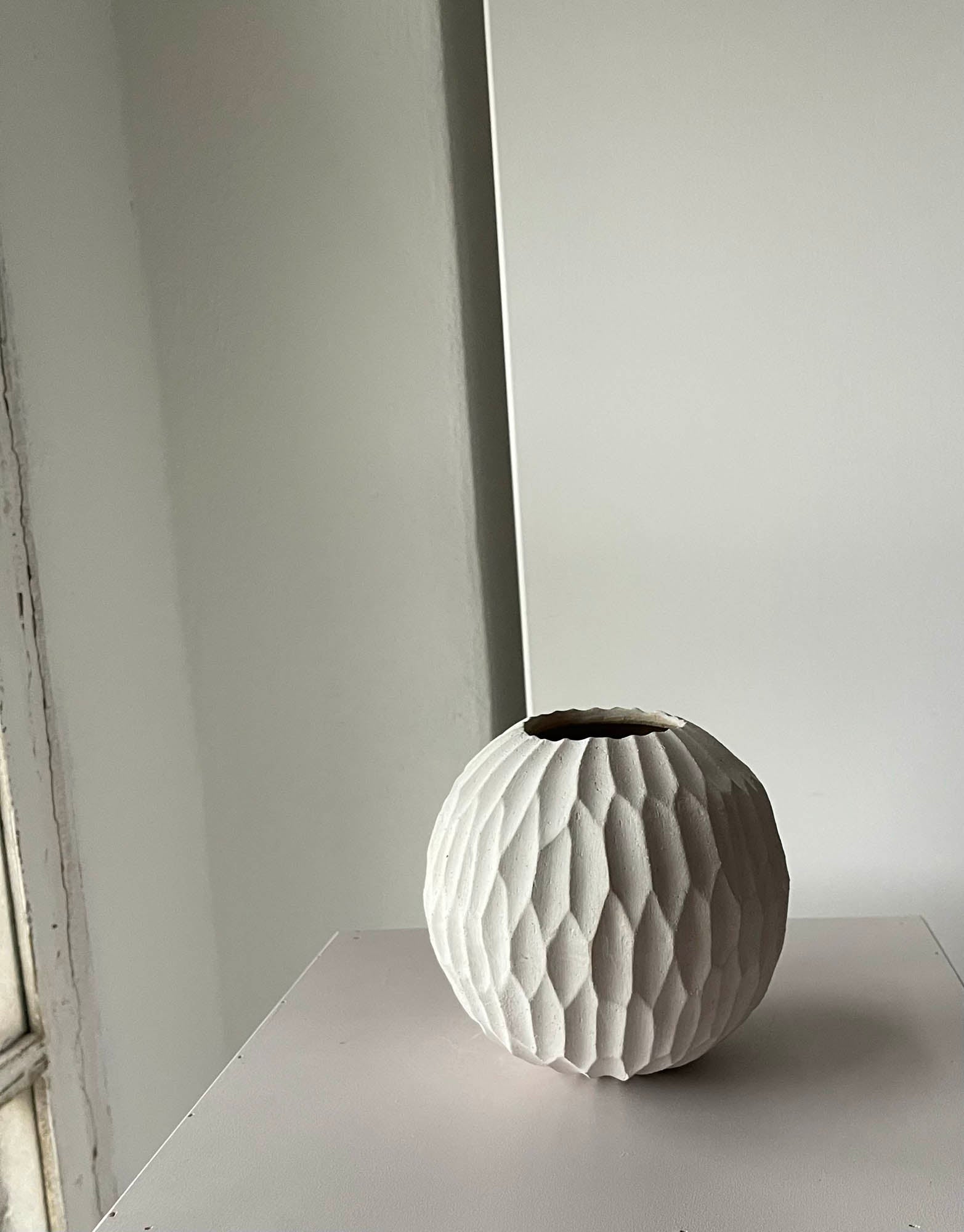
Named for the lantern-like plant that holds a bright fruit within a delicate husk, Marina Necker’s Physalis series explores what it means to protect and present. The forms feel both botanical and architectural: gentle bulges taper into crisp rims, and the body often carries a subtle cadence—as if breathing. The result is a vase that performs a rare trick: it elevates a single stem to sculpture while remaining modest enough to live easily on a bedside table or console.
Consider Physalis 01 ($768.00). It reads like a lantern mid-bloom, a vessel with quiet volume and a rim that stages stems with precision. Whether you place a single ranunculus, a delicate branch, or an autumnal grass, the vessel acts like a frame—never competing with the organic line, always amplifying it. Its sculptural poise makes it a natural focal point on a shelf where negative space matters. Empty, it’s a still life. In use, it’s choreography.
Alongside it, Physalis 02 ($567.00) offers a companion variation—slightly different in posture, equally elegant in restraint. Where Physalis 01 might feel like an exhale, Physalis 02 feels like the moment before. Together, the pair suggests rhythm and conversation. Display them side by side for a diptych effect, or separate them across a room to create a visual echo that ties a space together.
What distinguishes the Physalis series is how naturally it stages light. Morning sun catches the curved body; evening light grazes the rim and throws a gentle shadow—moments that change the mood of a room without demanding attention. This sensitivity to light is no accident. It’s the reward of precise form and honed surfaces, the kind of finesse we look for when curating exceptional Germany pottery for Trove Gallery.
Styling notes for the Physalis series: keep it minimal. A single stem or a tight clutch of small blooms will feel generous and intentional. If you prefer branches, let one arc outward; the vase will ground the gesture. And when flowers are out of season, let the vessel stand on its own. Its presence is complete.
Collectors who value German artisans will recognize the work’s lineage—discipline worn lightly, poetry embedded in proportion. Physalis is a study in less that gives more.
The Root Vases: grounding a room with sculptural calm
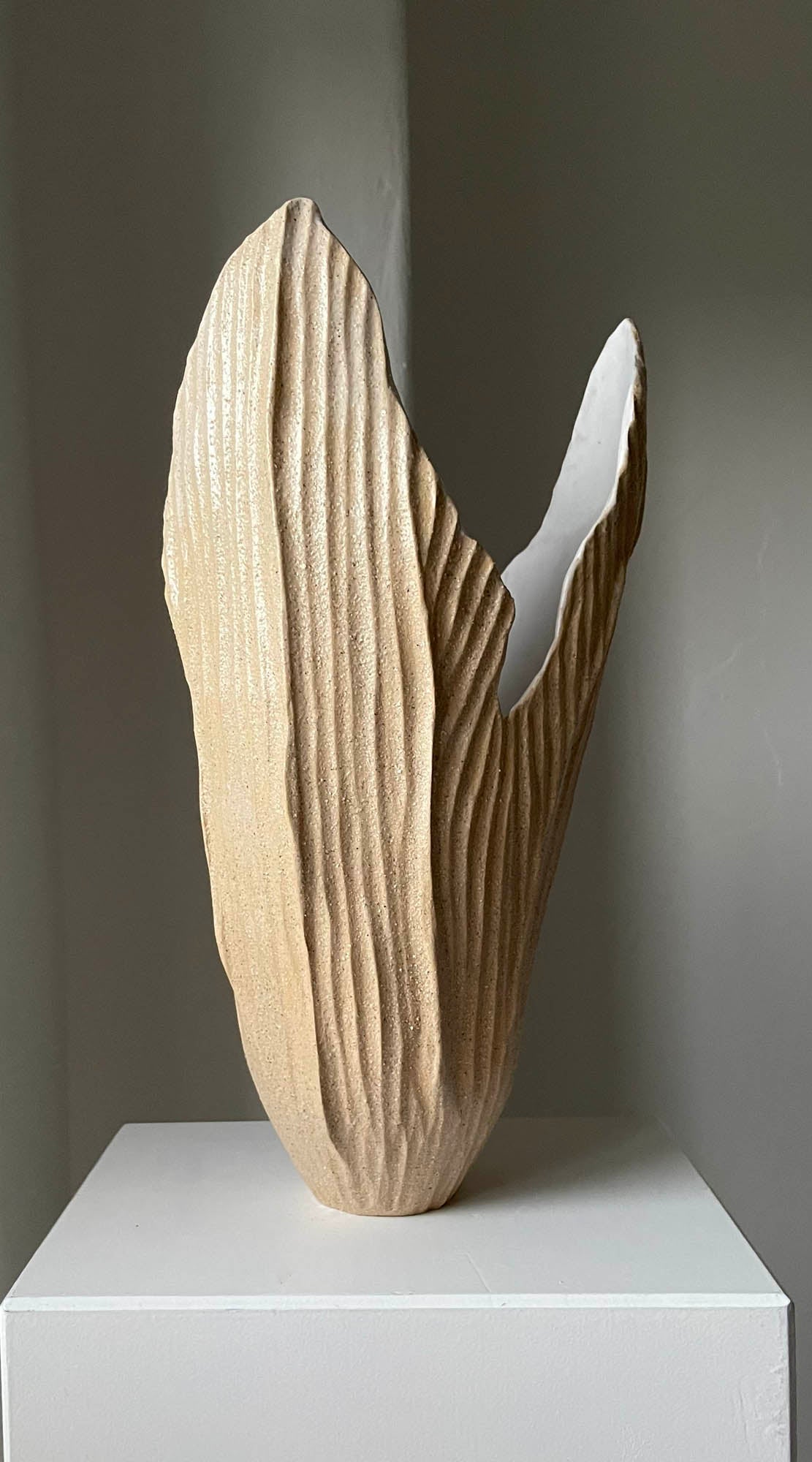
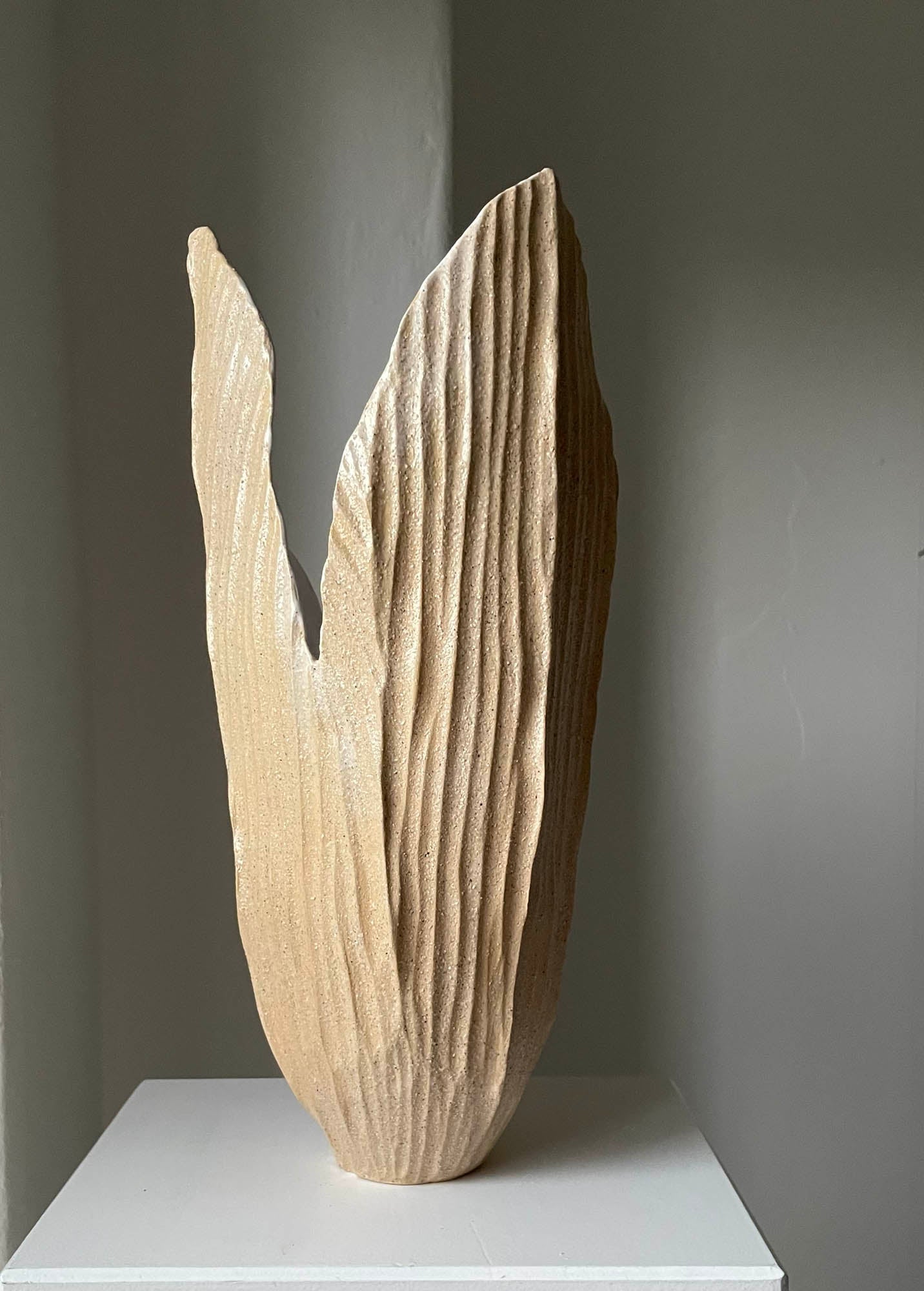
If Physalis is about breath and bloom, the Root series is about anchoring and ascent. These vessels appear to grow from the surface they rest upon—earthbound, steady, architectural. The silhouette feels elemental, with a base that reads as rooted and a body that rises with quiet confidence. In any setting—entryway, dining table, mantel—the Root Vases provide ballast, a center of gravity that organizes the objects nearby.
Start with the versatile Medium Root Vase ($150.00). It’s the workhorse of the group: compact enough for intimate surfaces, tall enough to hold a modest bouquet or a handful of foraged stems. Place it on a kitchen island or a bedside shelf; it will do what good architecture does—clarify space. With its measured proportions, the Medium Root Vase is a natural entry point for collectors curious about Marina’s visual language.
When the room calls for a stronger statement, turn to the Large Root Vase ($267.00). Its expanded volume makes it ideal for fuller arrangements—peonies in season, olive branches in winter. The larger scale amplifies the series’ signature effect: grounded base, rising form, a rim that conducts stems like a well-drawn line. On a dining table, it’s substantial without stealing focus. On a mantel, it reads like sculpture.
For architectural drama, the commanding X-Large Root Vase ($826.00) delivers presence. It can anchor a foyer, frame a fireplace, or stand as a sculptural object in a quiet corner. Use it for tall branches—magnolia, quince, or willow—or let it stand empty to showcase its silhouette. The X-Large is a curator’s piece: a work that transforms its environment simply by being there.
Part of the Root series’ appeal is its adaptability across scales. Pair the Medium and Large together to create a conversation of heights. Group all three for a stair-step display that leads the eye upward. The forms harmonize without matching; each variation offers a different tempo within the same melody. That’s the mark of careful design and the DNA of Germany artisanship—coherence across a family of objects.
Care and styling tips: keep water lines discreet by changing water frequently and trimming stems at an angle. Allow space around the base so the “rooted” posture remains legible. If you’re mixing materials, place a Root Vase near wood or stone; the dialogue between textures will feel natural and warm. And remember: a vessel can be a sculpture. The Root series shines even when no flowers are in sight.
Collectors often tell us these vases do something subtle in a room: they slow the eye. You notice the quiet curve, the steady base, the purposeful rim. You notice how the piece makes the table around it feel intentional. That is design operating at the level of feeling—and it is why we champion Marina Necker’s work at Trove Gallery.
The Ice Vase: clarity, edge, and the beauty of restraint
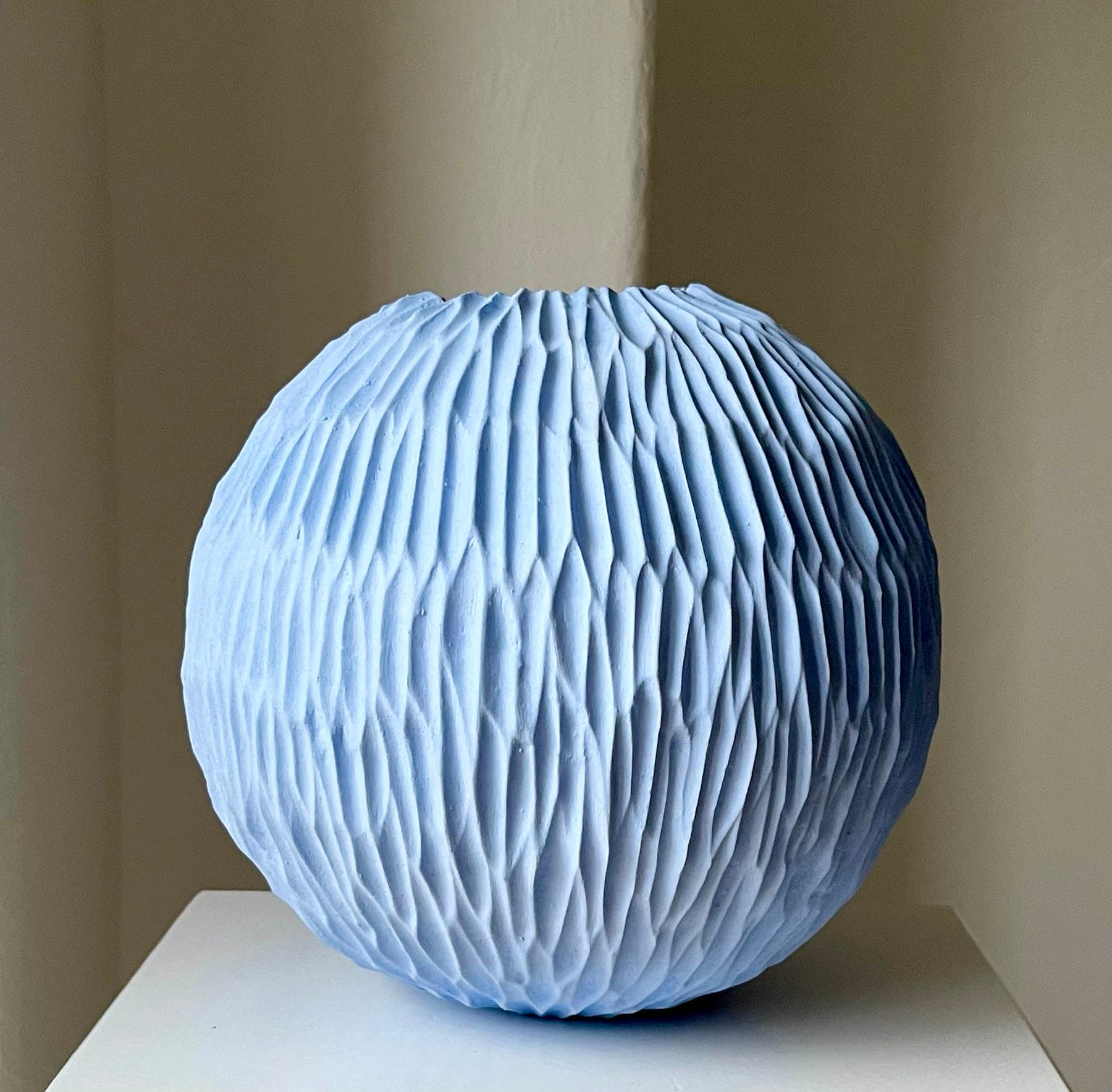
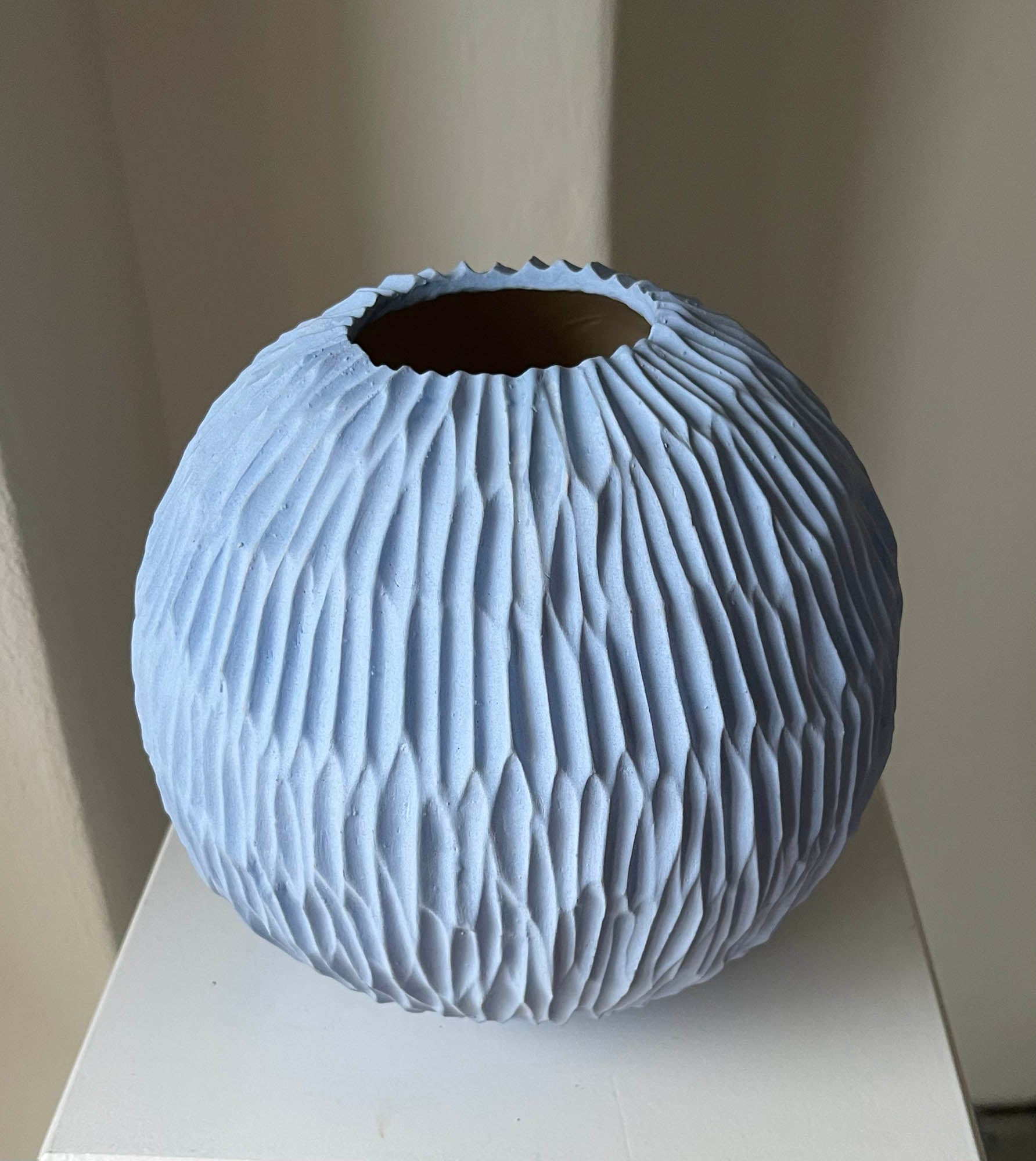
Where the Physalis breathes and the Root grounds, the Ice Vase ($218.00) cools and clarifies. It is a study in restraint—crisp profile, luminous surface, and a geometry that catches light like a winter morning. The form hints at facets without sharpening into severity; it’s clear-minded rather than austere. For modern interiors, the Ice Vase offers an elegant counterpoint to plush textures and warm wood.
In use, the Ice Vase excels at composition. Its controlled opening guides stems into a clean, upward gesture—tulips behave, anemones hold their gaze, branches align. The vessel organizes a bouquet so the flowers feel composed rather than crowded. For those who appreciate the minimal ethos of Germany pottery, this is a signature piece: precise, luminous, quietly dramatic.
Try the Ice Vase on a windowsill where it can translate changing daylight, or place it on a coffee table beside a favorite book. Its reflective qualities make the room feel edited, its silhouette a reminder that clarity is a form of luxury. Pair it with a Root Vase for an interplay of grounded mass and crisp edge, or with a Physalis for a dialogue of lantern and light.
Collectors who choose the Ice Vase often tell us it changes their approach to flowers. You need fewer stems, and each one matters more. That economy isn’t about limitation; it’s about focus—the kind of focus Marina Necker’s practice cultivates at every step.
Living with German ceramics: a collector’s guide
Bringing Germany artisanship into your home is more than an aesthetic choice; it’s a way of refining daily rituals. Here are a few ways to live fully with Marina Necker’s work—and, by extension, with the values of precision and craft that define Germany pottery.
Edit the arrangement. The right vessel will do most of the work for you. In a Physalis vase, one stem can feel like a complete composition. In a Root Vase, a handful of branches becomes a landscape. In the Ice Vase, the curve of a single tulip reads like a line drawing. Less is not only more; it’s more intentional.
Stage the light. Place a Physalis on a console where afternoon light glides across its curve; set a Root Vase near a window where morning brightness grounds the form; let the Ice Vase catch a sliver of sun to animate its edges. German ceramics thrive on these small shifts—a reminder that good design is often a conversation with light.
Mix scales and voices. Start with the Medium Root Vase for everyday ease, then add the Large Root Vase for gatherings and the X-Large Root Vase for architectural punctuation. Thread in Physalis 01 and Physalis 02 to introduce a softer cadence, and finish with the Ice Vase to bring clarity. Together, the collection composes a room with layered nuance.
Care for longevity. Although each piece feels sculptural, treat it as a living tool: rinse after use, avoid thermal shock, and allow the vessel to dry fully between arrangements. Line the base with felt if you plan to place it on delicate surfaces. These habits protect the finish and honor the artisan’s work.
Collect with intention. The most meaningful collections are built slowly. Choose one piece that changes how you see a familiar room; live with it; then add another that answers or expands that first gesture. Over time, you’ll create a personal grammar—forms and textures that reflect how you like to live. This is the quiet luxury that comes from German artisanship: a home that speaks softly and clearly.
From studio to home: why precision endures
In an age of instant everything, precision feels radical. It asks for time—time to train the hand, to study proportion, to accept that a millimeter matters. When you bring home a piece by Marina Necker, you bring home that time. You feel it in the evenness of a rim, the ease of a curve, the way the vessel meets the table without protest. These are small miracles, and they add up.
Germany artisans have long trusted this approach: one careful step, then another, until the work supports a life. Precision becomes a form of kindness—objects that function cleanly, age gracefully, and offer the mind a place to rest. In a world of visual noise, this is an inheritance to keep.
At Trove Gallery, we are honored to share Marina Necker’s work with collectors who value craftsmanship and authenticity. Explore the series, compare silhouettes, consider scale, and let your eye decide. If a vessel quickens your attention—if you find yourself returning to it in thought—that’s the signal. Objects worth living with often feel inevitable.
Ready to begin or to deepen your collection? Discover Physalis 01 ($768.00), Physalis 02 ($567.00), the Medium Root Vase ($150.00), Large Root Vase ($267.00), X-Large Root Vase ($826.00), and the Ice Vase ($218.00). Or view the full Marina Necker collection to see what resonates most.
Bring home precision with a human heartbeat. Bring home work that slows the eye, steadies the room, and makes the everyday feel considered. That is the promise of Artisans of Germany—and it’s waiting for you at Trove Gallery.