

Art Becomes Landscape: Naoshima, Japan
I recently had the privilege of spending 12 days in Japan. It was a whirlwind of a trip with 5 different stops along the way and a plethora of different experiences. To say that I came home and felt like I needed a vacation is an understatement; however now that I’ve had a couple of weeks to reflect on the journey, I feel that I can put into words what I learned.
My favorite spot was Naoshima Island in essence because it felt more like a “living philosophy” than a destination. As I’ve developed Trove, I have remained steadfast to the idea that objects carry story, soul, and a sense of place. The island embodies that spirit by dissolving the boundaries between everyday life and art, architecture, landscape, and craftsmanship. The entire island is one big gallery with art found everywhere you look.
Perhaps that’s because of Tadao Ando’s architecture which is designed around the relationship between concrete, silence, shadow, and natural light? His concert of the coexistence between art, nature, and architecture is beautifully portrayed via the way he positioned the Benesse House toward the Seto Inland Sea. And while the acclaimed Chichi Art Museum is essentially underground, the landscape remains intact and light filters in through the most unusual ways to change the way the works are experienced throughout the day. The architecture is as striking as the art inside which begs the question of what exactly are we drawn to. Luckily, the peaceful surroundings make it easy to ponder that in solitude.
Another fascinating experience on Naoshima Island was touring the Art House Project. The history behind this project was due to abandoned houses on the island. In hopes of repurposing the homes, the Benesse Foundation selected artists to take over the empty houses scattered about the residential areas and turn them into works of art. Getting from home to home means traversing through the island’s business district and witnessing a fabric of the locals’ lives. This provides a catalyst for interaction between visitors and locals that is otherwise impossible in art museums. Inside the homes, the installations remain the same; however they are changed and affected by the climate (both literally and metaphorically) on the outside. The interactions between urban and rural, young and old, locals and visitors, inside and outside present a different sort of model for a community… one that also revitalizes.
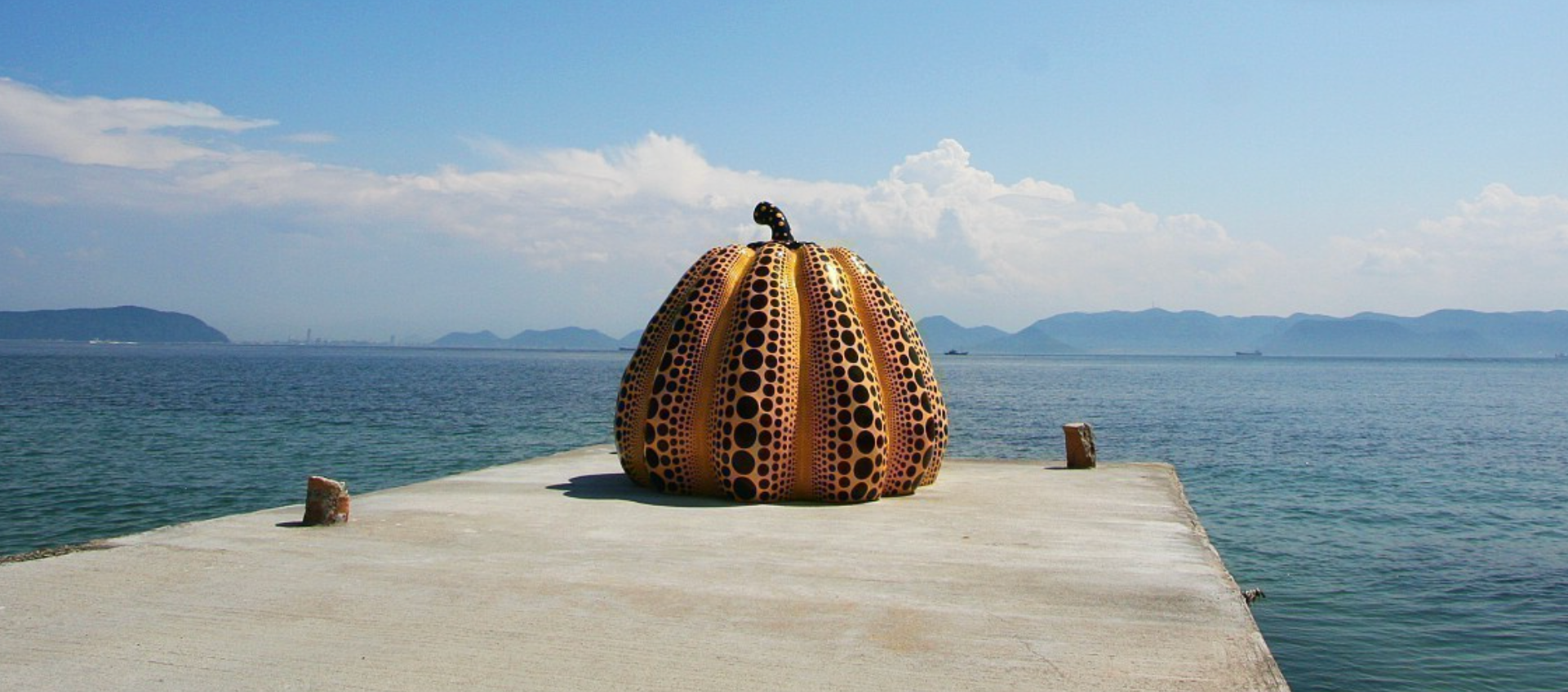
Of course my favorite was the yellow and black “pumpkin” that sits on the edge of a pier and stares into the endless abyss of the Seto Inland Sea. Anyone who has been lucky enough to have personally seen and interacted with one of Yayoi Kusama’s “pumpkins” knows what I mean when I say that it was simply joy. We got the opportunity to see the pumpkin at sunset when the sculpture’s silhouette softens as its bathed in the dimmer light as the horizon stretches into infinity. There was always a line to take pictures alongside “Yellow Pumpkin” but there were also many that simply took a minute to experience the harmony between art and the environment. In utter quietness and with the sun setting, the tranquility forces a deep exhale.
I came back home with a different appreciation for art… one that better understands that you don’t have to enter the doors of a museum to appreciate other people’s creativity. Rather, there is “art” for everything whether you’re into Old Masters such as Bruegel or the massive installation by Walter de Maria. Art- whether paintings or ceramics or architecture should all be treated with equal reverence because each can change how people live and connect with others.
