Hand Building: The Original Method
Why Hand Building Still Moves Us
Before the first potter’s wheel was ever spun, hands did the work. Clay, water, and quiet attention—this is the origin of ceramic form. Hand building is the oldest pottery method in the world, a slow, intentional practice that coaxes volume from earth without machinery. It’s a technique prized by contemporary ceramic artists for its expressive freedom and by collectors for the way it transmits touch across time. Every slight asymmetry, every thumbprint ridge, is a record of making—human, intimate, and enduring.
In this technique deep dive, we explore what hand building is, how it differs from wheel work, and why it continues to inspire today’s sculptural ceramics. Along the way, we’ll look closely at exceptional hand-built pieces from Trove Gallery’s makers—works that invite you to live with objects that carry the imprint of a life.
What Is Hand Building? Pinch, Coil, Slab—The Original Toolkit
Hand building refers to forming ceramics without a wheel. Three classic approaches—pinch, coil, and slab—can be used alone or together to shape walls, sculpt contours, and build architectural volumes.
Pinch begins with a ball of clay and a centered thumb. The maker pinches and turns, working from the base outward to create bowls and vessels whose walls subtly record every compression. Coil building stacks long ropes of clay, then blends the seams to create strength and height. Slab construction rolls sheets of clay and joins them like a tailor would panels of cloth, enabling sharp planes, carved windows, and crisp negative space. Press molds and simple supports—buckets, plaster forms, even folded cardboard—can help maintain curves while a piece firms up.
Because hand building is additive and sculptural, it invites irregularity—the elegant, wabi-sabi kind that collectors cherish. Surfaces tend to be more tactile: rasp marks, slip textures, and finger-smoothed seams become part of the piece’s identity. Firing then fixes those decisions in time. The result is a vessel that feels more like a portrait than a product—each contour a sentence in the story of its making.
From Antiquity to Atelier: The Enduring Language of Hand‑Built Vessels
Across ancient cultures, hand-built pottery held food, water, and meaning. Coils formed amphorae; slabs framed altar objects; pinch pots taught dexterity to new hands. Today’s artists return to these foundations not as a reenactment, but as a conversation—testing scale, surface, and silhouette against the past.
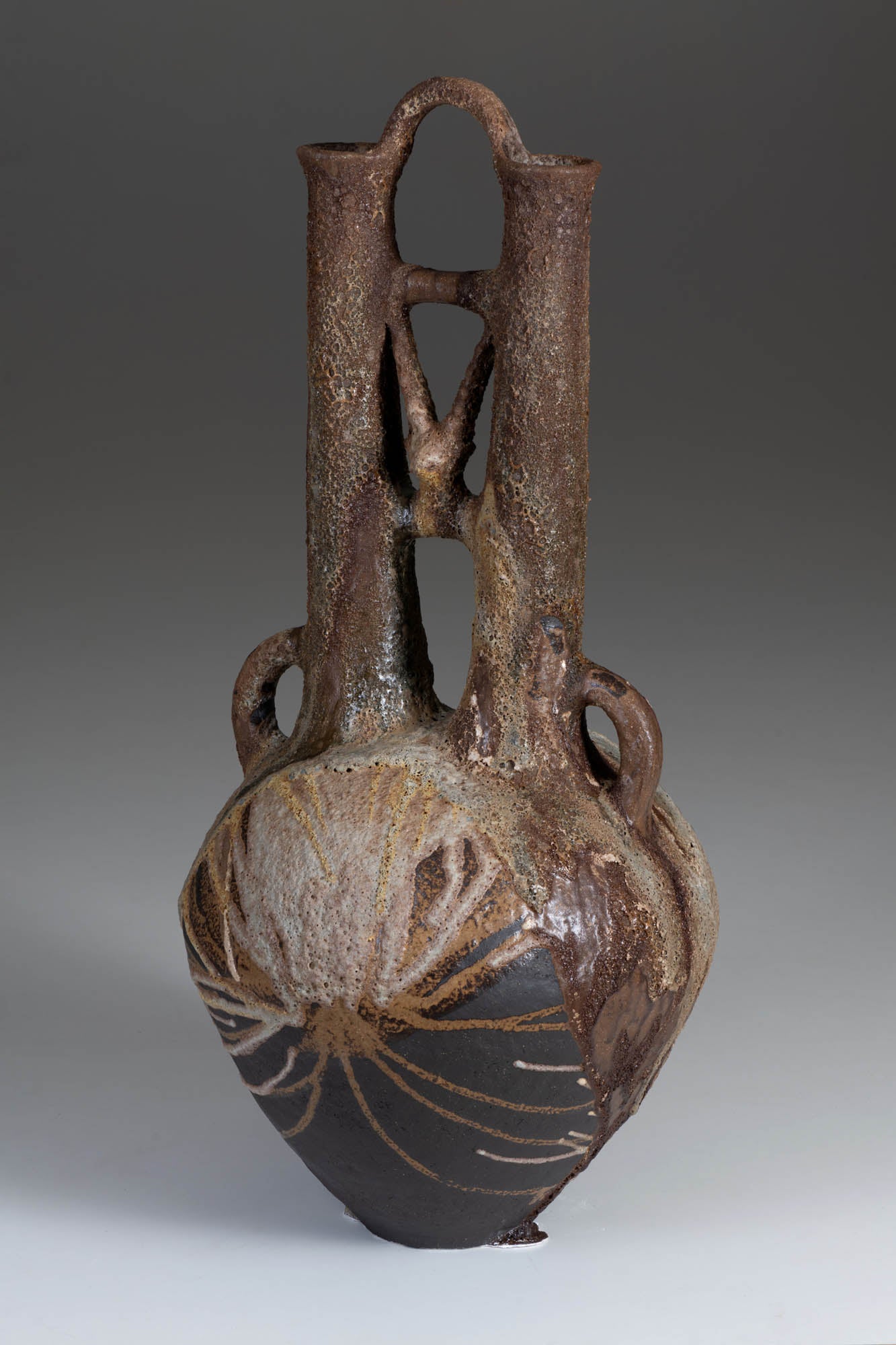
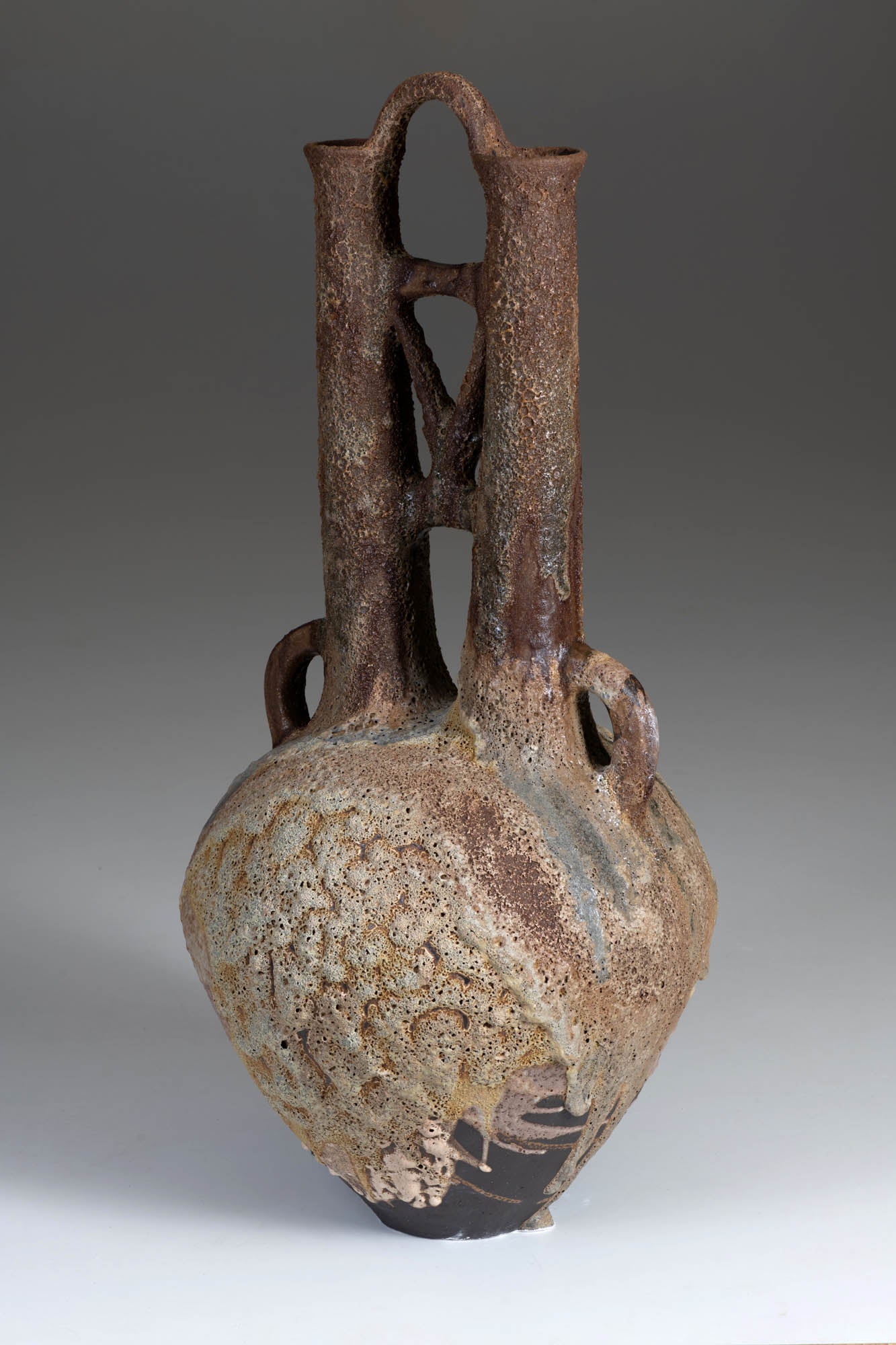
Consider the archaeological resonance of pieces by Melina Xenaki. Her Large Ashglaze Cypriot Burial Pot ($2,796.00) translates ritual forms into the present, drawing on the gravity of ancient Cypriot silhouettes while embracing a contemporary ash glaze that settles like mist across the surface. It’s the kind of work that feels both unearthed and newly born—classic volume, modern tactility.
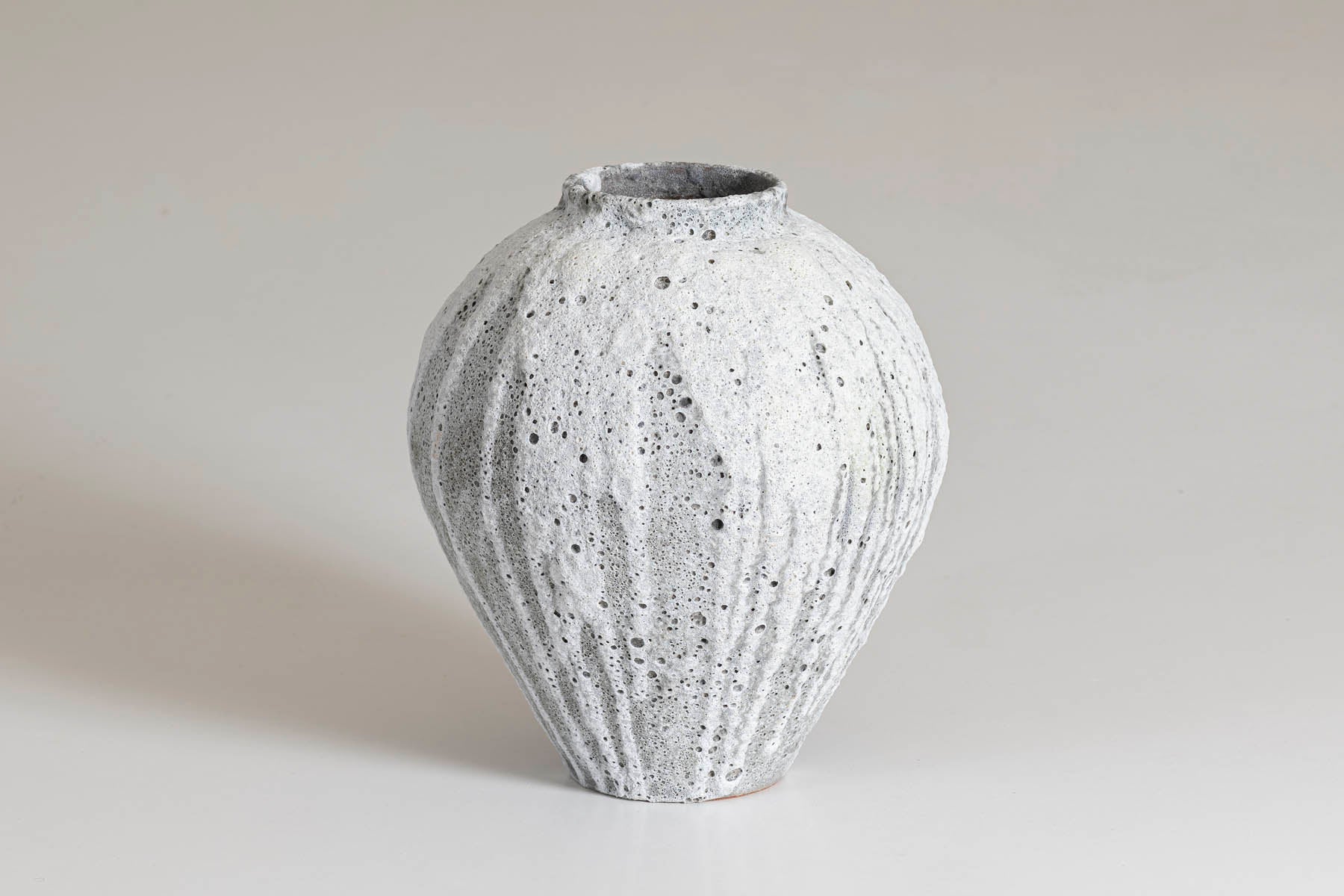
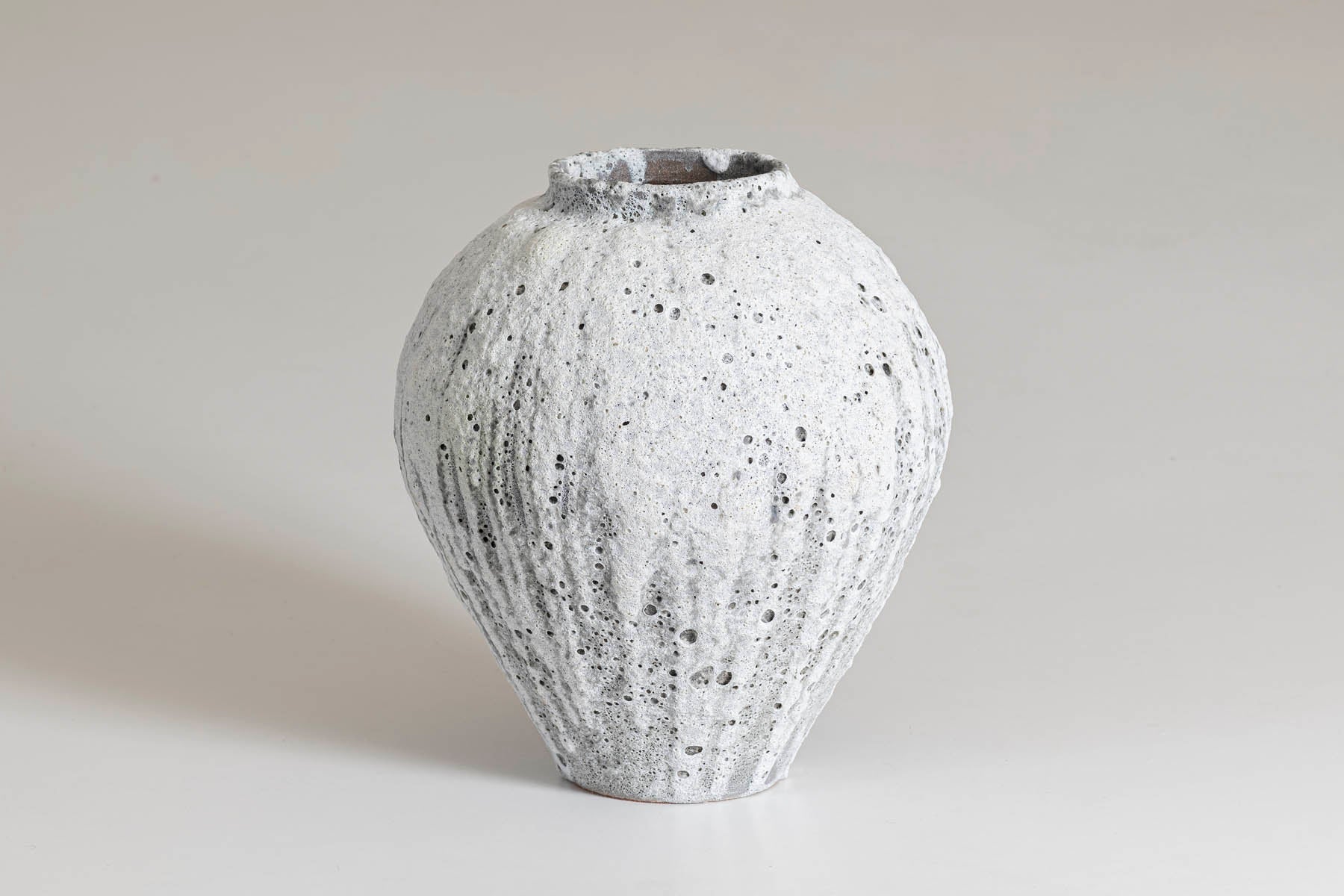
If the Cypriot pot leans toward ceremony, Xenaki’s White Crater Vessel ($902.00) explores topography. Here, the hand builds cratered skin—pockets, ridges, and small hollows that invite light to perform across the form. The surface might remind you of pumice or moonrock, but it’s made intimate by the way the artist’s gestures remain readable. On a plinth or mantel, it becomes both sculpture and landscape—an object of stillness that rewards close looking.
Look long enough at hand-built work and you’ll notice something: time is layered into it. The pause before joining a coil, the patience of smoothing, the restraint of not “perfecting” a line that is already eloquent. Collectors often describe the quiet of such pieces. They don’t clamor for attention; they anchor a room by holding it steady.
Sculptural Voices Today: Lucia Mondadori’s Totems and Vessels
Hand building is a language of structure and touch, and few speak it as fluently as Lucia Mondadori. Her work reveals a sculptor’s sensibility—stacked volumes, confident negative space, and surfaces that invite the hand. The Aisha Totem ($1,270.00) rises as a vertical poem: discs and cuffs of clay layered with fine balance, each element negotiating weight and air. It’s a piece that shows what coil and slab can achieve together—an architecture of calm.
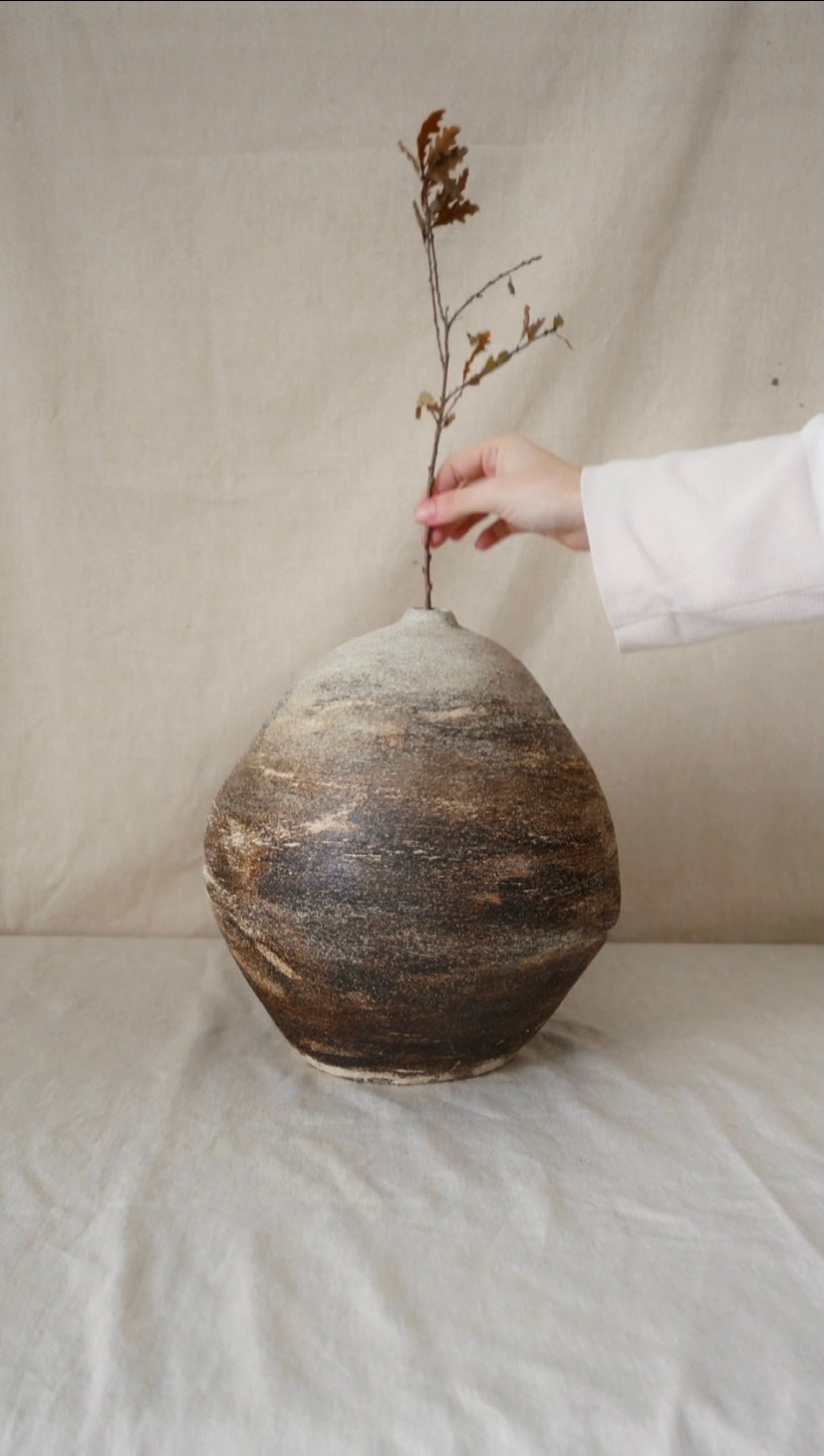
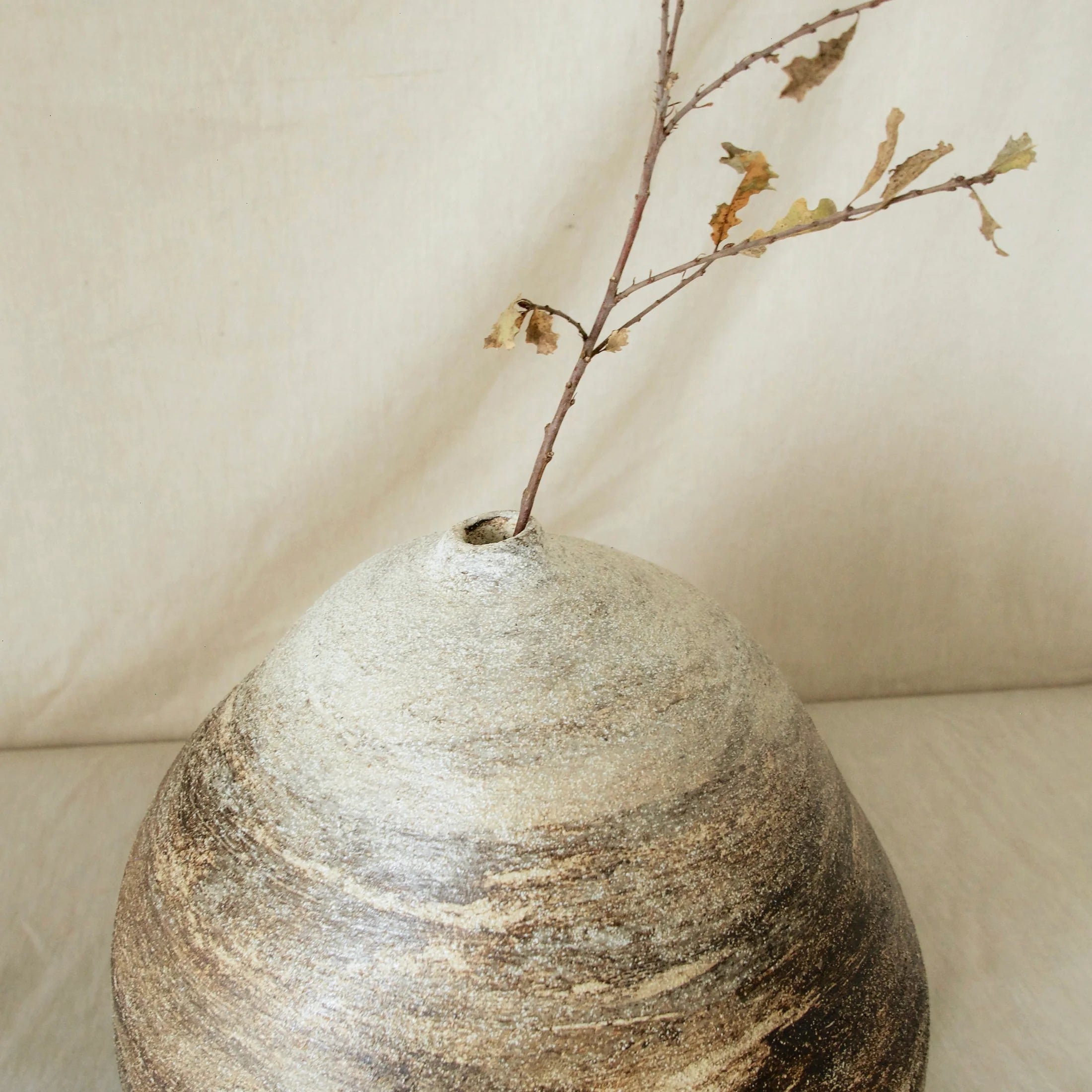
For collectors who love biomorphic silhouettes, Mondadori’s Arbo Stoneware Vessel ($713.00) offers a meditative presence. Its branching contours feel grown rather than made, the walls swelling and narrowing like a trunk that remembers a season’s wind. The matte stoneware keeps light soft, so your eye rests on form rather than shine.
Within her Lilith series, the drama deepens. The Black Lilith Grande Vessel ($251.00) delivers lean, sculptural posture with inky depth, while the Lilith Grande Vessel ($1,140.00) broadens into a fuller, architectural curve—two expressions of the same character: one nocturne, one aria. The Lilith Vessel ($1,149.00) completes the trio with a scale that suits shelves and consoles, offering quiet strength without dominating the space.
For a warmer, more intimate counterpoint, the Layla Vessel N°1 ($650.00) holds elegant proportion at a human scale. Its gentle transitions and hand-smoothed seams make it a perfect anchor for a vignette—paired with books, framed art, or a single branch. Together, Mondadori’s pieces demonstrate how hand building can move from geometric rigor to sensuous curve without losing coherence. Each vessel is a conversation between intention and serendipity—between designer and material.
Surface, Fire, and Feeling: The Tactile Alchemy of Hand‑Built Ceramics
Technique frames a vessel; surface gives it voice. The way an artist finishes a hand-built form—through slips, terra sigillata, burnishing, or glaze—determines what we notice first: color, texture, reflection, or the quiet of matte. Ash glazes, for instance, melt into glossy micro-landscapes that pool in recesses and thin over edges, emphasizing the geography of the build. A satin matte can mute reflections so that line and shadow take the lead.
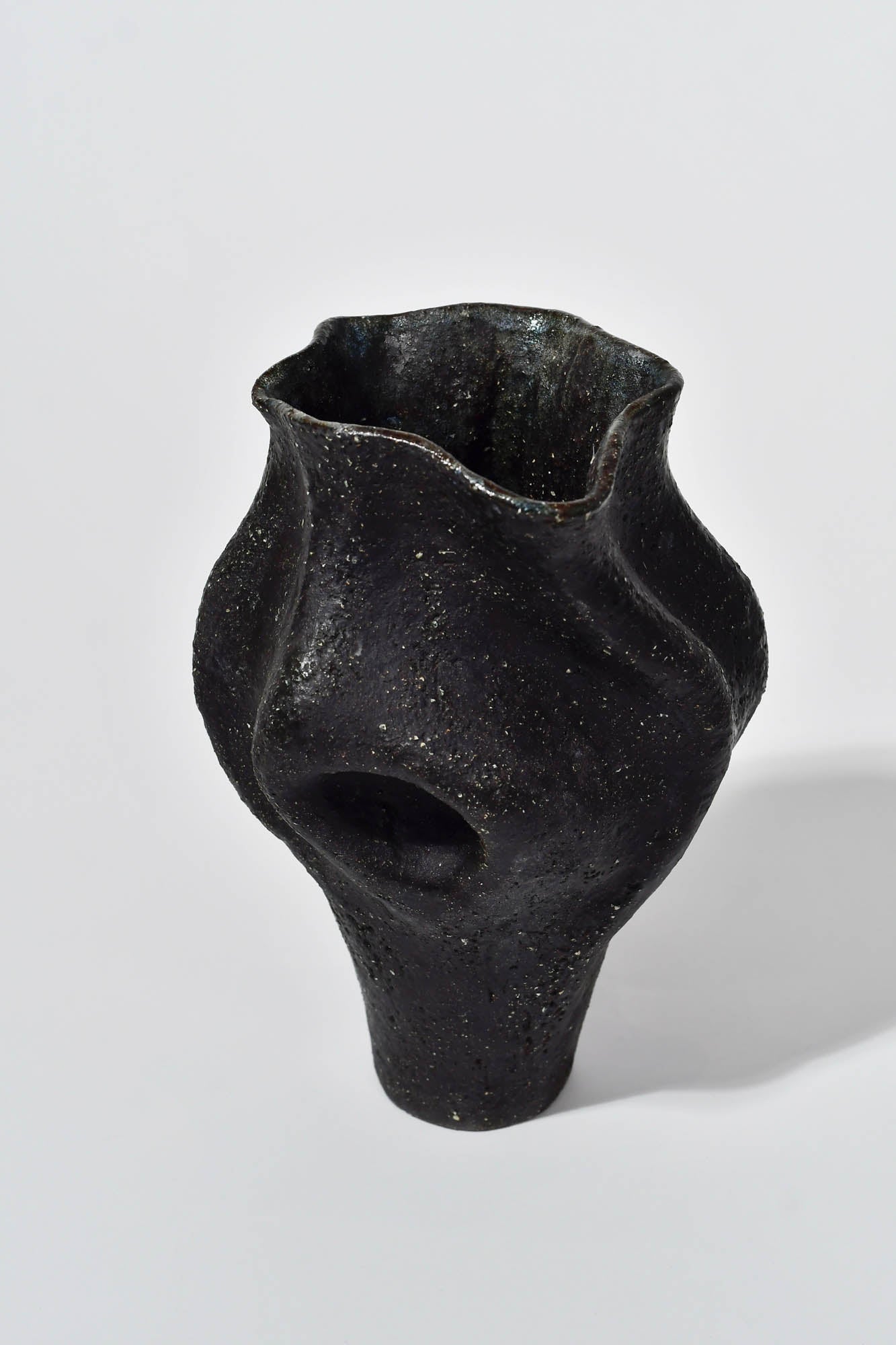
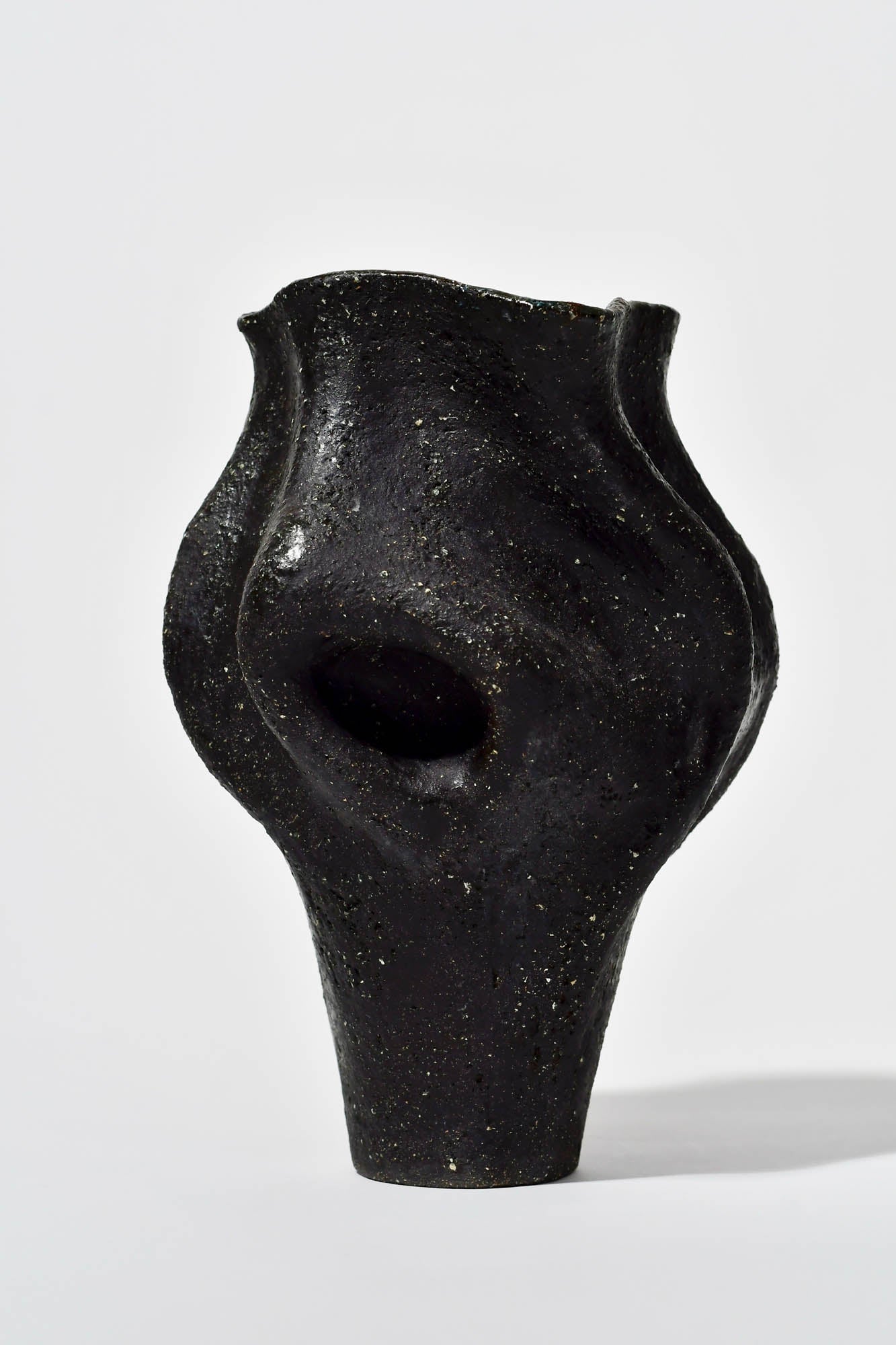
Emma Gautier of Omé Studios harnesses this sensitivity to surface in the Black Échos Vase ($636.00). True to its name, Échos reads like a low, resonant note: a slender carved profile and deep, smoky finish that accentuates every handcrafted transition. Whether coil-built and then refined or shaped with mindful slab work, the effect is the same—an elegant vessel that shows how negative space can be as expressive as the clay itself.
Hand building also makes room for purposeful texture. On Xenaki’s cratered surface, glaze settles differently from crest to trough, while on Mondadori’s totemic stacks, glaze can unify layered elements without washing out their distinct edges. The key is that the finish respects the form. When you run a hand along these pieces, the tactile cues reinforce what you see: this object was made by a person, deliberately. That recognition is at the heart of why hand-built ceramics feel luxurious—not because they are glossy, but because they are alive to the touch.
Dialogues in Form: Kiril Georgiev and Elina Zabeta
When collaborators share a studio language, hand building becomes a duet. The partnership of Kiril Georgiev and Elina Zabeta shows how restraint, proportion, and surface can harmonize across a series. Their vessels read like variations on a theme—each one distinct, all of them in conversation. Pieces such as Vessel #3 ($470.00) and Vessel #4 ($402.00) explore confident mid-scale silhouettes, inviting you to appreciate the quiet transitions from shoulder to neck and the subtle inflections that hand forming introduces.
With Vessel #5 ($402.00) and Vessel #6 ($369.00), the duo tightens their language: pared-down profiles, tactile surfaces, and a poised sense of volume that feels equally at home on a console or as a centerpiece. The series extends with Vessel #7 ($369.00) and Vessel #8 ($336.00), which introduce subtle shifts in height and mouth diameter—small decisions that change how the vessels cast shadow and hold space. Whether coil-built with refined seams or shaped and hand-finished to preserve softness, these forms demonstrate the poetic precision that hand building makes possible.
Collectors often ask how to group such pieces. One approach is to treat them as a suite: select two or three variations that share a surface but differ in height. Cluster them with breathing room so negative space performs alongside form. Another approach: pair a restrained silhouette with a more textural statement piece to create tension and release.
Curating, Styling, and Caring for Hand‑Built Ceramics
Choosing hand-built ceramics is an act of curation. Start with intent: do you want a contemplative anchor, a sculptural statement, or a textural counterpoint? For presence and gravitas, Xenaki’s Large Ashglaze Cypriot Burial Pot is a room-maker. For textural intrigue, the White Crater Vessel catches light in a way that rewards proximity. If you’re drawn to vertical rhythm, Mondadori’s Aisha Totem and Lilith Grande Vessel stage a compelling dialogue—stacked geometry meeting voluptuous curve. For a more intimate vignette on shelving or a nightstand, consider the Layla Vessel N°1 or Mondadori’s Lilith Vessel, which offer sculptural quiet at a human scale.
In minimalist settings, the deep tone of Omé Studios’ Black Échos Vase brings tonal contrast without noise. In spaces with organic palettes, Georgiev and Zabeta’s vessels—#3 through #8—can be grouped to create a soft skyline on a sideboard, their varied heights sketching a horizon line that shifts with the light throughout the day. For sculptural resonance, Mondadori’s Arbo Stoneware Vessel and the Black Lilith Grande Vessel make a striking pair: one organic and branching, the other taut and architectural.
Styling tips for balance and scale: give significant pieces breathing room—at least the width of your hand around the vessel—to let shadow articulate the form. Create visual triangles: a tall totemic piece like Aisha Totem can be balanced by a medium vessel such as Lilith Vessel and a low stack of books. Keep materials in dialogue: linen, oak, and stone pair beautifully with matte stoneware; polished brass makes an elegant foil for dark ceramic surfaces.
Caring for hand-built ceramics is simple. Dust with a soft, dry cloth; avoid abrasive pads that can burnish matte finishes. For vessels intended for floral arrangements, consider a glass insert if you plan on using water regularly, and always lift from the body rather than the rim. Felt pads under bases protect shelves and stone. Most importantly, position pieces away from persistent direct sun if you prefer surfaces to age slowly and evenly.
Hand building is, at heart, an ethics of attention. It asks the maker to move slowly and the collector to look closely. In a world of quick impressions, that attentiveness is a luxury—one you feel every time your eye returns to a subtle curve or a seam that almost disappears under your fingertips.
Ready to live with the quiet power of hand-built form? Explore the full spectrum in our curated selection of hand-built ceramics, or dive into the maker pages for deeper stories: Lucia Mondadori, Melina Xenaki, and Kiril Georgiev and Elina Zabeta. When you collect a hand-built vessel, you’re not only choosing an object—you’re inviting the maker’s time and touch into your home.