Raku: Fire and Chance
Raku, at the Edge of Flame
Raku is the art of inviting chance to the table. In this centuries-old Japanese ceramic technique, vessels leave the kiln incandescent and enter a world of oxygen-starved smoke where chemistry and intuition finish the work. The result is instantly recognizable: glassy crackle, metallic flashes, and smoky veils that seem to hold the breath of fire itself. For collectors and design lovers, raku is more than a surface—it’s a story of risk, ritual, and reward, told in shimmering, imperfect beauty.
At Trove Gallery, we celebrate the way artisans translate this elemental dance into objects for daily life—ceramic, glass, leather, and even fur-trimmed furnishings that echo raku’s tactile drama. This deep dive explores raku’s origins and process, the hallmarks collectors seek, and a curated selection of artisan pieces that carry the spirit of fire into the home.
Ready to see the work up close? Explore our maker collections: Gilles Caffier, Noe Kuremoto, Faustine Telleschi, Anna von Lipa, Frantisek Jungvirt, Marcela Cure, and Nadia Stieglitz.
From Kyoto Courtyards to Contemporary Studios
Raku ceramics trace their lineage to 16th-century Kyoto and the tea master Sen no Rikyū, whose wabi-sabi aesthetic—earthy, sparse, and deeply attentive—reshaped Japanese culture. The earliest raku bowls were hand-formed by the Raku family, then low-fired and rapidly cooled to lock in character. Over centuries, the spirit of raku crossed oceans. Western studio potters adopted post-firing reduction—removing glowing pieces from the kiln and plunging them into combustible materials—to amplify the crackle patterns, carbon blacks, and lustrous sheens that collectors now prize.
While traditional Japanese raku and Western raku differ in process, the philosophy is shared: a reverence for imperfection and the eloquence of accident. Each piece becomes a record of heat, touch, and timing. Small changes in glaze thickness, kiln atmosphere, or the placement of a single wood shaving can shift a surface from chalk-white crackle to oil-slick iridescence. The potter collaborates with the elements—and then lets go.
At Trove, we’re captivated by makers who channel this ethos across media. The Japanese-British sculptor Noe Kuremoto considers ancestral forms through a contemporary lens. French artist Faustine Telleschi builds kinetic, ruffled ceramics that capture movement frozen in time. And Paris-based Gilles Caffier translates raku’s tactile drama into lighting and furniture with nuanced, hand-worked surfaces that glow like ember-light in the evening.
The Raku Process: Heat, Air, Smoke
Every raku piece begins with clay—often a grog-rich body that tolerates thermal shock. The vessel is bisque fired, then glazed with crackle or luster formulas. From there, the choreography begins.
First, the glaze fire. A raku kiln climbs quickly, often to the 900–1000°C range. Then the artist opens the kiln while the glaze is molten. Using long tongs, they lift the glowing piece into open air—where the sudden temperature shift arrests one part of the glaze’s chemistry and ignites the next.
Next, reduction. The incandescent piece is set into a nest of combustible material—sawdust, newspaper, straw, even cedar shavings. Smothered with a lid, the chamber goes oxygen-poor. Carbon penetrates the crackle network, tracing the hairlines with dramatic ink-black contrast. Metallic oxides in luster glazes flash to copper, bronze, or peacock tones. When the chamber is opened, smoke rises and time resumes. The pot is cooled, washed, and revealed—one-of-a-kind, no matter how carefully the steps repeat.
For collectors, the hallmarks of quality raku include balanced crackle (a network of varied but cohesive lines), intentional luster (not overly smoky or cloudy), and forms that complement the surface—the canvas must serve the flame. Care is simple but specific: raku is porous; it’s typically not for food or water unless explicitly sealed. Dust gently and avoid prolonged moisture; think of it as you would a fine leather—patina is part of its charm.
Curated Works: The Spirit of Raku in the Home
Consider the soulful presence of a single raku or raku-inspired piece in a room. It anchors the gaze, softens modern lines, and invites touch. Our curation brings together ceramics, glass, and mixed media that harmonize with raku’s elemental palette—charcoal, chalk white, mineral green, coppery iridescence—and its love of texture and light.
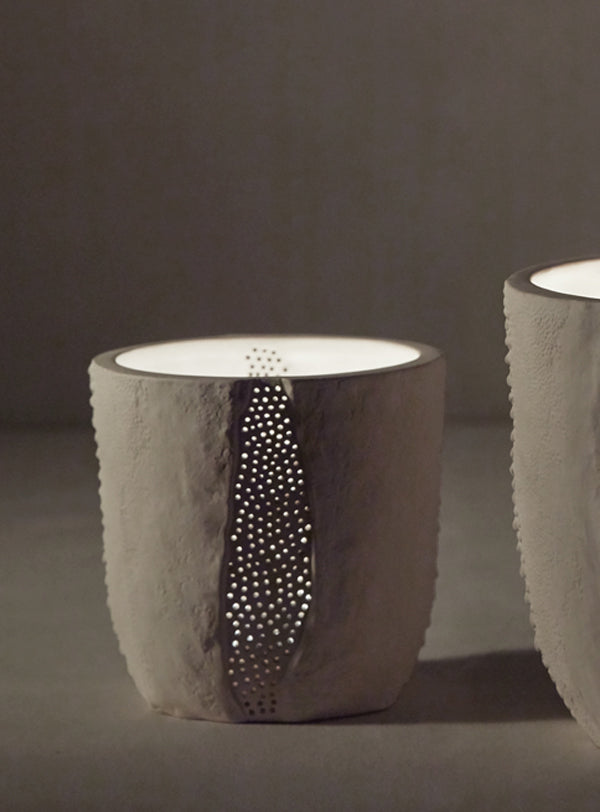
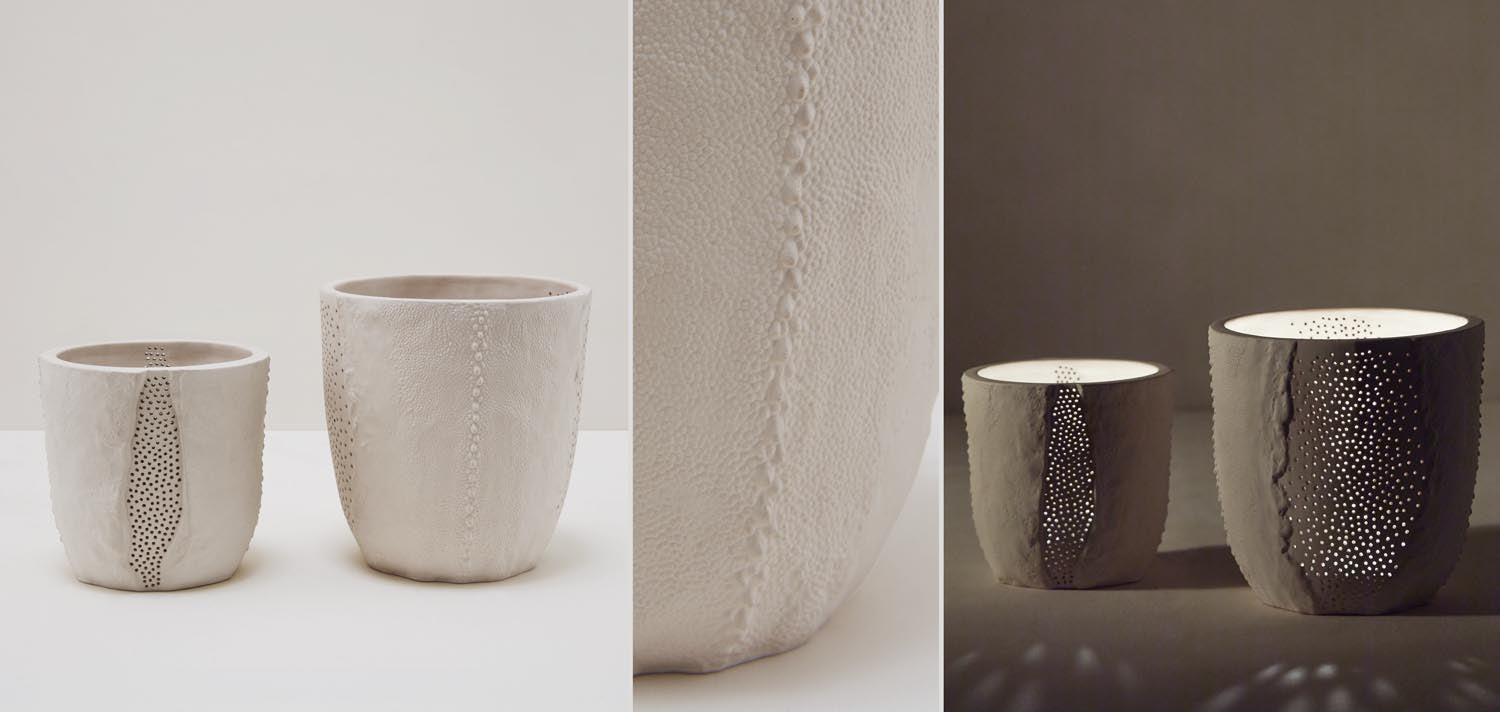
Begin with an intimate glow. The Shagreen Votive by Gilles Caffier ($213.00) pairs a pebbled, hand-finished surface with candlelight to amplify tiny shadows—an effect that mirrors raku’s crackle but in leather-inspired relief. On a dining table or console, it reads like a small hearth, equally elegant solo or in clusters.
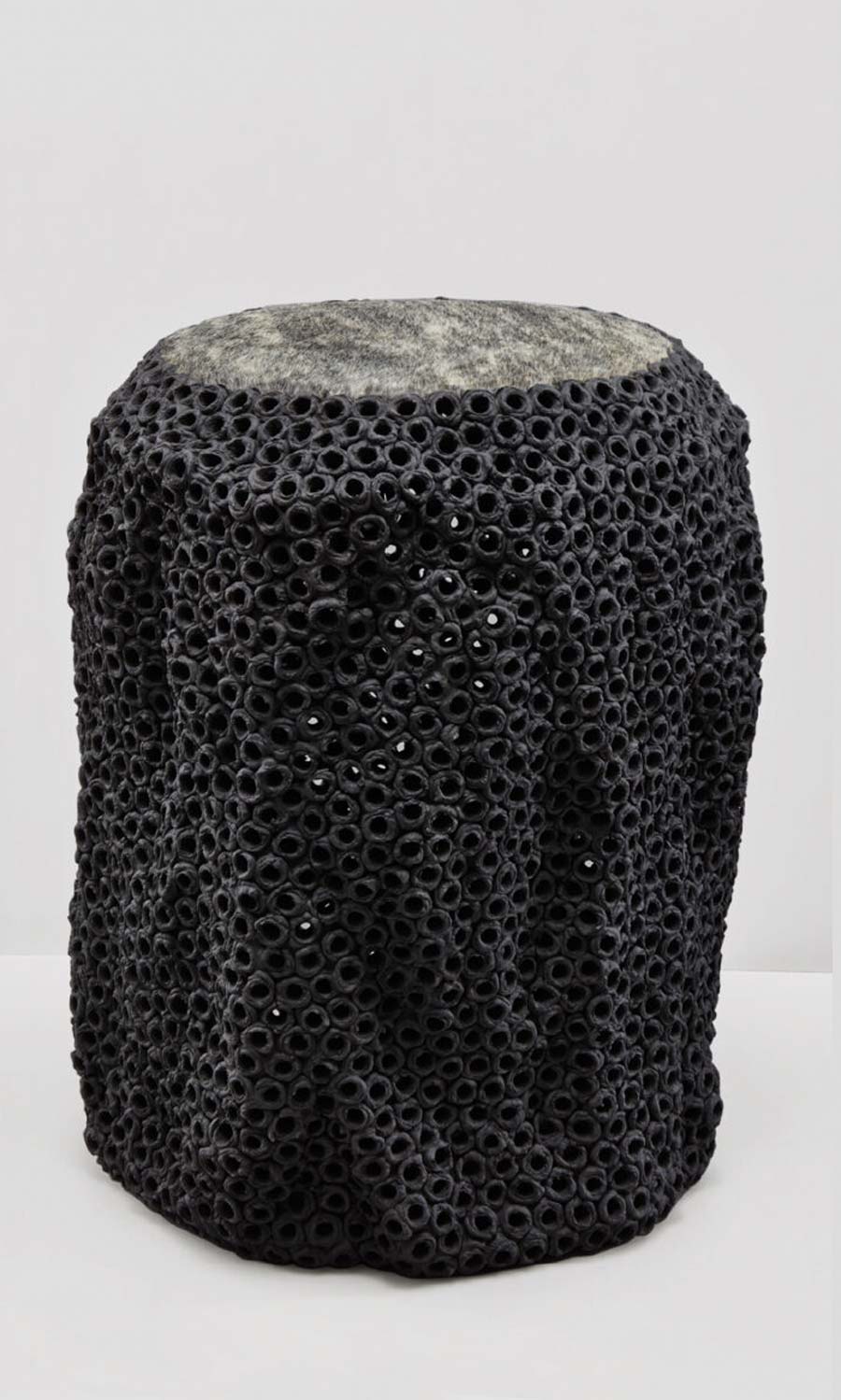
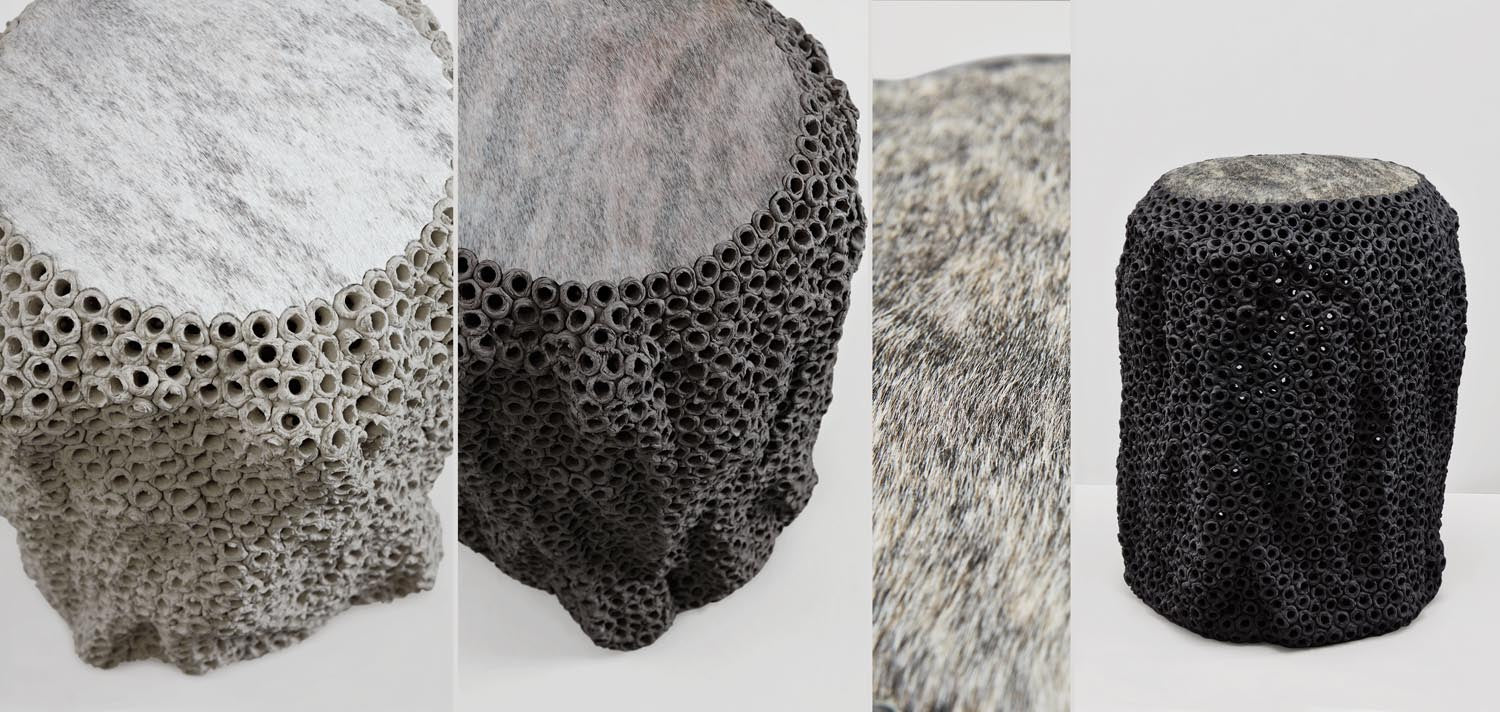
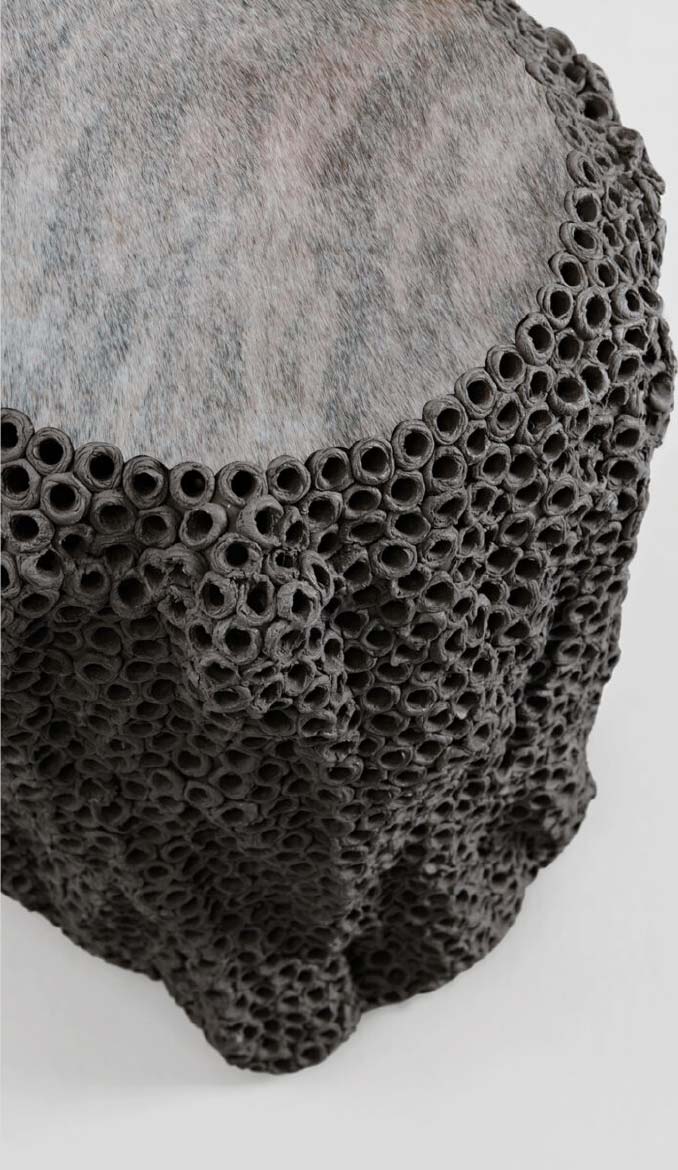
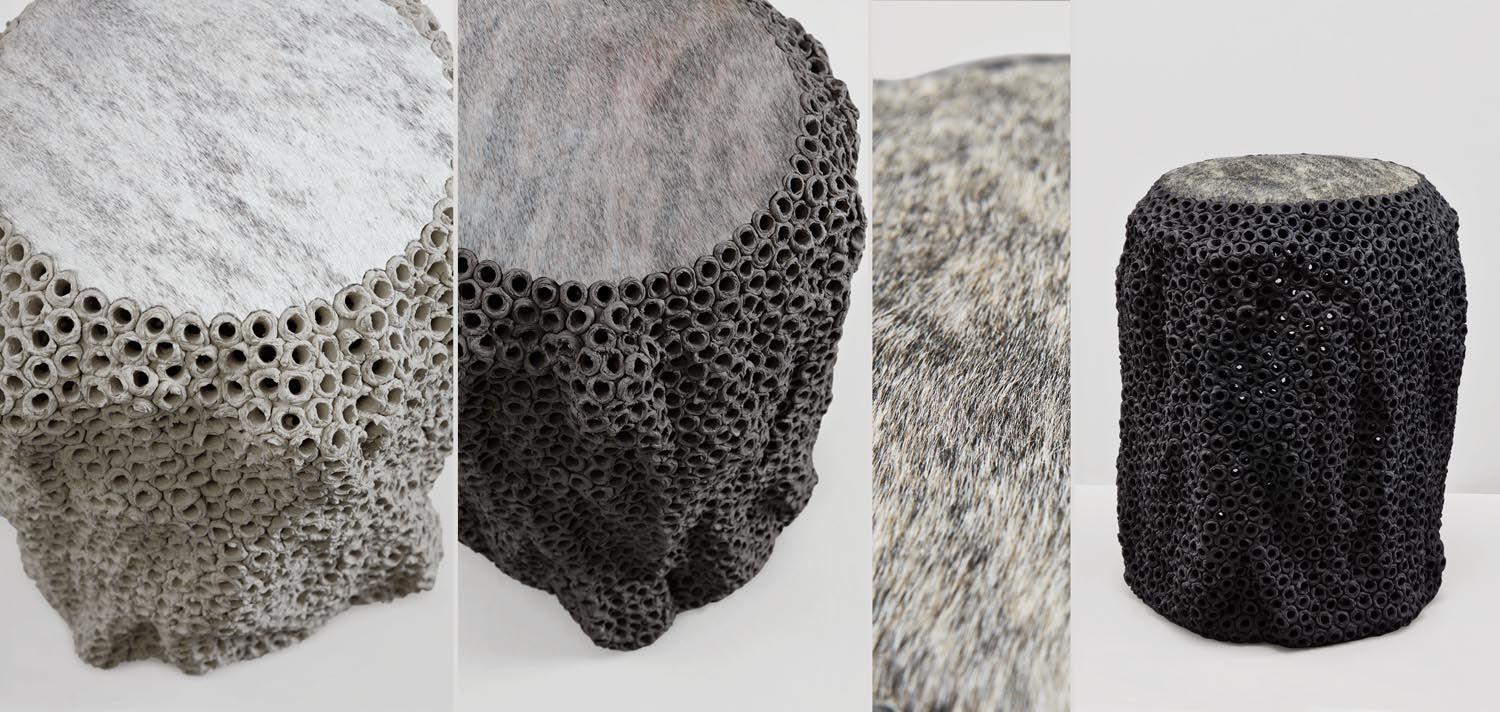
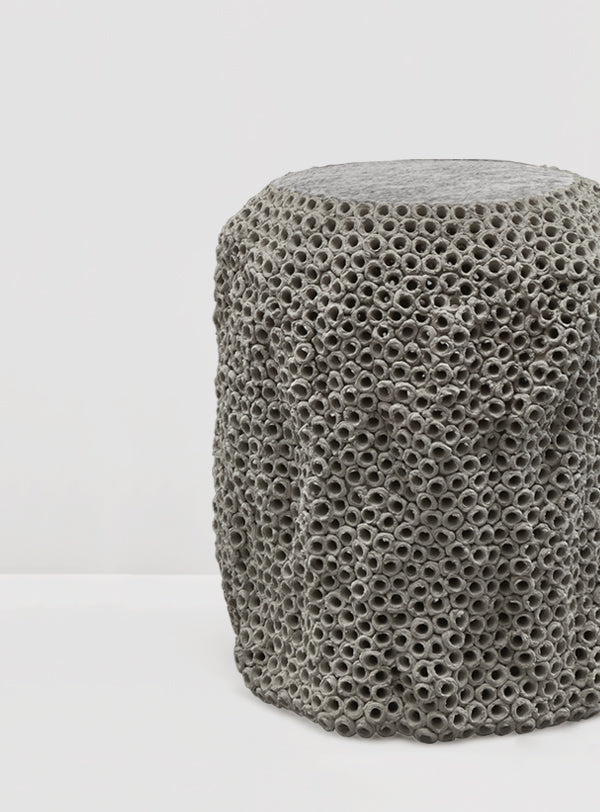
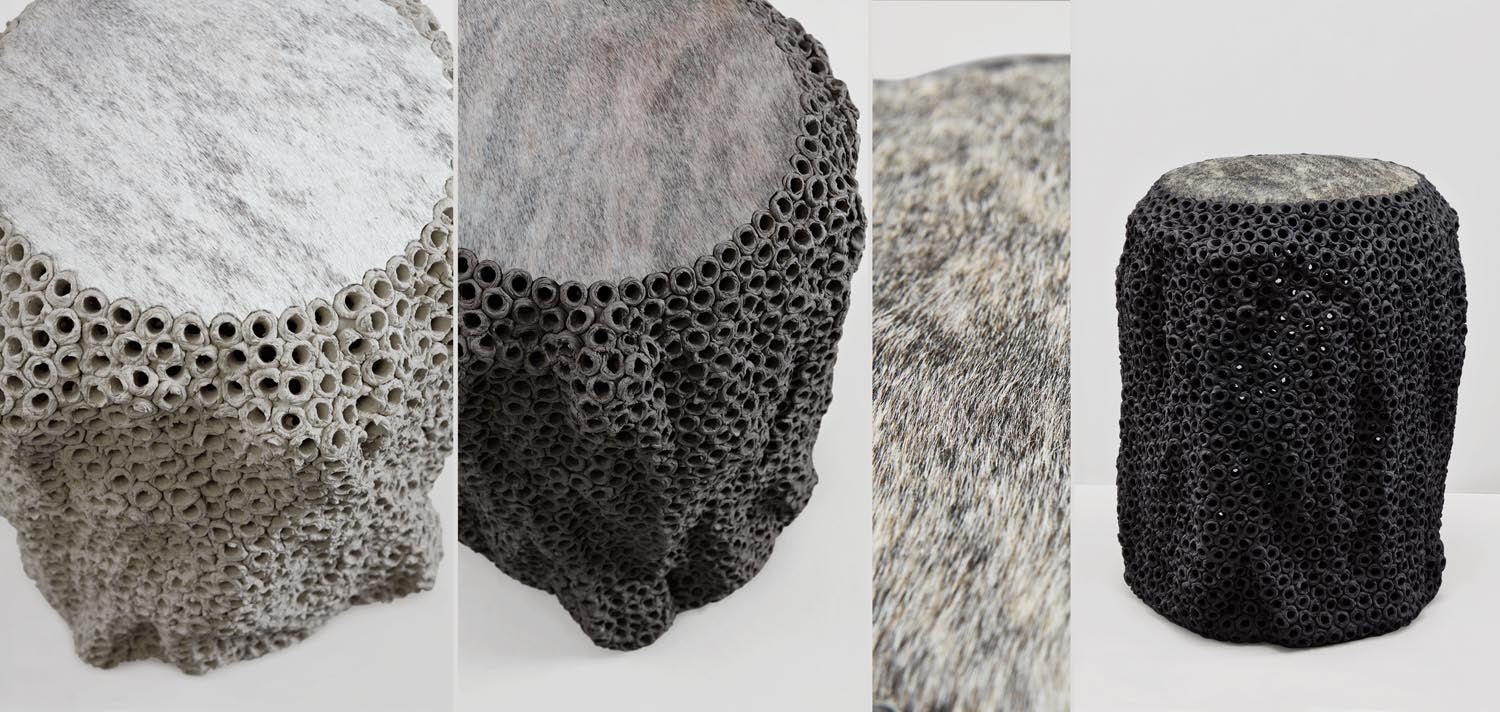
For sculptural seating with tactile contrast, Caffier’s trio of stools—Black Fur Covered Stool, Brown Fur Covered Stool, and Gray Fur-Covered Stool (each $2,347.20)—juxtapose crisp structure with soft, luxurious fur. Their material richness echoes the way raku glazes play matte against gloss; place one beside a fireplace or reading corner and the room gains a quiet, tactile drama.
Lighting is where raku’s spirit truly shines—edge-lit textures reveal themselves at dusk. The Coral Lamp ($2,254.80) wears a branchwork silhouette and a hand-finished skin that catches light like tide-washed stone. For a softer, tailored presence, the Leather Table Lamp ($2,071.20) brings a raku-inspired patina to leather, the low, ember-like glow enriching its surface without glare. Both sit beautifully on a console or beside a favorite chair, adding the hush of a gallery to everyday moments.
Caffier’s vessels perform the same balance of restraint and detail. The Tall Pangolin Vase ($1,296.10) features a scale-like relief that reads as mineral and animal at once—an exquisite counterpoint to pared-back interiors. The Cactus Vase ($2,106.00) takes a bolder silhouette, its ribs and shadows recalling desert light. While not raku-fired, their surfaces speak fluently with raku ceramics on the same shelf—texture converses with crackle, gloss with shadow.
To connect directly with Japanese ceramic heritage, look to Haniwa Warrior 93 ($1,700.00) by Noe Kuremoto. Inspired by ancient haniwa funerary figures, this sculpture embodies the dignity of form and the humility of clay. Its presence is quiet yet monumental—the kind of piece that recalibrates a space and rewards close looking.
Surface stories continue across our global roster. The Distressed Sardinia Vessel ($732.00) by Àlvar Martínez Mestres features a hand-worked skin that feels sea-salted and sun-worn, a natural pairing to raku’s smoky veils. Ruffles Vase ($534.00) by Faustine Telleschi captures motion in clay; its rhythmic ridges catch highlights the way a raku crackle matrix does, animating even a neutral palette.
Glass, too, is a child of fire. The Confetti Carafe ($214.00) by Anna von Lipa brings playful color and clarity to the table, a joyful counterpoint to raku’s meditative tones. For a more minimalist lens on light, Transparent Garden Vessel ($825.00) by Frantisek Jungvirt acts like a vitrine for stems and shadows—its purity lets a raku piece beside it breathe even deeper.
At the apex of sculptural craft, Septem ($8,250.00) by Marcela Cure offers a refined, architectural presence—seven elements held in lyrical balance. And for those drawn to tactile, jewelry-like compositions in clay, Parure 8 ($2,800.00) by Nadia Stieglitz layers forms in a way that feels both intimate and monumental, a wearable sensibility scaled to the wall or pedestal.
How to Style Raku and Raku-Inspired Objects
Raku is inherently textural and emotive. To let it sing, build negative space around it. On a bookshelf, pair a raku or raku-inspired vessel with something clear or reflective—glass, mirror, polished stone—so its smoky mattes and pinpoint glosses stand out. The Transparent Garden Vessel is a natural counterbalance; together they create a rhythm of light and shadow. Add a single branch or dried stem to guide the eye along a vertical line.
For a console or mantle, heighten the interplay of warm and cool light. Set the Coral Lamp at one end and anchor the other with the Tall Pangolin Vase or Cactus Vase. Place the Shagreen Votive between them; candlelight will pick up micro-textures that overhead lighting misses.
In living spaces, texture is your palette. A fur-topped stool introduces soft shadow and tactile depth; the Black Fur Covered Stool beside a stone coffee table creates an elegant temperature contrast—cool mineral, warm fiber. If you prefer a lighter palette, the Gray Fur-Covered Stool echoes raku’s ash whites and charcoals; the Brown Fur Covered Stool reads as earth and ember.
For the dining table, mix ritual with play. A raku-inspired centerpiece can feel contemplative; offset it with the crystalline color of the Confetti Carafe to add a celebratory note. In an entry, a single figurative work like Haniwa Warrior 93 greets guests with calm gravitas; let it stand relatively alone, perhaps with a shallow dish for keys and a tall, minimal lamp.
Collecting with Intention: What to Look For
Whether you’re new to raku or refining a collection, consider three lenses: surface, form, and narrative. Surface first: examine the crackle. Does it feel naturally varied, with lines that thread and diverge like river deltas? Carbon should sit confidently in the network, not muddy the glaze. Luster should shift in light—copper to bronze, peacock to graphite—without collapsing into dullness.
Second, form. Raku favors forms that allow the surface to breathe—spherical, cylindrical, or gently faceted. Sharp elaboration can distract unless it’s integral to the piece’s energy. Look for silhouettes that show restraint, because the drama is in the skin.
Third, narrative. The best raku holds a story of process and place. When a piece brings a personal connection—an artist’s lineage, a technique learned from a master, or a material memory—the experience deepens. That’s why we pair raku with works from complementary disciplines. The discipline of glass in Frantisek Jungvirt’s studio, the tactile intelligence of Gilles Caffier’s lighting and furniture, the historic echo in Noe Kuremoto’s figures—together they amplify a room’s sense of craft and care.
For those building a capsule collection, we often recommend a trio: a meditative vessel (consider Ruffles Vase or Distressed Sardinia Vessel), a sculptural focal point (Haniwa Warrior 93 or Septem), and a light source that activates texture (Leather Table Lamp or Coral Lamp). This simple framework gives you balance: vessel for quiet, sculpture for presence, light for life.
Care is straightforward. Keep raku and raku-inspired pieces away from prolonged dampness; dust with a soft cloth and avoid harsh cleaners. If a vessel is unsealed and decorative, use dry arrangements—branches, grasses, or sculptural blooms. Respect the material, and it will reward you with a lifetime of changing light.
Fire, Chance, and a Home that Breathes
Raku finds beauty where control meets surrender. That’s why these objects feel alive—they’re artifacts of a moment when elemental forces were held, briefly, in human hands. In a home, that energy reads as warmth and authenticity. It softens modern edges, enlivens neutrals, and reminds us that the things we live with can be both useful and poetic.
If raku has captured your imagination, explore the pieces named here and the makers behind them. Visit our collections for deeper context: Gilles Caffier, Noe Kuremoto, Faustine Telleschi, Anna von Lipa, Frantisek Jungvirt, Marcela Cure, and Nadia Stieglitz. Or jump straight into the artworks: Shagreen Votive, Black Fur Covered Stool, Brown Fur Covered Stool, Gray Fur-Covered Stool, Coral Lamp, Leather Table Lamp, Tall Pangolin Vase, Cactus Vase, Haniwa Warrior 93, Confetti Carafe, Distressed Sardinia Vessel, Transparent Garden Vessel, Septem, Ruffles Vase, and Parure 8.
Bring home the glow of fire and the grace of chance. Shop the collection today, or contact our curators for personalized guidance on building a raku-centric display that feels unmistakably yours.