Nerikomi: Master Technique Explained
What Is Nerikomi? The Allure of Patterned Clay
Nerikomi is the quiet thrill of pattern revealed in cross-section: color, clay, and time arranged into stripes, checks, florals, and gradients that run all the way through a ceramic form. Unlike surface painting, Nerikomi builds design within the body of the clay itself, so the motif is not fragile decoration but structure—resilient, authentic, and mesmerizing from every angle. Originating in Japan, nerikomi (closely related to neriage) celebrates colored porcelain or stoneware that’s layered, compressed, and sliced to expose a living tapestry of pattern. For collectors who value craftsmanship and authenticity, it’s a technique that feels both modern and timeless—luxury without pretense.
At Trove Gallery, we gravitate to techniques that honor material truth. Whether you’re seeing the smoky gradients of a pit-fired vase, the geological character of a textured vessel, or the kaleidoscopic optimism of mouth-blown glass, the same ethos applies: process becomes story. As you explore nerikomi, you’ll encounter that story in every line, seam, and slice—patterns that are not painted on but part of the clay’s very identity.
Nerikomi vs. Neriage: A Brief History and Vocabulary
Both nerikomi and neriage use colored clays to create visual pattern, but in practice makers often use the terms fluidly. Some define neriage as marbling and throwing on the wheel while nerikomi emphasizes stacked, laminated blocks that are sliced and assembled by hand. In either case, the magic comes from building design internally and then revealing it through careful cross-sections.
Common motifs include:
- Linear stripes: parallel or shifting bands that read like woven textiles.
- Checkerboards and tessellations: modular grids that can be scaled or skewed.
- Organic “millefiori”-like blooms: floral or radial patterns created by bundled canes.
- Gradients and fades: subtle tonal transitions achieved by blending clay bodies or stains.
- Topographic swirls: geological veining that evokes marble, stone, or woodgrain.
The resulting surfaces can be finished matte for a soft, paper-like tactility or glazed to heighten color and depth. Either way, the pattern is there even if you sand or trim—because it’s the clay.
The Master Technique: How Nerikomi Is Made
The heart of nerikomi is patience. From the first tint of clay to the last polish, each stage builds integrity and precision.
1) Coloring the clay
Makers begin with a clean, consistent clay body—often porcelain for crisp edges and luminous color. Oxide or ceramic stains are wedged into portions of clay to create a chosen palette. The key is even dispersion and moisture parity; if one color is wetter or stiffer than another, seams can fail later.
2) Conditioning and compression
Once the palette is ready, colored clays are sheeted or extruded into layers. Compression matters—like laminating veneer—so the stack behaves as a single billet. Makers use ribs, paddles, or rolling pins to align particles and remove trapped air while maintaining even thickness.
3) Building the pattern “cane”
Stripes, checks, and motifs are built by combining layered slabs into canes or blocks. Imagine stacking a zebra array of thin white and black layers, then slicing and rotating pieces to form a chessboard; repeat, and complexity multiplies. To create floral tessellations, thin rods (canes) of color are bundled, compressed, and sometimes wrapped with contrasting clay like a frame. Each press and trim sharpens the final design.
4) Slicing to reveal
With wire or taut blade, the maker slices fresh cross-sections from the patterned billet. Each slice is a snapshot: a moment in the cane’s geometry. Those slices become tiles for assembly.
5) Forming the object
Slab-built vessels and sculptural forms are common in nerikomi because they allow patterns to meet cleanly along seams. Artists carefully score and join slices, sometimes adding solid clay for rims or bases. On the wheel, some wrap patterned slabs around a thrown core or throw with marbled clay to create neriage effects. Drying is slow—covered and staged—so internal stresses don’t distort the pattern.
6) Finishing and firing
Edges are refined when leather-hard to avoid smearing colors. Some artists apply a clear glaze to intensify saturation; others prefer satin or matte finishes for a paper-ceramic feel. Firing respects the clay body’s range, with steady ramps to safeguard laminated seams. The result: a vessel whose story is structural, not superficial.
Reading Pattern: What Collectors Should Look For
A keen eye can spot good nerikomi at arm’s length. Look for crisp, uninterrupted lines that carry through seams and around curves. Patterns should feel intentional—edges clean, corners aligned, curves continuous. In cross-section, you may see how stripes taper or thicken near joints; that variation reveals the maker’s control. On rims and bases, the pattern should remain present rather than vanish beneath heavy slip or glaze.
Equally telling is restraint. Strong work knows where to let the clay breathe—unpatterned borders at a rim, a quiet base, or a single color insert that frames the composition. If the surface is glazed, ask whether the glaze enhances the pattern or smothers it. If matte, run a fingertip across transitions: you should sense harmony, not steps.
Collectors often compare nerikomi to textile arts, marquetry, or stone inlay. That’s apt. What you are really collecting is the discipline of alignment—pattern as architecture.
Cross-Material Dialogues: Pieces That Echo Nerikomi’s Spirit
At Trove Gallery, we love placing nerikomi alongside works that celebrate process, pattern, and material integrity. The conversation across mediums yields a richer interior. Consider these pieces—each unique in technique, all resonant with the ethos of pattern made honest.
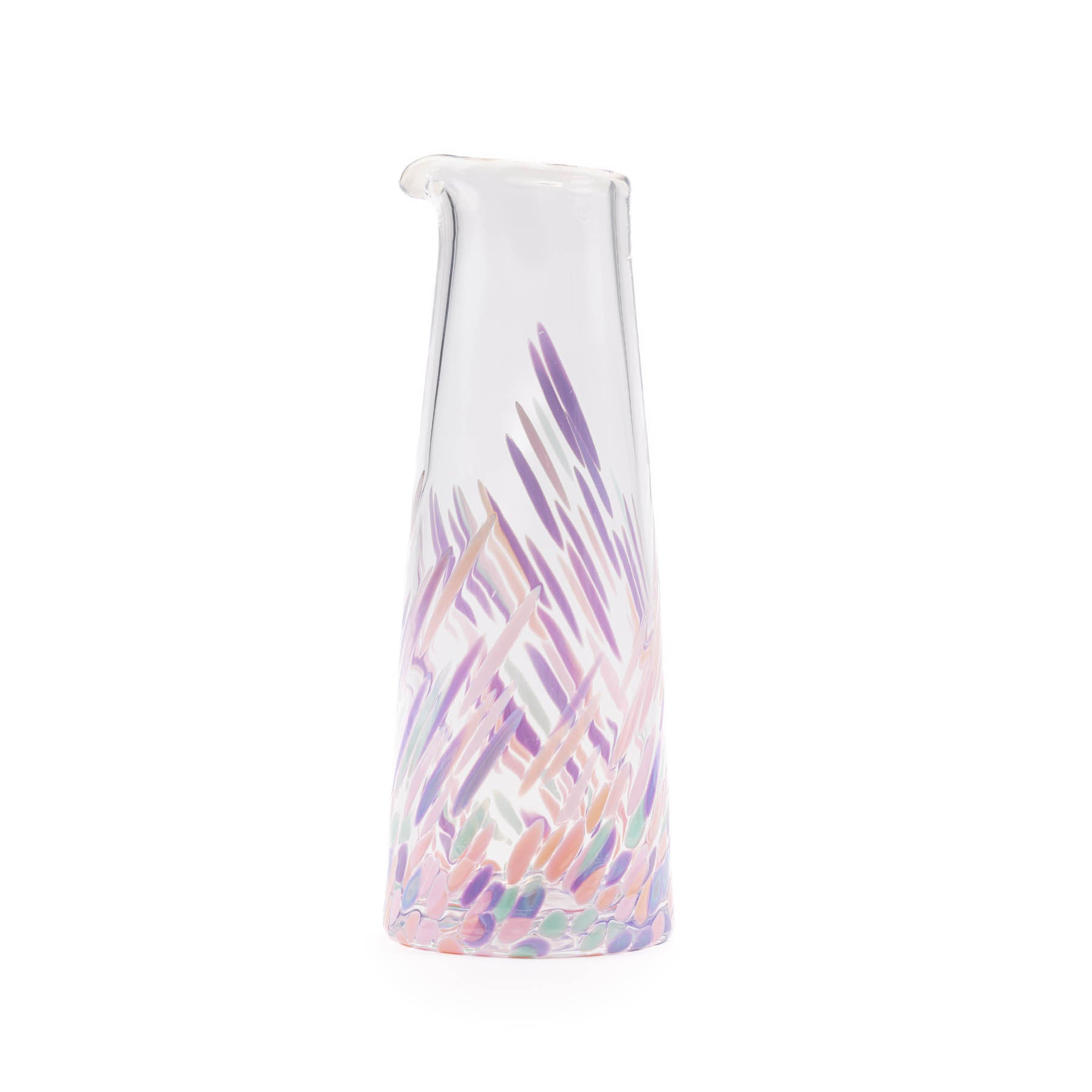
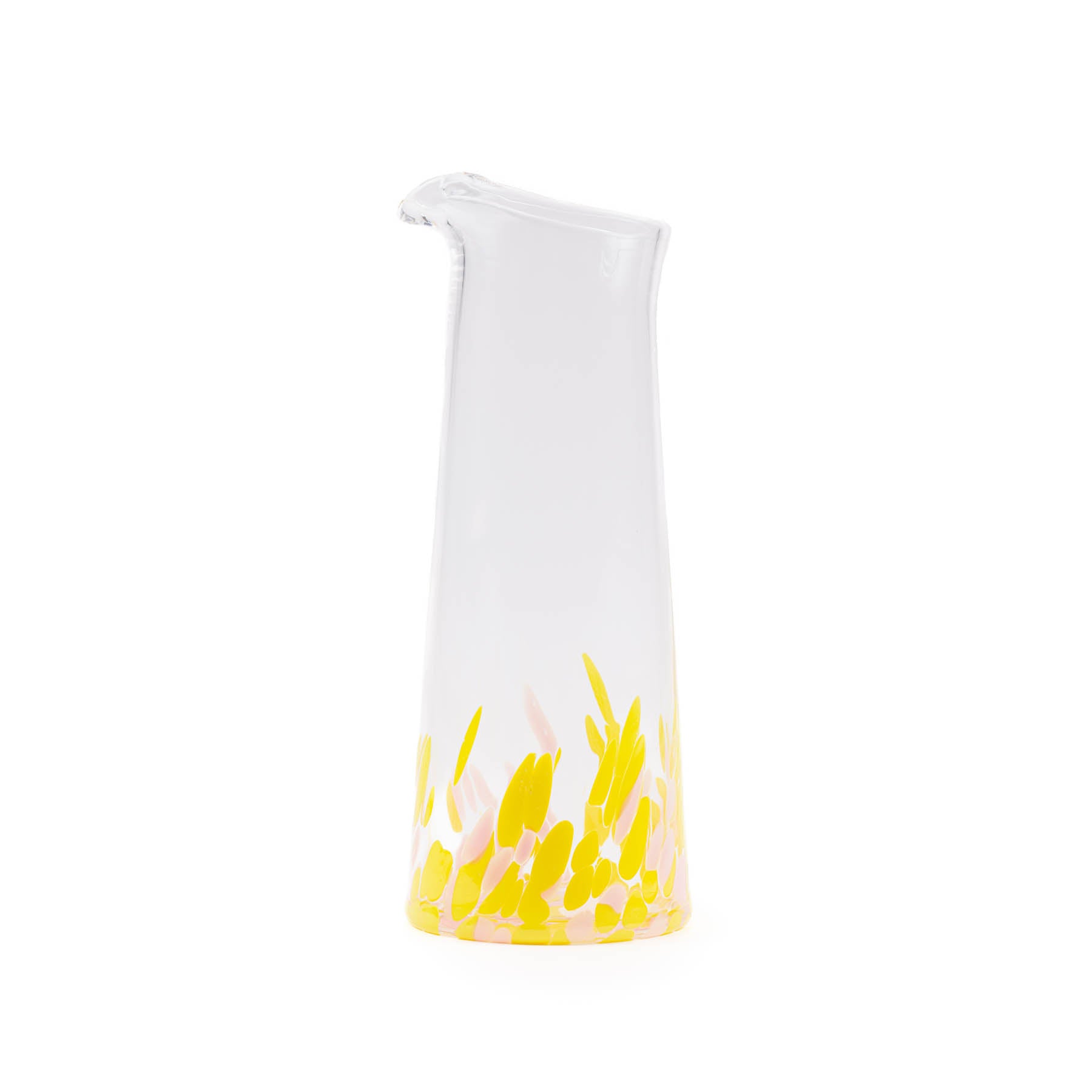
- The joyful speckles of the Confetti Carafe by Anna von Lipa ($214.00) bring a celebratory note to the table. While glass, not clay, its color-in-body confetti mirrors nerikomi’s commitment to pattern that is part of the material, not applied as an afterthought.
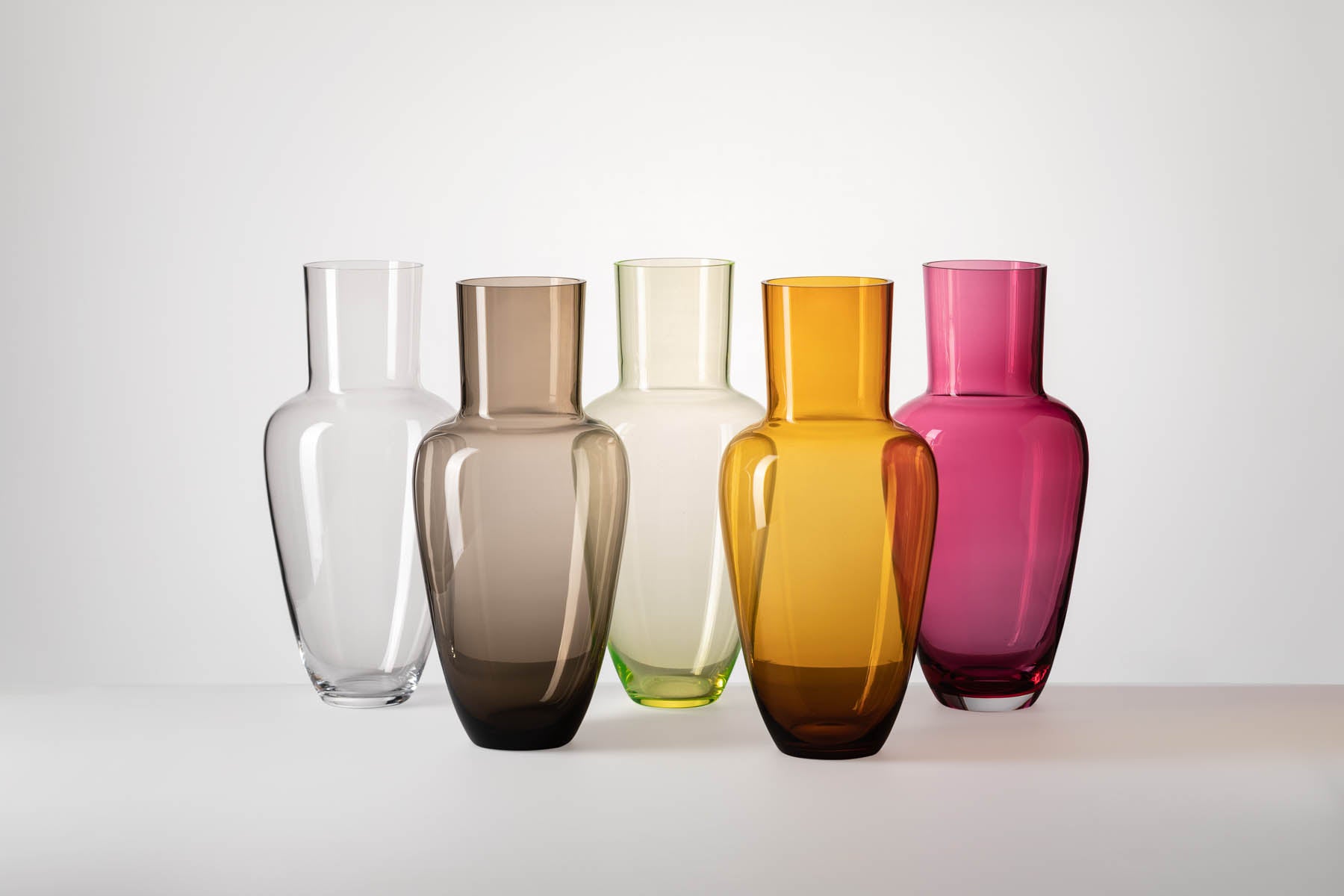
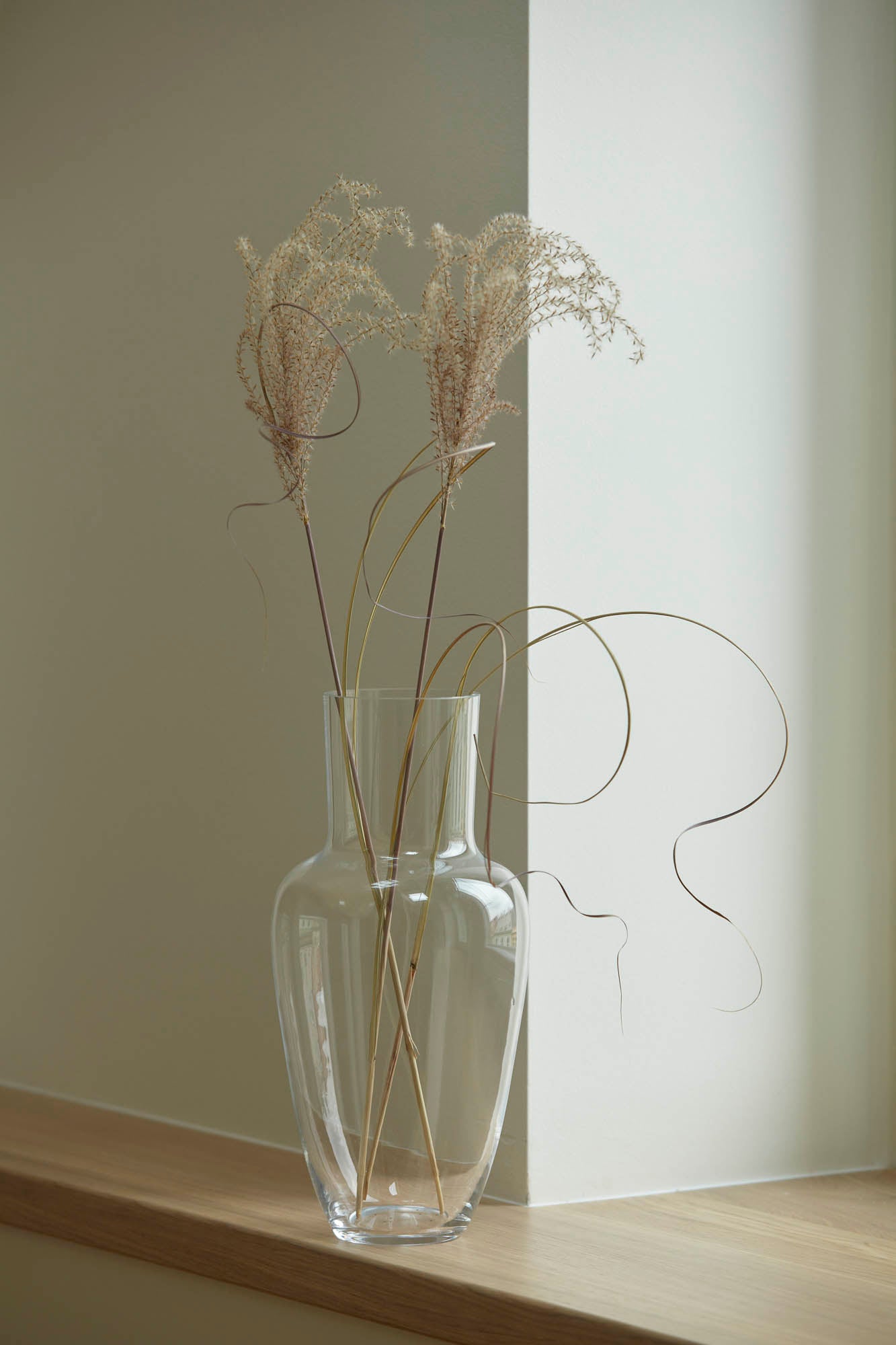
- Framed by transparency and light, the Transparent Garden Vessel by Frantisek Jungvirt ($825.00) shows how layered hue and form can feel weightless yet architectural, a luminous counterpoint to nerikomi’s opaque precision.
- For those drawn to ancient narratives in clay, Haniwa Warrior 93 by Noe Kuremoto ($1700.00) channels the quiet strength of ritual objects. Its totemic presence pairs beautifully with nerikomi’s graphic clarity, grounding a vignette with sculptural calm.
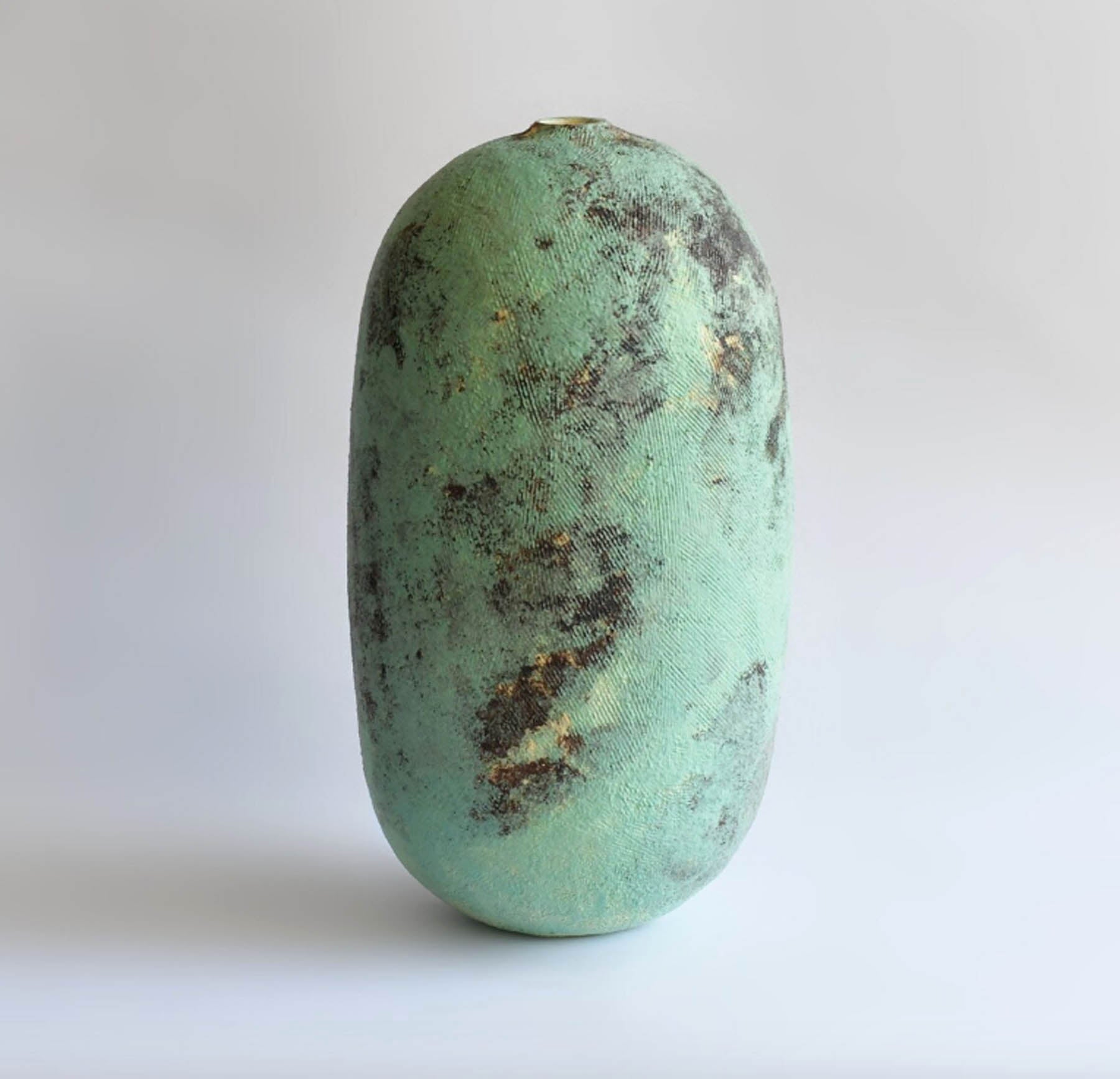
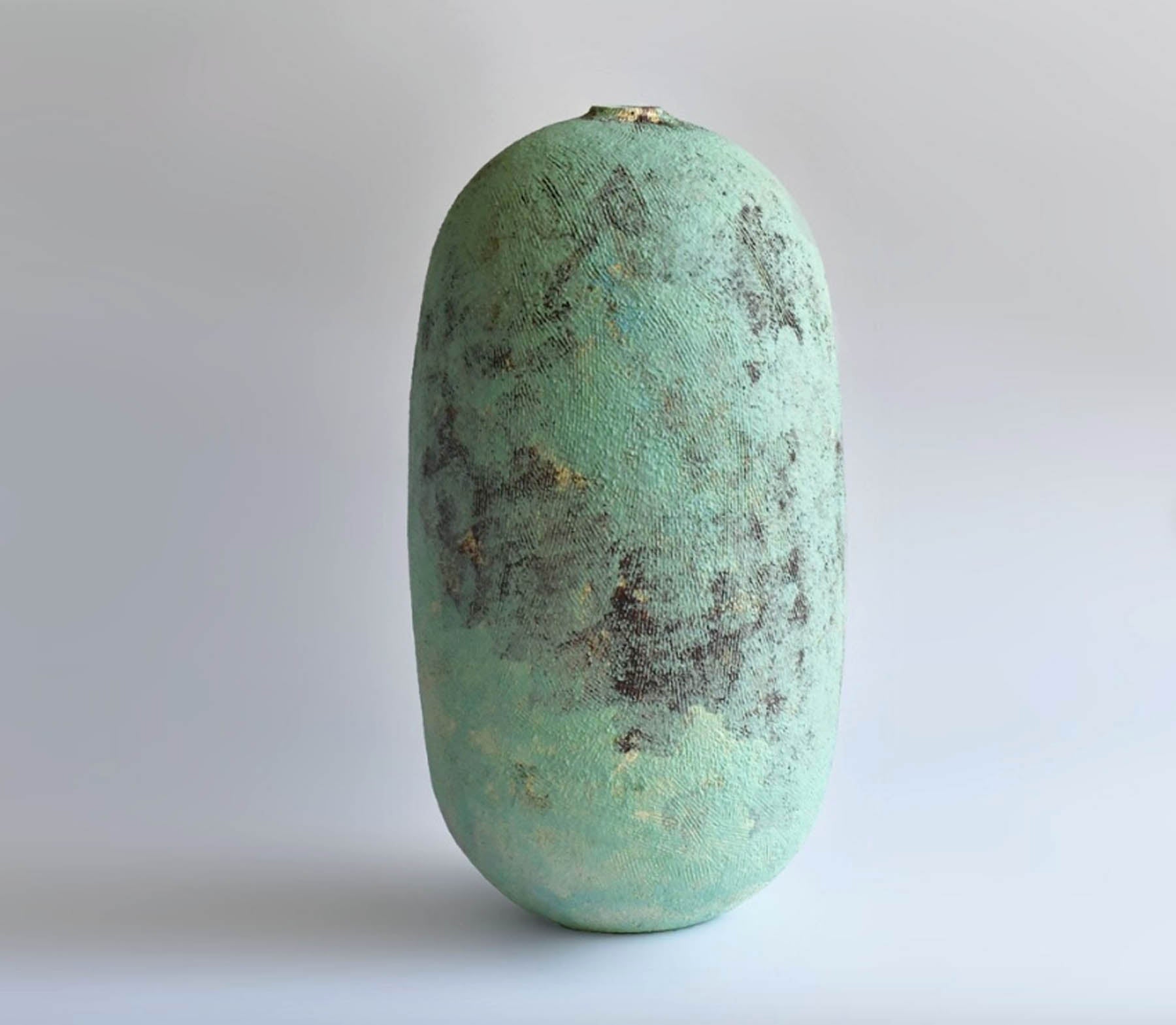
- Texture lovers will gravitate to the stratified character of the Distressed Sardinia Vessel by Àlvar Martínez Mestres ($732.00), whose weathered surface reads like a coastal cliff—a natural foil to the refined geometry of patterned clay.
- A study in motion, the Ruffles Vase by Faustine Telleschi ($534.00) translates rhythm into form. Place it near a striped nerikomi piece to create a dialogue between linear and lyrical movement.
- Graphic purity meets soft light in Clouds 01 by Caroline Desile ($778.00). The composition’s layered softness plays beautifully against the crisp edges of cut clay pattern.
- Pursue sculptural refinement with Parure 8 by Nadia Stieglitz ($2800.00). Its composed volumes complement the quiet discipline that nerikomi demands.
- If you favor facets, the Small Gema Vase by Moser ($1179.00) offers a jewel-like profile—facets catching light much as a polished nerikomi rim reveals strata.
- The playful equilibrium of the Tilt Bowl by Nate Cotterman ($375.00) introduces dynamic posture to any arrangement, underscoring how form can challenge expectation—just as nerikomi subverts the notion of decoration-as-surface.
- For functional sculpture, consider the Long Handle Bowl by Melina Xenaki ($533.00). Its elongated handles carve lines in space that echo the linear language of striped nerikomi.
- Earth, flame, and time are etched into the Wood-Fired Porcelain Vessel 04 by Lilith Rockett ($1008.00). Wood ash and fire leave traces as authentic as a clay pattern—process made visible.
- Smoke-drawn gradients in the Sawdust-Fired Vase 49 by Michelle Grimm ($600.00) feel like atmospheric cousins to neriage marbling, soft and elemental.
- Embrace statement scale with Septem by Marcela Cure ($8250.00). Its presence anchors a room the way a masterwork of nerikomi does—confident, centered, and serene.
- Create a warm counter-glow with the sculptural Grande Jill Candle (scented or unscented) by Dumae ($1980.00). Candlelight skims across pattern and relief, enhancing depth and contour.
- Finally, the structured profile of the Giovanni Basket by Oscarmaschera ($362.00) introduces order and texture—an elegant companion to the measured geometry of nerikomi tiles or trays.
These are not nerikomi pieces themselves; rather, they are companions that honor the same philosophy: material-first beauty. Explore more from their makers’ collections—Frantisek Jungvirt, Anna von Lipa, Noe Kuremoto, Faustine Telleschi, Marcela Cure, Nadia Stieglitz, and Nate Cotterman—to curate a dialogue that is uniquely yours.
How to Style Nerikomi at Home
Nerikomi’s graphic clarity makes it exceptionally versatile. In minimal spaces, it becomes the focal point—one patterned vessel on a quiet console offers all the interest you need. In layered, eclectic interiors, nerikomi reads as a “neutral with character,” its repeating geometry harmonizing disparate elements.
Consider scale and rhythm:
- Pair a tall, linear nerikomi vase with a softer, organic silhouette like the Ruffles Vase ($534.00) to create a dynamic duet.
- Echo colors across materials—the color frosting in the Confetti Carafe ($214.00) can pick up tones in your clay palette.
- Use light intentionally: position patterned clay near a warm source—try the Grande Jill Candle ($1980.00)—to deepen contrast and shadow within the pattern.
On shelving, intersperse patterned pieces with solids to avoid visual noise. In dining settings, nerikomi serving ware becomes conversation—understated yet unforgettable against crisp linens or raw wood. And in entryways, a single patterned bowl for keys invites daily touch, reminding you that art can be both tactile and tender.
Care, Integrity, and Longevity
Because nerikomi patterns run through the clay body, light wear will not erase them. Still, best practice preserves beauty for generations:
- Hand-wash with mild soap; avoid abrasives that could dull matte finishes.
- Protect from thermal shock—no sudden transitions from refrigerator to hot water.
- Use felt pads where a vessel meets stone or metal to prevent micro-scratches.
- If glazed, treat as fine tableware; if unglazed or matte, avoid oils that can stain.
- Display out of direct, prolonged UV exposure to preserve subtle color nuances.
When you acquire a piece, ask your gallery or the maker about the clay body and firing range. The more you know, the more confidently you can live with it—no museum hush required.
Collector’s Guide: Choosing a Nerikomi Piece You’ll Love
As you refine your eye, consider these criteria:
- Pattern coherence: Do motifs align around the form, especially at seams and rims?
- Edge discipline: Are cuts crisp without smear between colors?
- Functional integrity: Does the base sit flat? Are rim thicknesses consistent?
- Finish choice: Does matte or gloss suit the design and intended use?
- Maker’s signature: Is the piece part of a coherent body of work—recognizably theirs?
Think too about narrative value. A piece that teaches you something each time you use it earns its place in your life. That’s the promise of true craft: not only what it is, but what it becomes with you.
Looking to assemble a vignette around your future nerikomi acquisition? Start with complementary works that share process-forward beauty:
- The celebratory Confetti Carafe ($214.00) by Anna von Lipa for color play at the table.
- The poised Tilt Bowl ($375.00) by Nate Cotterman to introduce a sculptural silhouette.
- The atmospheric Sawdust-Fired Vase 49 ($600.00) by Michelle Grimm, a study in smoke and softness.
- The meditative Haniwa Warrior 93 ($1700.00) by Noe Kuremoto to anchor the arrangement.
- The luminous Transparent Garden Vessel ($825.00) by Frantisek Jungvirt for a transparent counterbalance.
- The richly textured Distressed Sardinia Vessel ($732.00) for tactile contrast.
- The sculptural Parure 8 ($2800.00) by Nadia Stieglitz as a statement piece.
- The gem-like Small Gema Vase ($1179.00) and soft Clouds 01 ($778.00) to weave light and atmosphere.
- Finish with the Grande Jill Candle ($1980.00) and a functional accent like the Giovanni Basket ($362.00) to bring daily life into the composition.
Prefer a purely clay-focused ensemble? Pair a matte, linear nerikomi vase with the heat-kissed surfaces of the Wood-Fired Porcelain Vessel 04 ($1008.00). Add the Long Handle Bowl ($533.00) by Melina Xenaki for sculptural utility, and let each piece define a distinct chapter in your tactile story.
However you curate, let your space be an invitation—to touch, to ask, to learn. That is the essence of living with craft.
Ready to explore? Discover more from the makers who embody material-first beauty: Frantisek Jungvirt, Anna von Lipa, Noe Kuremoto, Faustine Telleschi, Marcela Cure, Nadia Stieglitz, and Nate Cotterman. Then, when you’re ready, bring home a piece of nerikomi—and a story built into the clay.
From technique deep dives to curated releases, Trove Gallery connects you to the world’s most considered makers. Shop the pieces above or explore our latest arrivals to start your collection today.