Majolica: Painted Perfection
The poetry of majolica
Some materials invite touch; others demand a second look. Majolica does both. The centuries-old, tin-glazed earthenware—also spelled maiolica—transforms humble clay into a luminous painting surface where color blooms inside a glossy white glaze. Brushstrokes float with watercolor softness, linework appears inked and immediate, and the final piece gleams as if lit from within. At Trove Gallery, we celebrate this fusion of art and craft not only through historical appreciation but also by championing contemporary makers whose work channels majolica’s painterly spirit—across clay, glass, and sculptural form.
In this technique deep dive, we explore how majolica is made, why its colors look so alive, and how to style hand-painted ceramics at home. Along the way, we’ll introduce kindred works by our global artisans—pieces that honor the same devotion to surface, color, and story.
What is majolica? A short, essential history
Majolica is tin-glazed earthenware. Historically, potters brushed an opaque white glaze—made translucent and glossy with lead, then opacified with tin oxide—over a porous, bisque-fired clay body. They painted directly onto this unfired white glaze using metallic oxide pigments. In the kiln, the glaze melted and locked the painting beneath a glassy skin, preserving the immediacy of the artist’s hand.
The technique traveled and transformed across cultures. Hispano-Moresque ceramics from medieval Spain spread luminous whites and metallic lusters; Italian Renaissance maiolica evolved into istoriato—narrative scenes rich with cobalt blues, copper greens, and antimony yellows. Across the Atlantic, Mexican Talavera brought bold, rhythmic motifs and a sunlit palette to daily tableware. Throughout, the constant is a brilliant, opaque surface that behaves like a canvas for color.
It’s worth clarifying terms: in 19th-century England, “Victorian majolica” described colorful lead-glazed relief wares (think Minton)—a related but distinct branch from tin-glazed Italian and Iberian traditions. Today, collectors and artists often use “majolica/maiolica” for tin-glazed painting, while “majolica-style” may also reference the broader aesthetic of exuberant color and story on ceramics.
How majolica is made: from clay to color
The magic of majolica lies in process. Here’s a simplified path from earth to iridescent surface:
1) Form and first firing (bisque): The potter throws or hand-builds a vessel with a red or buff earthenware clay and fires it to a low temperature. This creates a porous, stable blank ready to absorb glaze.
2) The white ground: A tin-opacified glaze—creamy, bright, and slightly absorbent before firing—is applied by dipping or brushing. This white ground is the painter’s field.
3) Painting on the raw glaze: Oxide pigments (cobalt for blue, copper for green, manganese for warm browns and soft purples, antimony for yellow, iron for russet) are painted directly onto the unfired glaze. Because the surface is slightly thirsty, pigments feather and settle like watercolor. Lines can be crisp where the brush is sure, or softly diffused where the artist courts the glaze’s responsive nature.
4) Glaze firing: Fired around earthenware temperatures (often in the 980–1050°C range), the glaze melts to glossy translucence while the tin oxide keeps it opaque. The pigments fuse beneath, their hues intensifying as the glaze clears. The result is a depth and glow unique to tin-glaze.
5) Optional luster or overglaze: Some traditions add third-fire lusters—golden or coppery sheens applied in a lower-temperature firing. Others layer linework or inscriptions with enamel. Each pass is a conversation with heat and time.
Why does majolica’s color look so vivid? Because the painting sits inside the glaze, not on top. Light travels through the glassy layer, hits color, and bounces back—creating that distinctive inner radiance.
Color, light, and surface: kindred pieces at Trove
While our trove of ceramics spans many techniques, certain works resonate powerfully with majolica’s painterly ethos—through luminous color, tactile surface, or the way light becomes part of the composition.
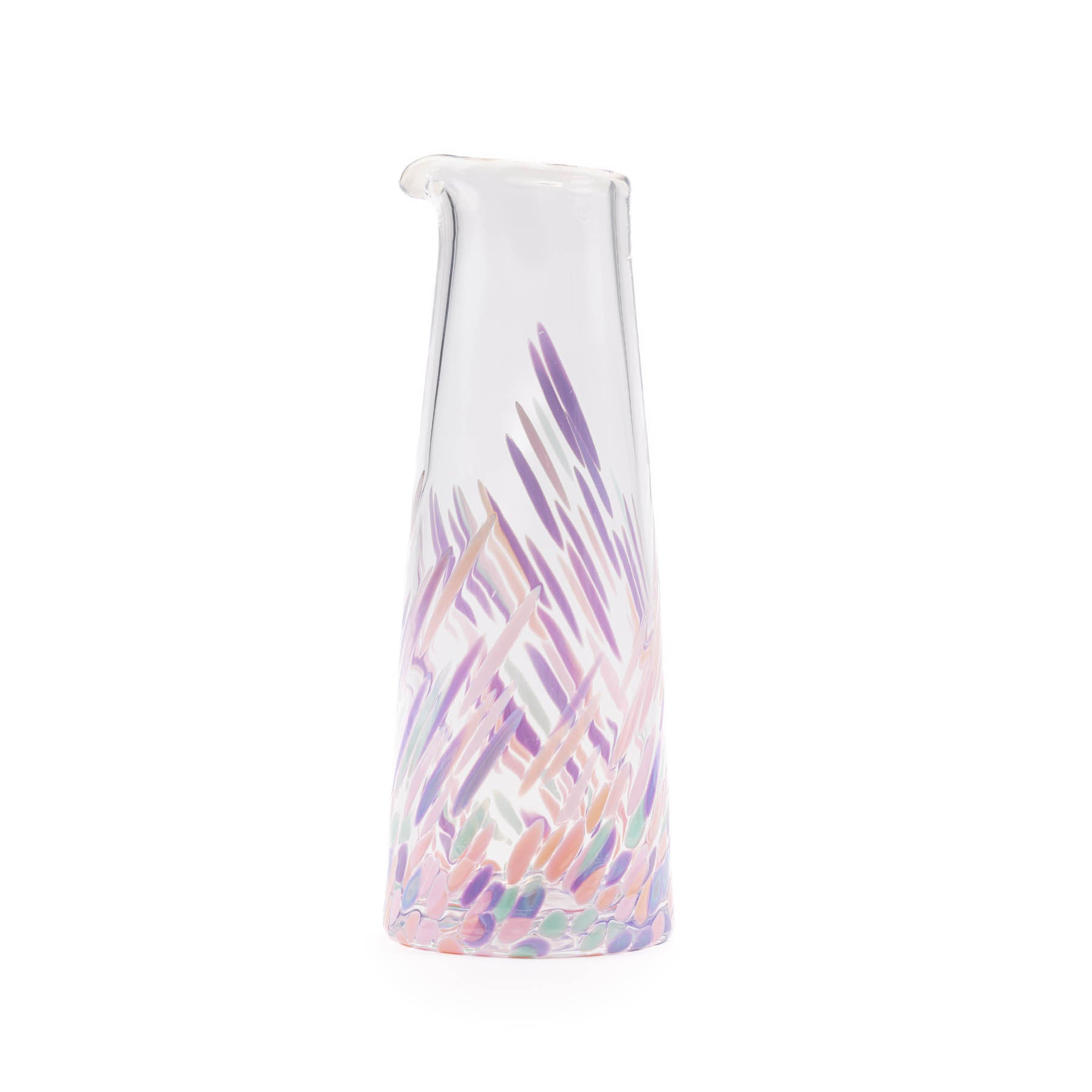
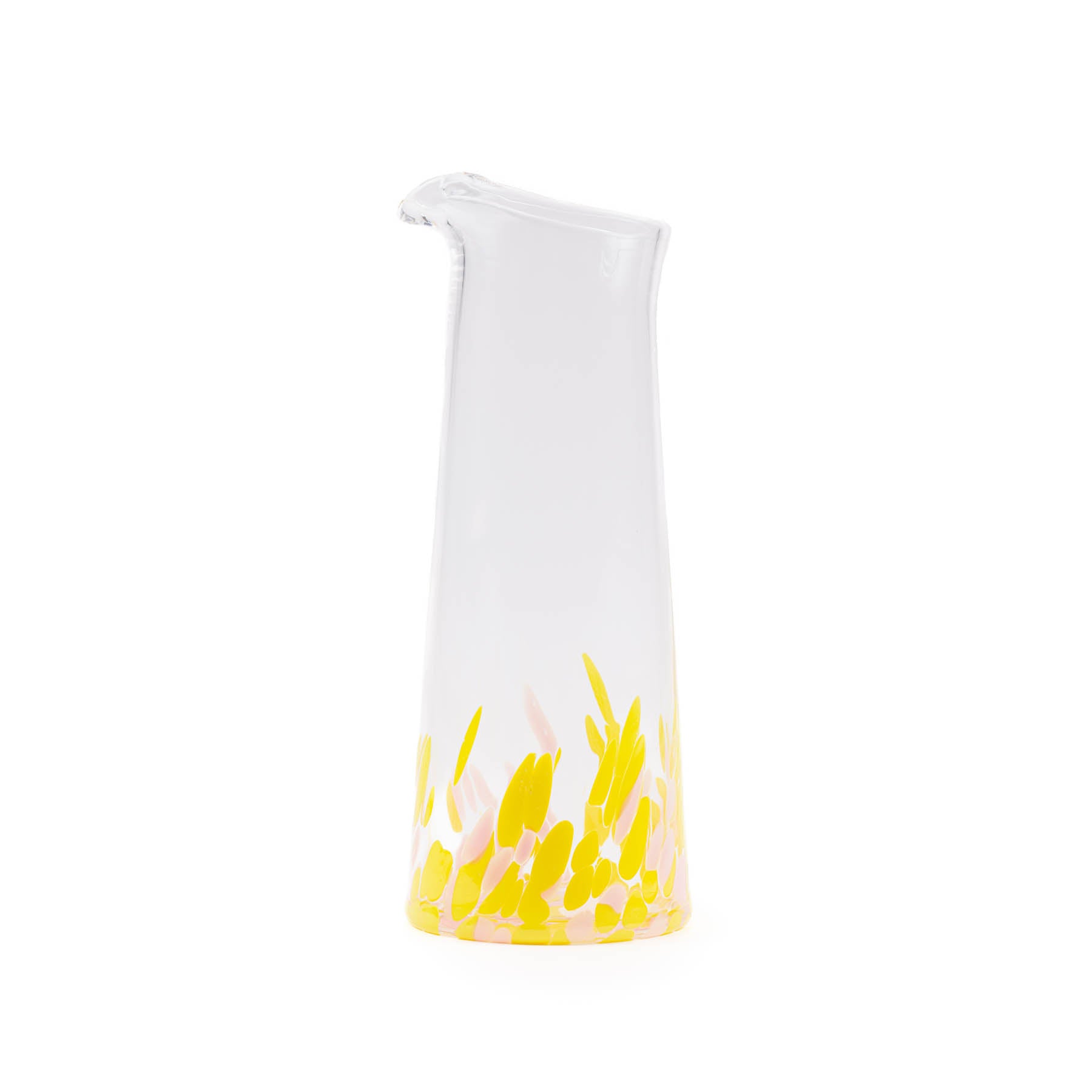
Consider the hand-blown Confetti Carafe by Anna von Lipa ($214.00). Its dappled glass “confetti” pattern captures the same joie de vivre that majolica florals express on clay. Here, color is suspended in clear crystal; pour water or wine, and the hues refract across the table like a celebration of light.
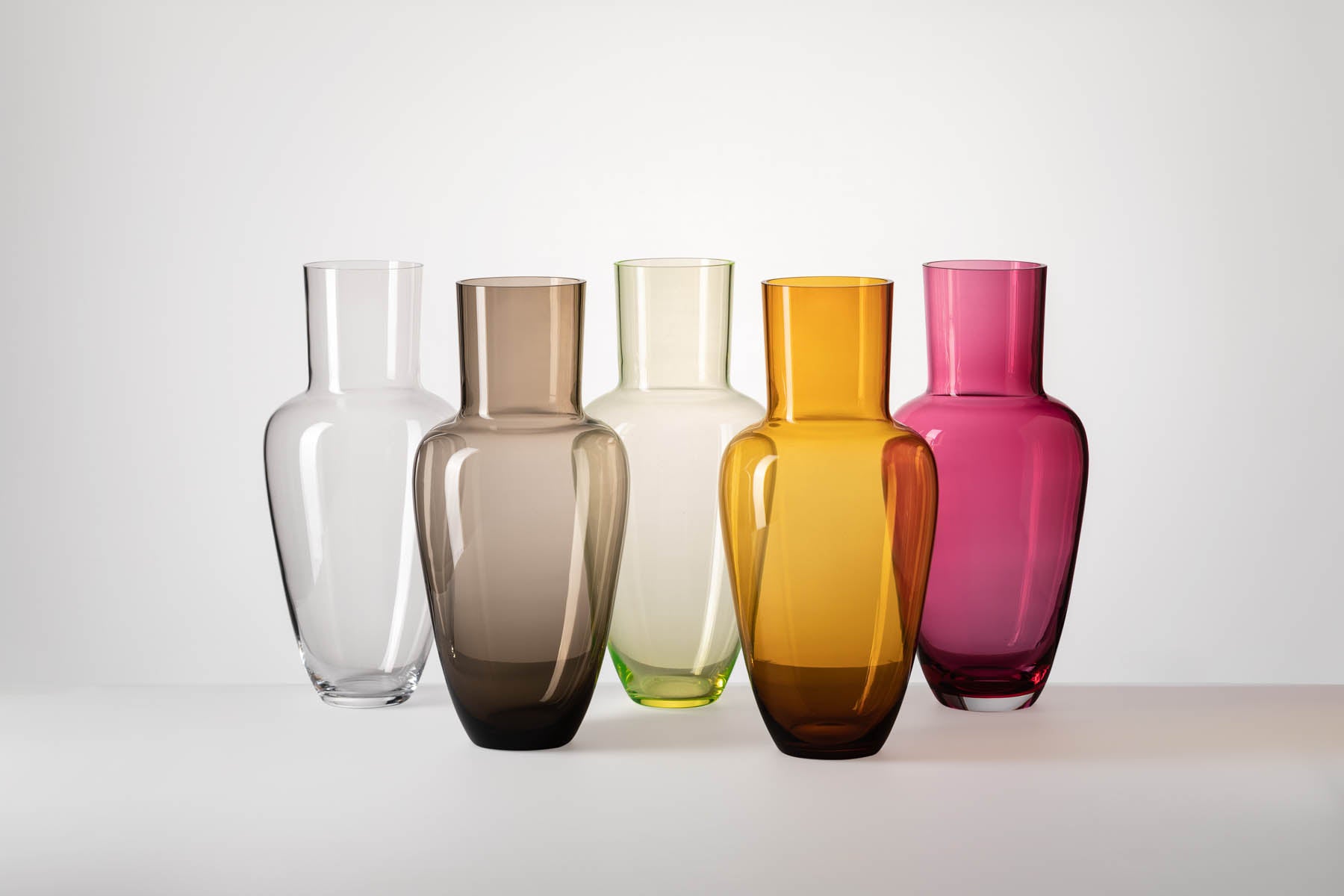
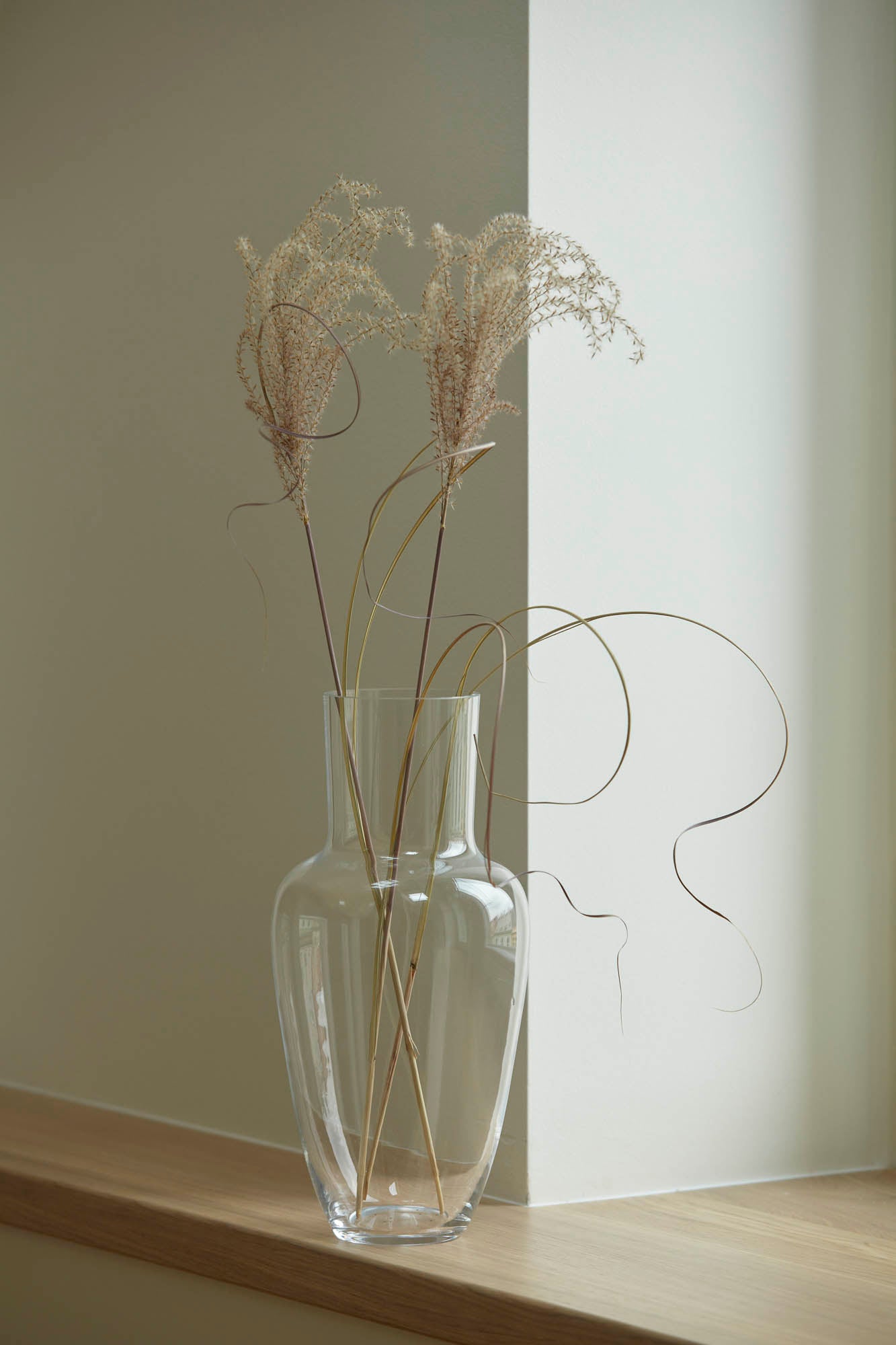
For a study in clarity and restraint, the Transparent Garden Vessel by Frantisek Jungvirt ($825.00) proves how a pristine surface can frame a subtle, nature-leaning composition. Like a blank tin-glaze field, ultra-clear glass elevates every gesture—the perfect foil for flowers, shadow, and space.
Cut crystal can be painterly too. The Small Gema Vase by Moser ($1,179.00) facets light into lively strokes. Place it near sunlight and it sketches shifting “brushmarks” across a room, echoing the kinetic spirit of hand-painted glaze.
Form changes the narrative: the fluted silhouette of the Ruffles Vase by Faustine Telleschi ($534.00) turns shadow into ornament, much as Renaissance potters used relief and slip-trailing to animate motifs. A single branch becomes a drawing against its rippling rim.
Color can tilt the gaze—literally. Tilt Bowl by Nate Cotterman ($375.00) rests on an angled foot, catching light in unexpected ways. The bowl’s posture invites you to see a table vignette anew, much like a lively majolica charger reorients a dining scene.
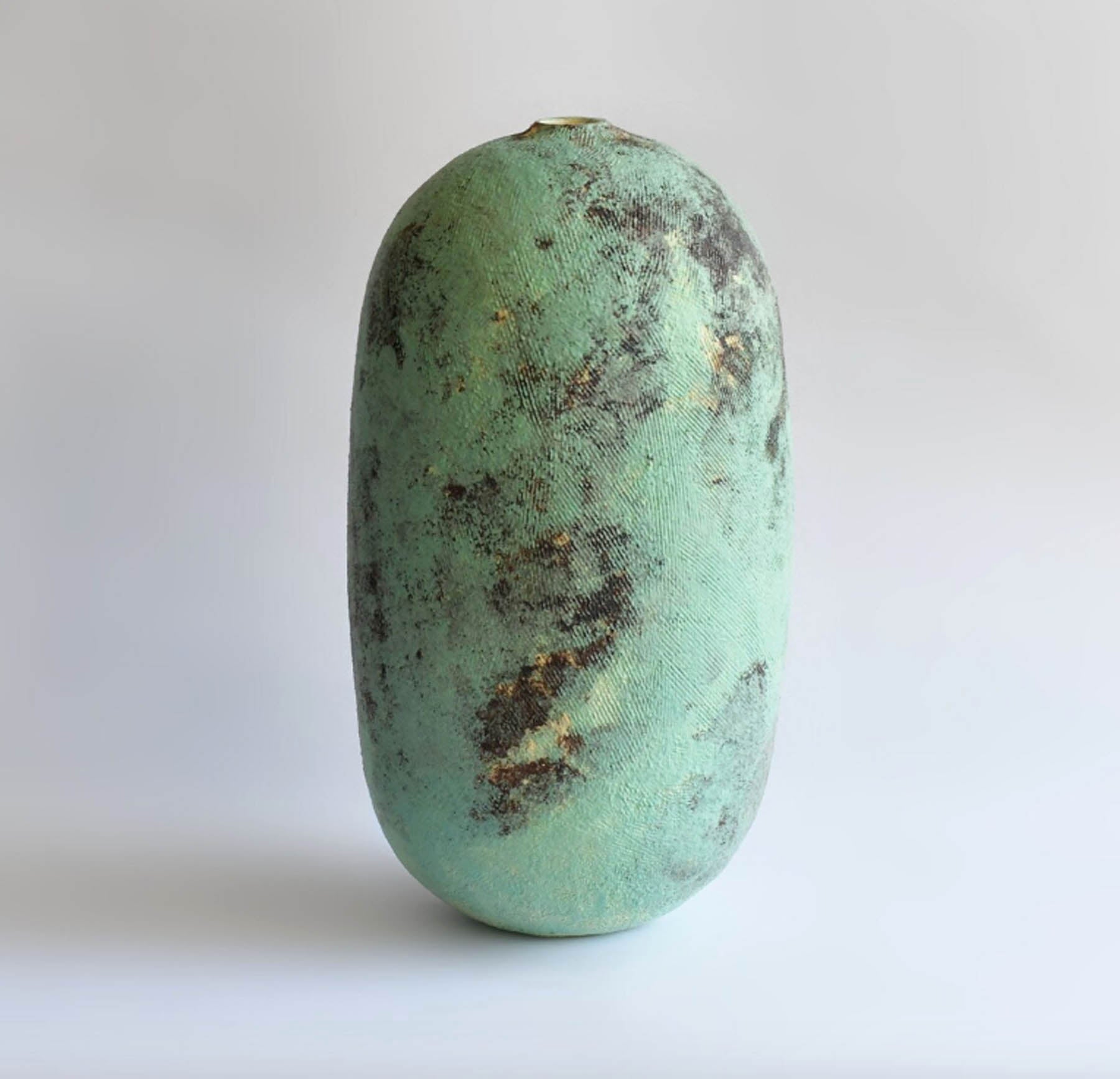
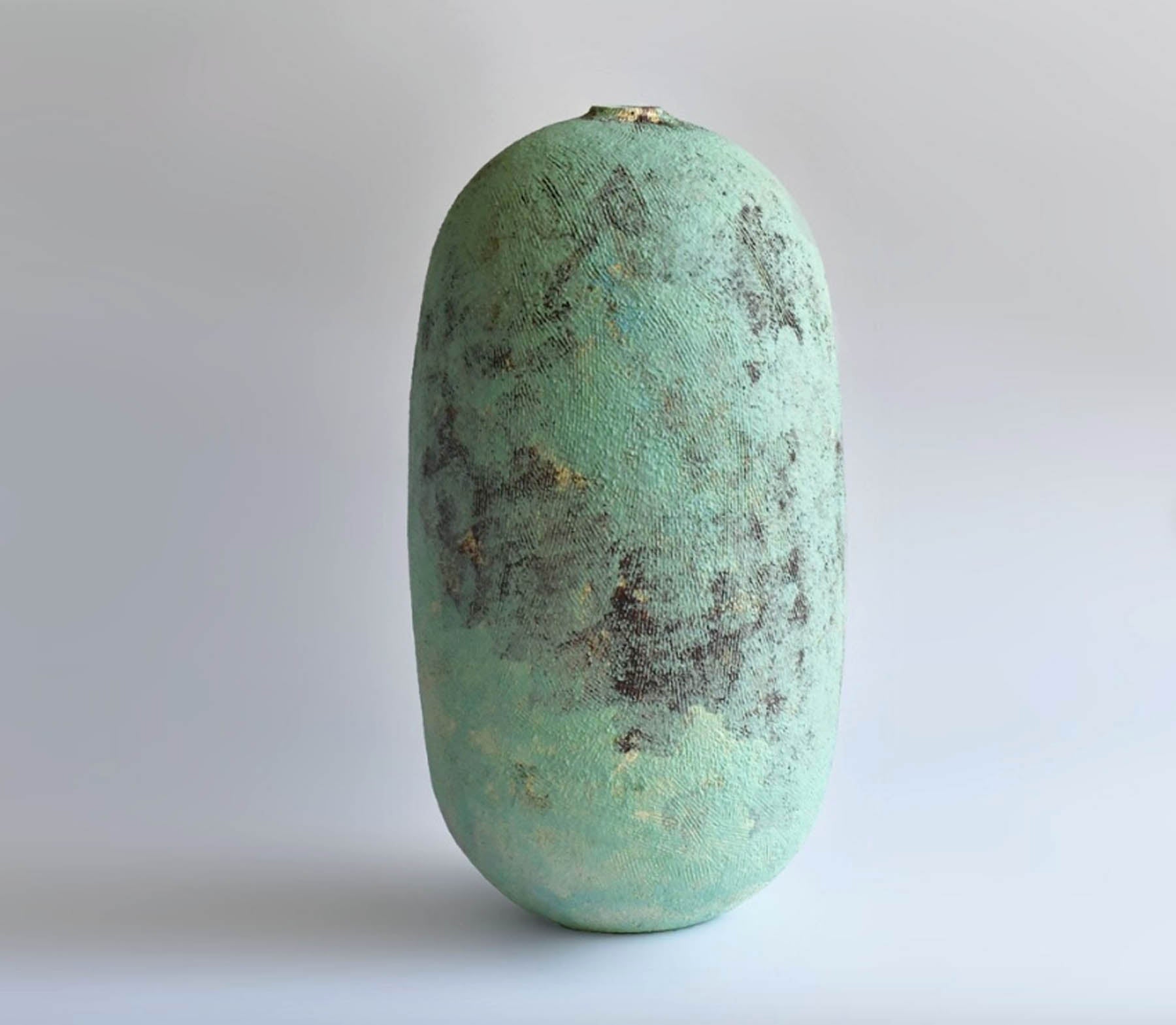
Surface history matters, too. The Distressed Sardinia Vessel by Àlvar Martínez Mestres ($732.00) carries a Mediterranean patina—earthy, time-softened, evocative of sun, salt, and limewashed walls. It speaks the same language of lived beauty that historic tin-glazed wares whisper from their vitrined shelves.
Styling majolica at home: layering story and craft
Majolica thrives in dialogue—with textiles, woods, metals, and light. Whether you own antique tin-glazed pieces or are building a contemporary collection that nods to the tradition, these ideas help create balance.
1) Let one painted piece lead. A single, expressive work brings coherence to a vignette. Try a sculptural anchor like Haniwa Warrior 93 by Noe Kuremoto ($1,700.00). Its timeless presence—earth, silhouette, and spirit—grounds a grouping of bright ceramics and glass, allowing color to orbit form.
2) Temper gloss with matte. Majolica’s gloss sings when paired with quieter surfaces. Wood-fired and smoke-fired forms bring a soft, mineral counterpoint: Wood-Fired Porcelain Vessel 04 by Lilith Rockett ($1,008.00) and Sawdust-Fired Vase 49 by Michelle Grimm ($600.00) offer a hushed, tactile balance—like a rest in a musical phrase.
3) Curate a Mediterranean moment. Pair the Distressed Sardinia Vessel ($732.00) with the artisanal leather Giovanni Basket by Oscarmaschera ($362.00). Tuck linen napkins inside the basket, add branches to the vessel, and complete the scene with the sculptural Grande Jill Candle by Dumae ($1,980.00)—scented or unscented—whose architectural silhouette becomes a quiet beacon at dusk.
4) Elevate everyday rituals. Use a painterly carafe for weeknight dinners, a ruffled vase for market flowers, a small cut-crystal for bedside blooms. The artistry is not just for display. Try the Confetti Carafe ($214.00) with citrus water; its chromatic sparkle makes even a Tuesday feel composed.
5) Mix narrative and abstraction. If your majolica features figurative motifs, complement it with abstract or textural works. Clouds 01 by Caroline Desile ($778.00) introduces a painterly horizon; Parure 8 by Nadia Stieglitz ($2,800.00) adds sculptural cadence on a console or bookcase. For a statement focal point, Septem by Marcela Cure ($8,250.00) offers a one-of-a-kind, collectible presence—bold, refined, and designed to resonate across decades.
6) Honor the handle and the hand. Objects that foreground the hand’s touch—like the stoneware Long Handle Bowl by Melina Xenaki ($533.00)—echo majolica’s intimacy. Set it near a painted platter to underscore the human scale that connects them.
Collectors’ lens: how to read a majolica surface
Whether you’re acquiring antique tin-glazed plates or contemporary interpretations, understanding the surface will deepen your appreciation.
Brushwork and breath: On true majolica, lines often have a soft edge where pigment breathed into the raw glaze. Look for varied line weight and tiny, lively imperfections—the signs of a confident hand painting on a responsive ground.
Color palette: Historic pieces often favor cobalt blue, copper green, antimony yellow, manganese brown, and iron red. Later works may expand into modern pigments. The way hues layer—transparent to opaque, feathered to crisp—tells you about technique and control.
Glaze pooling and sheen: Around rims and relief, glaze may collect slightly, increasing gloss and depth. An authentic tin-glazed surface reflects light softly, as if the painting is lit from within.
Foot and body: Turn the piece over. Earthenware bodies reveal color (buff to reddish), with a dry foot ring where it sat in the kiln. Antique wares might show gentle wear; contemporary pieces maintain a fresher glaze continuity.
Sound and substance: A light tap against the palm yields a soft, warm note compared to dense stoneware or porcelain. This isn’t a test of quality so much as a clue to material and firing range.
Remember: the vocabulary of majolica extends into modern design. A glasswork that paints with light, a clay form that treats surface as drawing—these are contemporary kin. In our curation, you’ll find works that converse fluently with tin-glaze traditions, even when the medium evolves.
Meet the makers: contemporary voices in color and form
We’re honored to champion artists who bring the same devotion to surface and story that majolica models—each in their own language.
Frantisek Jungvirt explores clarity, color, and botanical poise in glass. His Transparent Garden Vessel ($825.00) shows how light itself can be a medium—an idea central to tin-glaze luminosity.
Anna von Lipa celebrates joyous color and heritage glassmaking with the Confetti Carafe ($214.00). The playful palette recalls the festive side of majolica tableware.
Noe Kuremoto embraces archetypal form and tactility. Haniwa Warrior 93 ($1,700.00) is a serene, guardian-like figure whose presence anchors bright ceramics the way an antique charger anchors a wall.
Faustine Telleschi sculpts ceramic silhouettes that choreograph light. The Ruffles Vase ($534.00) invites a floral line to perform across its undulating rim.
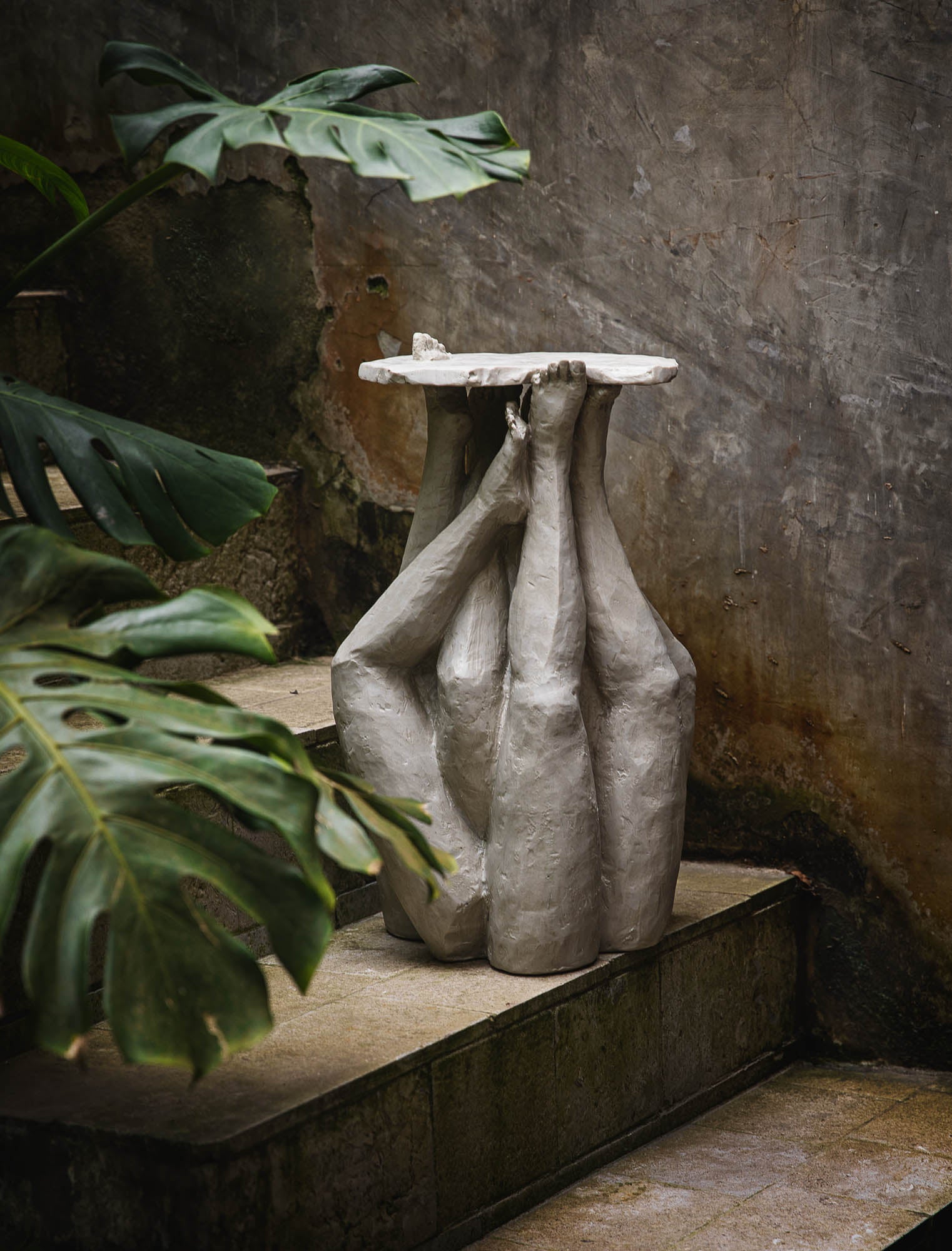
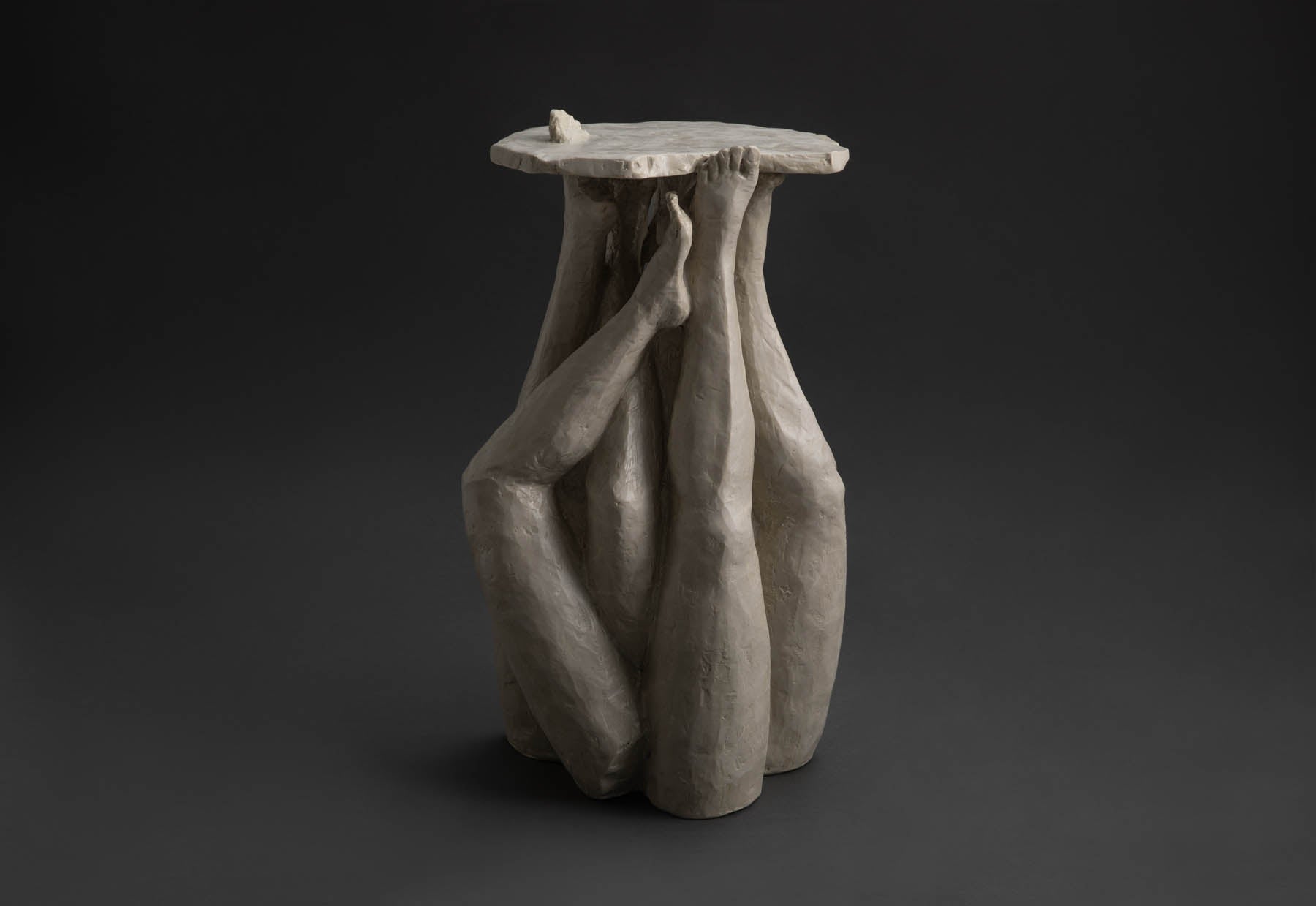
Marcela Cure creates striking, collectible works where material and gesture are balanced with finesse. Septem ($8,250.00) commands a room—majolica’s storytelling translated into contemporary sculpture.
Nadia Stieglitz composes rhythmic ceramic forms that read like sculptural jewelry for interiors. Parure 8 ($2,800.00) layers movement and shadow with quiet authority.
Nate Cotterman reimagines functional glass with subtle invention. His Tilt Bowl ($375.00) proves that a small shift in angle can offer a fresh view—a principle every painterly potter knows well.
Beyond these seven, our wider roster adds depth to any majolica-forward interior narrative. The patinated character of the Distressed Sardinia Vessel ($732.00), the refined clarity of the Small Gema Vase by Moser ($1,179.00), the wabi-sabi hush of Wood-Fired Porcelain Vessel 04 ($1,008.00), and the smoky aura of Sawdust-Fired Vase 49 ($600.00) compose a rich counterpoint to glossy, hand-painted pieces. Add the sculptural silhouette of the Grande Jill Candle by Dumae ($1,980.00), the hand-held grace of the Long Handle Bowl ($533.00), the atmospheric Clouds 01 ($778.00), and the leather-crafted utility of the Giovanni Basket ($362.00) to build layers of meaning, function, and delight.
Caring for majolica: longevity for luminous surfaces
Good care sustains the quiet dialogue between color and light.
Cleaning: Handwash with a soft sponge and mild soap; avoid abrasives. Dry fully to preserve the glaze’s luster. Antique pieces—especially those with hairline cracks or restored areas—deserve an extra gentle touch.
Display: Keep out of direct, prolonged sunlight to protect pigments. Plate hangers with padded grips or display stands with felt feet help prevent scuffs. For wall installations, ensure secure anchors suited to the piece’s weight.
Serving: Many contemporary, food-safe tin-glazed pieces are designed for the table, but always check maker recommendations. Avoid extreme temperature swings (freezer to oven) that could stress the earthenware body.
Pairing materials: Layer tin-glazed pieces with woods, linen, and handblown glass to echo the tradition’s warmth. The interplay between glossy glaze, soft textile, and clear crystal creates a timeless table or console story.
Collecting: Choose with your eye first—color, brushwork, proportion. Then consider provenance, condition, and maker’s voice. Building a collection around a theme (palette, region, or motif) can be rewarding; equally beautiful is a personal anthology of forms and stories that resonate with you.
At Trove Gallery, we curate objects that speak together—across centuries, materials, and techniques. Whether you’re drawn to the hand-painted radiance of classical majolica or its modern echoes in glass and sculptural clay, each piece carries the mark of the maker and the promise of daily beauty.
Ready to begin or expand your collection? Explore maker collections like Anna von Lipa, Frantisek Jungvirt, Noe Kuremoto, Faustine Telleschi, Marcela Cure, Nadia Stieglitz, and Nate Cotterman; then layer in handpicked works such as the Confetti Carafe ($214.00), Transparent Garden Vessel ($825.00), or sculptural anchors like Septem ($8,250.00) and Haniwa Warrior 93 ($1,700.00).
Bring painted perfection home—shop the full selection now, and let your space become the canvas.