Saggar Firing: Master Technique Explained
What Is Saggar Firing? The Art of Painting with Smoke
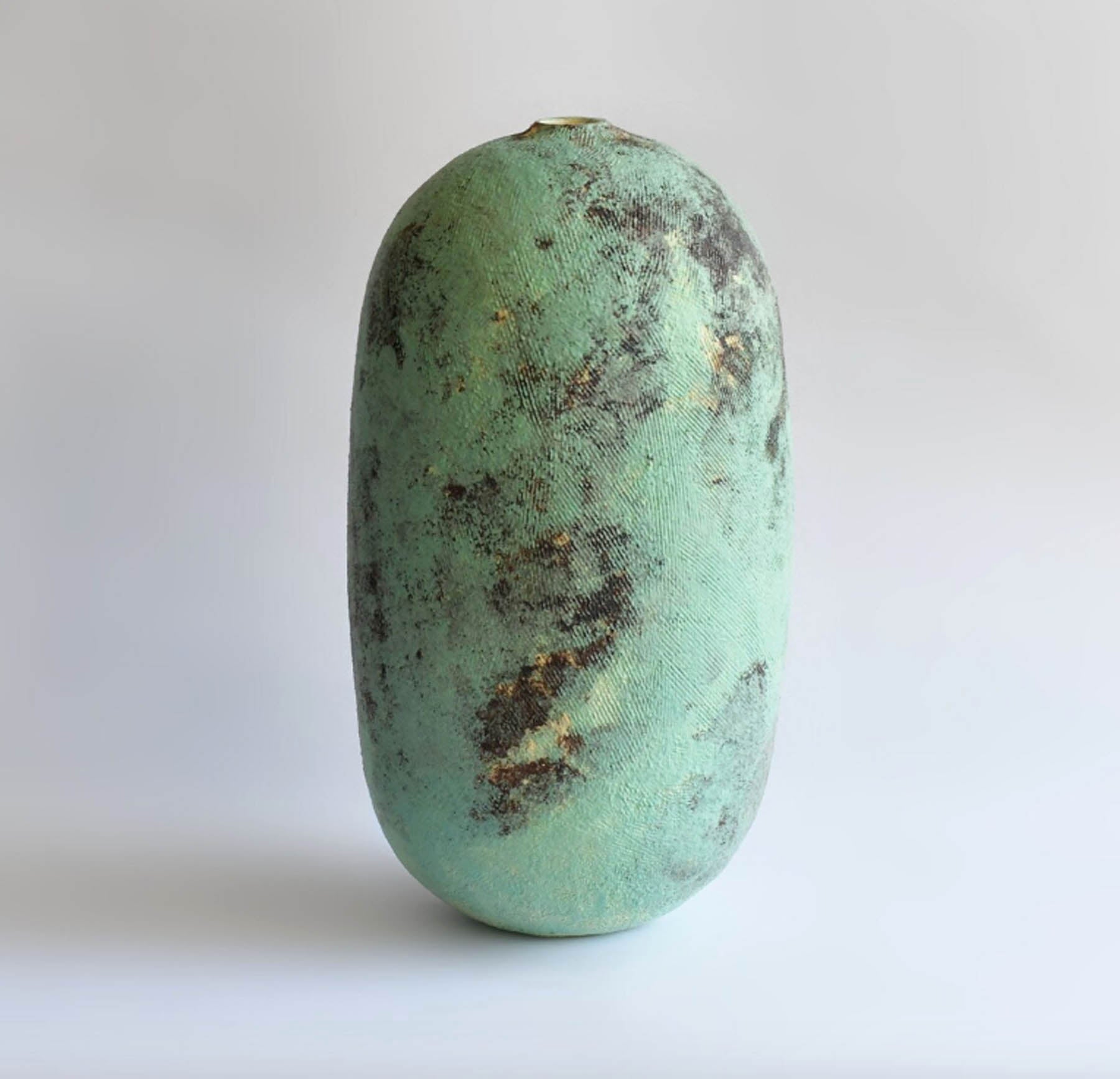
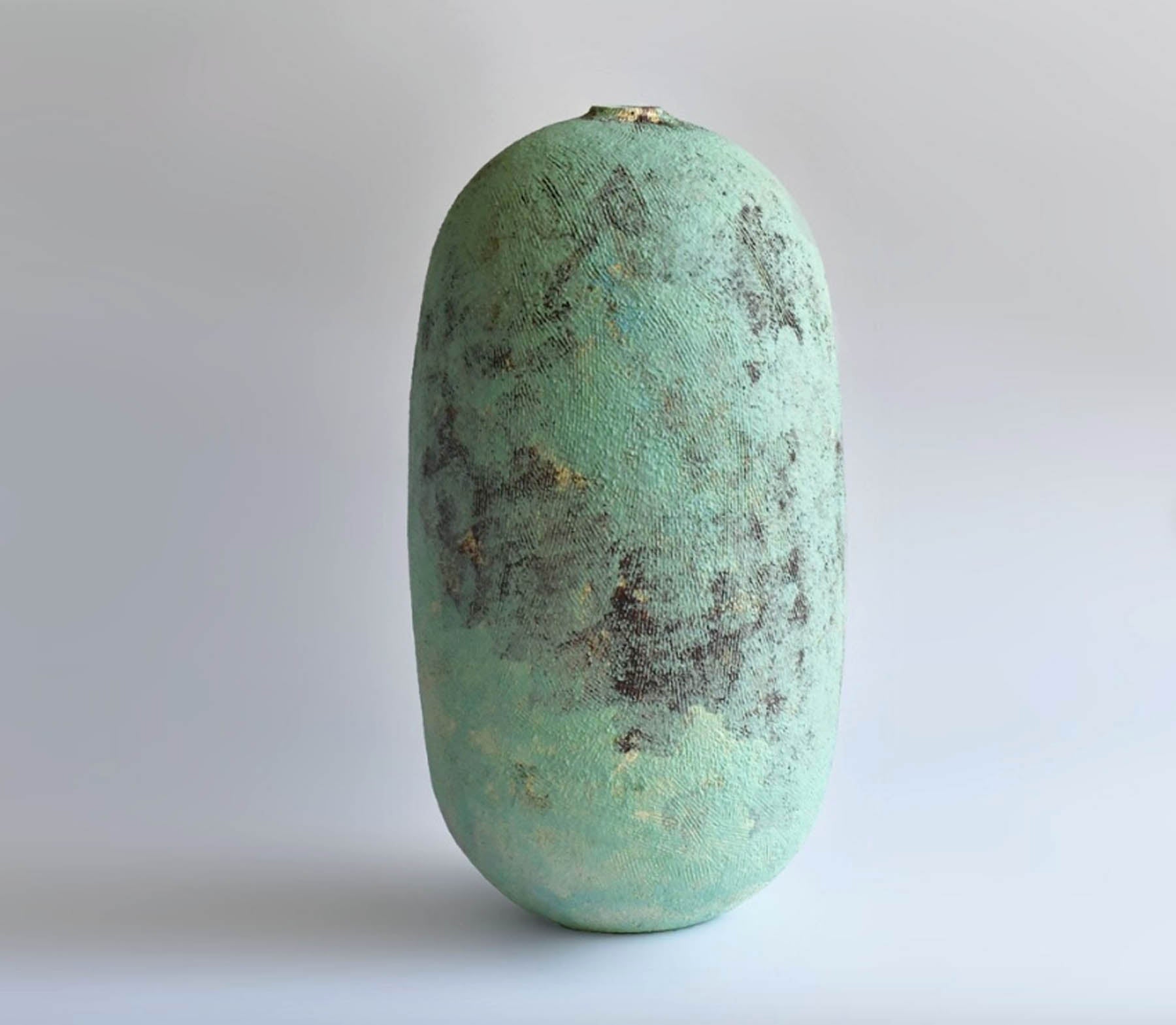
Saggar firing is an atmospheric ceramic technique that turns heat, minerals, and combustible materials into a painter’s palette. Rather than using glaze to color clay, artists pack a piece inside a protective container called a saggar—traditionally a lidded, refractory clay box—along with organic matter and metal-bearing materials. As the kiln climbs, those materials vaporize and imprint smoky veils, halos, and mineral blooms directly onto the ceramic surface. The result is saggar fired pottery with uniquely nuanced, unrepeatable markings that feel both ancient and alive.
Historically, saggars were used in China and Europe to shield delicate wares from kiln ash and flames. Modern studio potters reimagined the saggar not as armor but as a microenvironment, a tiny atmospheric studio inside the kiln. By controlling what goes in—seaweed, sawdust, copper wire, or salt—and how air is allowed to circulate, makers orchestrate color, contrast, and movement without glaze. In the broader family of atmospheric firing, saggar firing sits alongside wood firing, smoke firing, and pit firing, but it is especially prized for its painterly clarity and intimate scale of detail.
Materials and Methods: Inside the Saggar
At the heart of the process is a container that creates a semi-sealed chamber. Traditional ceramic saggars are made of thick, grogged clay that can withstand repeated firings. Contemporary artists also use disposable “foil saggars” created by wrapping a piece in layers of aluminum foil for low-temperature firings. Whether ceramic or foil, the intention is the same: establish a controlled atmosphere around the pot so that combustibles and metal salts can volatilize and bond with the clay body.
Preparing the surface often begins with refined clay work. Many artists burnish their forms or apply terra sigillata, an ultra-fine slip that yields a satiny sheen ideal for catching smoke blushes. The piece is then nestled into a bed of materials—sawdust, coffee grounds, pine needles, seaweed, onion skins—each chosen for its character and the way it smolders. Makers may add copper carbonate or copper wire for green to blackish smokes, iron-rich materials for reds and umbers, and salt or sodium bicarbonate for pale halos. The saggar is sealed, the kiln is fired, and time and temperature do their quiet work.
Because saggar firing is a dialogue rather than a script, artists document their packings and firings. They test how a tighter wrap changes reduction, how a shard of charcoal softens a contour, how an extra hour soaks the color. The same ingredients can yield dramatically different results, and this dance between chance and control is part of the allure—each piece emerges as a singular record of its firing.
Surface Alchemy: Color, Chemistry, and Character
To understand the surface of saggar fired pottery is to appreciate simple chemistry in a complex environment. As combustibles burn in a reduced-oxygen saggar chamber, carbon is released and “trapped” in the clay body, leaving smoky veils and jet silhouettes. With metal-bearing additions, copper fumes can drift into greens and auburns; iron can flare into russet freckles; salt can etch pale auroras along edges. Unlike glaze, which melts and levels across a surface, atmospheric color settles as a layered fog—directional, gestural, sometimes with perfect leaf prints where materials rest against the form.
Because these surfaces live on the clay itself, they can be wonderfully tactile. Burnished terra sigillata shines softly; eggshell-thin porcelain can glow with translucent blushes; a coarser stoneware might take on the map-like topography of smoke. Makers often seal the finished work with microcrystalline wax or a similar barrier to protect the surface and deepen contrast while retaining a hand-rubbed feel. The best pieces balance chemistry with composition, allowing the form to lead and the firing to respond.
Collecting Saggar-Fired Art: What to Look For
Collecting saggar fired pottery invites you to see beyond glaze into the subtleties of clay and air. Begin with form. A well-proportioned silhouette is the stage for atmospheric effects; generous curves invite billows of smoke, while crisp shoulders catch graphic edges. Next, consider the composition of marks. Look for intentionality within spontaneity: a sweep of carbon that echoes the vessel’s line, a concentrated bloom set like punctuation, a quiet field that allows the handwork to breathe. Pay attention to craftsmanship—foot trimming, balance, lid fit if applicable—and ask about the artist’s firing approach, clay body, and finishing care.
Atmospheric surfaces vary in durability. Display away from constant direct sunlight to preserve tonal nuance, dust gently with a soft cloth, and avoid harsh cleaners. If a piece will touch water, confirm the artist’s guidance; many collectors treat saggar and smoke-fired works as sculptural to protect the surface. When in doubt, place a glass or sealed insert inside a vessel to hold flowers while keeping the artwork pristine.
Studio Voices: Makers in Conversation with Fire
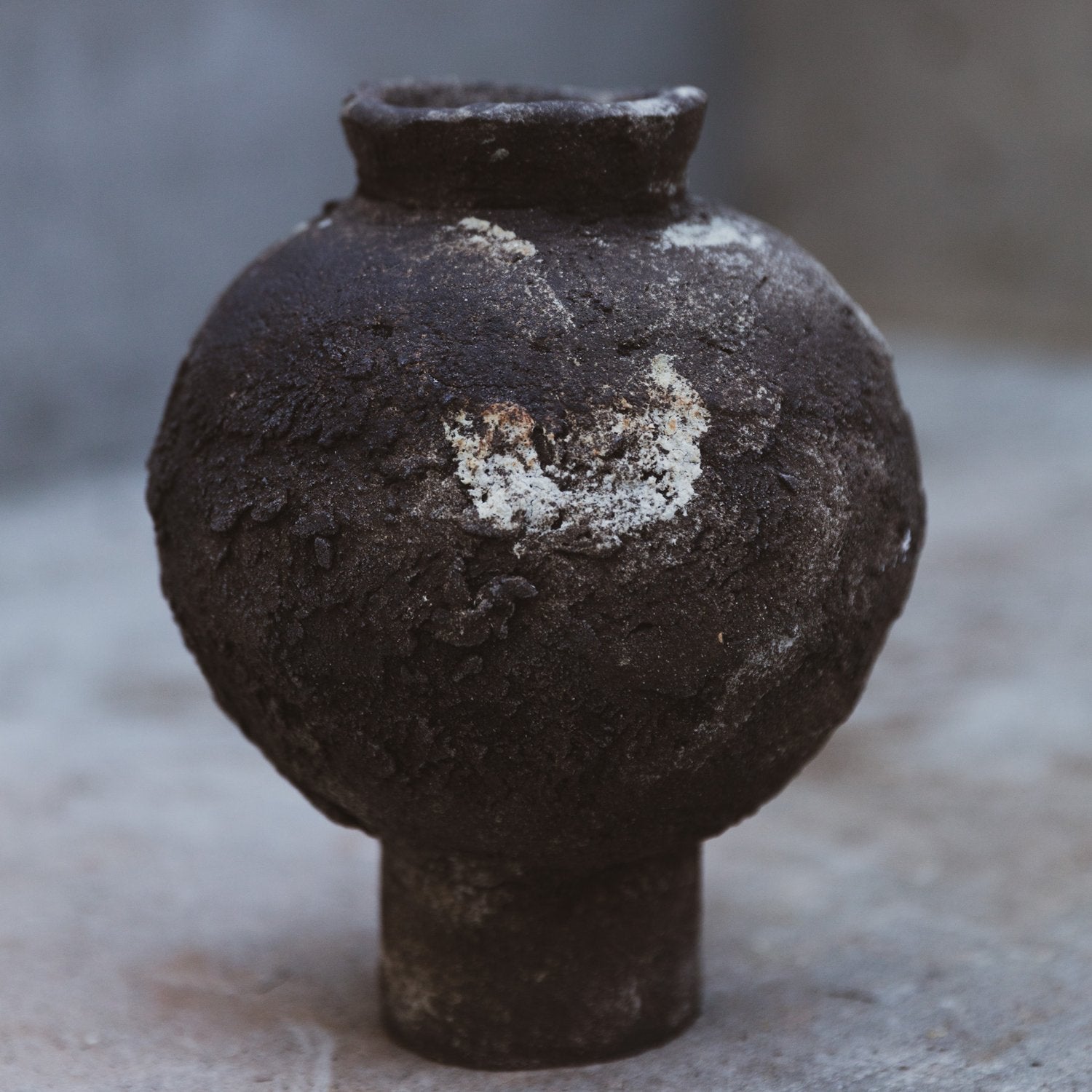
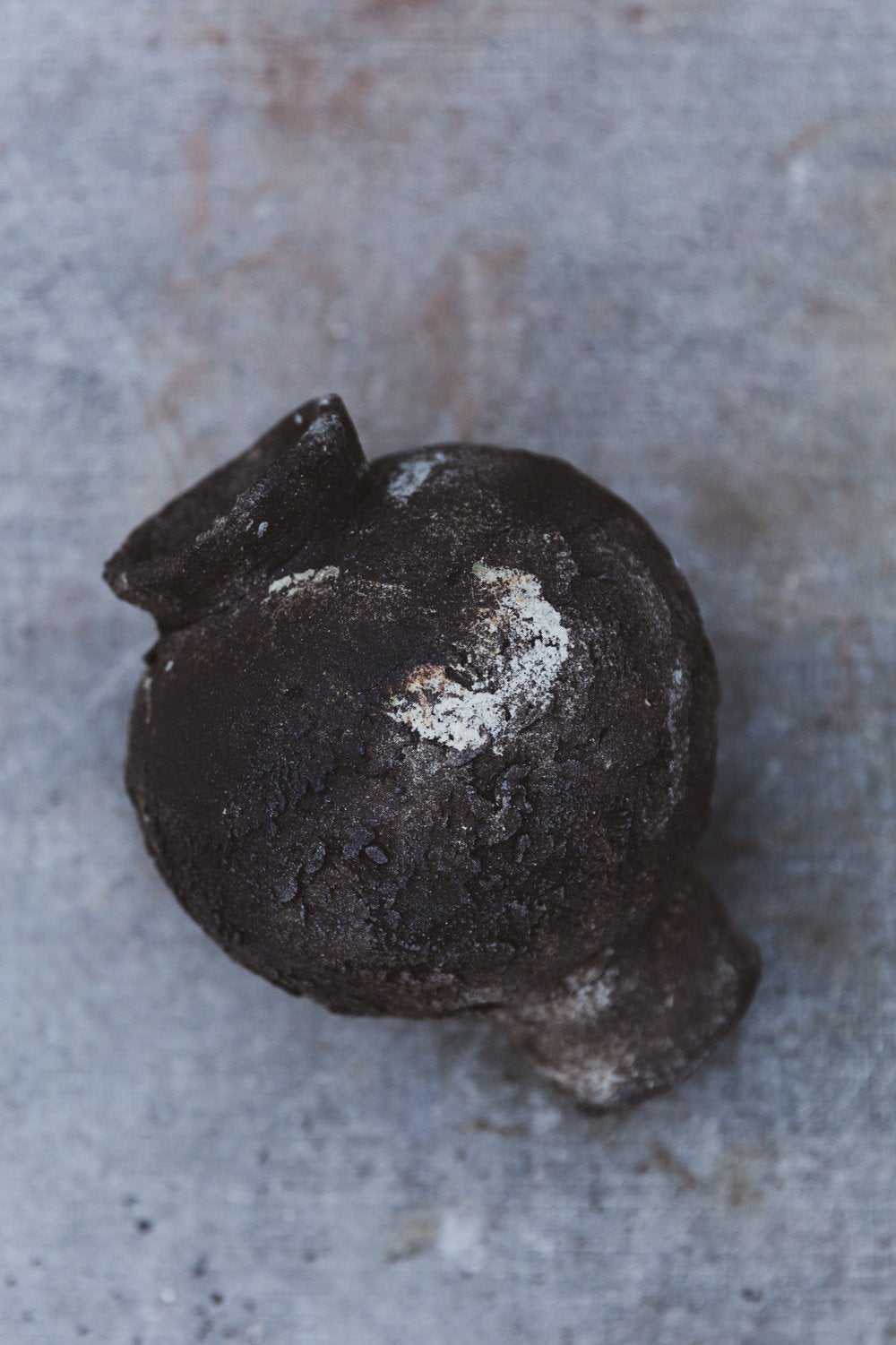
At Trove Gallery, we champion artists who treat flame as a collaborator. The dialogue between form and atmosphere spans media, from ceramics to glass, and each maker brings a distinct sensitivity to surface, light, and line. Consider the lyrical balance of the Moon Jar 2 by Ilona Golovina ($2,240.00). Its rounded profile and serene presence invite the kind of shadow and highlight play collectors love in saggar fired work, even as this piece stands on its own terms—calm, sculptural, and quietly radiant. Explore more from this maker in the Ilona Golovina collection.
Sculptural presence meets ancient storytelling in Haniwa Warrior 93 by Noe Kuremoto ($1,700.00). Inspired by Japan’s earthen guardians, the work’s stoic geometry speaks to kiln traditions where the environment leaves its trace. It pairs beautifully with atmospheric ceramics, creating a dialogue between mythology and material. Discover the artist’s world through the Noe Kuremoto collection.
Wood firing is a sibling to saggar firing within atmospheric techniques, and its ash-softened palettes resonate deeply with smoke-made color. Wood-Fired Porcelain Vessel 04 by Lilith Rockett ($1,008.00) exemplifies this sensitivity. Its pared-back form and restrained surface invite slow looking—the kind of quiet confidence that makes a collection feel timeless. The gentle ash blushes echo the unpredictable grace prized in saggar fired pottery.
For a closer kinship to smoke, Sawdust-Fired Vase 49 by Michelle Grimm ($600.00) embodies the poetry of reduction and carbon trapping. Sawdust firing, often conducted in bins or pits, shares saggar firing’s core language: earth, fire, and the handwriting of smoke. The vase’s soft tonal fields and ghosted gradients reward proximity—move around it and you’ll notice the surface deepen and shift with the light.
Texture and time take center stage in Distressed Sardinia Vessel by Àlvar Martínez Mestres ($732.00). The vessel’s weathered character suggests stone, shore, and architectural memory, an evocative complement to the mineral blooms found in atmospheric ceramics. Explore more of the artist’s vision in the Àlvar Martínez Mestres collection.
Gesture has its own power in clay. Long Handle Bowl by Melina Xenaki ($533.00) turns utility into sculpture with elongated handles that sweep like calligraphy. In a vignette alongside saggar fired pottery, those handles become a counterpoint to smoke’s softness, adding a note of rhythm and reach. See more from this maker in the Melina Xenaki collection.
Some artists translate movement into delicate folds. Ruffles Vase by Faustine Telleschi ($534.00) gathers light along its undulating edges, the way a carbon veil gathers at a rim in saggar firing. The vase amplifies any play of shadow on a shelf and brings a couture sensibility to the ceramics table. Visit the Faustine Telleschi collection for more sculptural elegance.
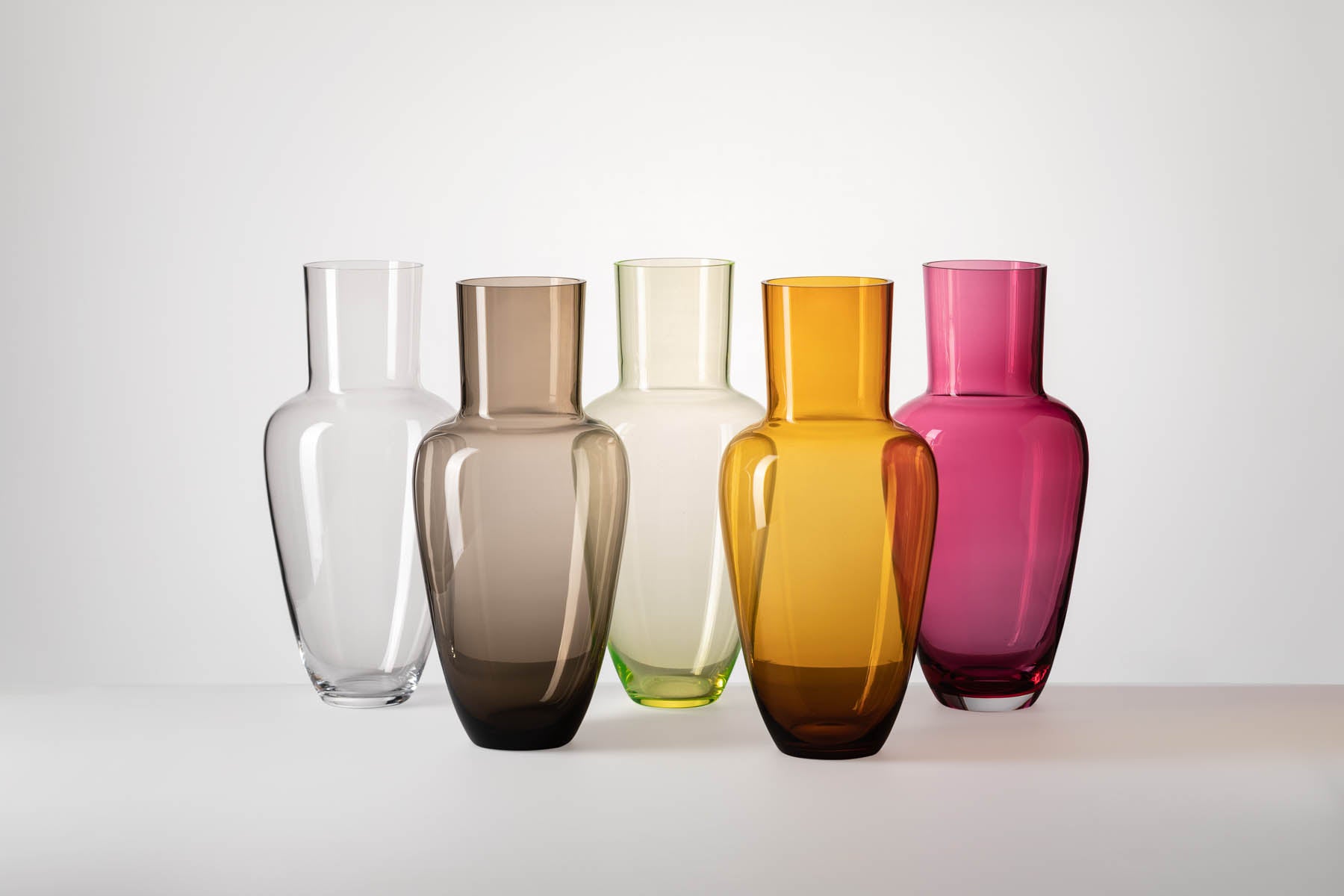
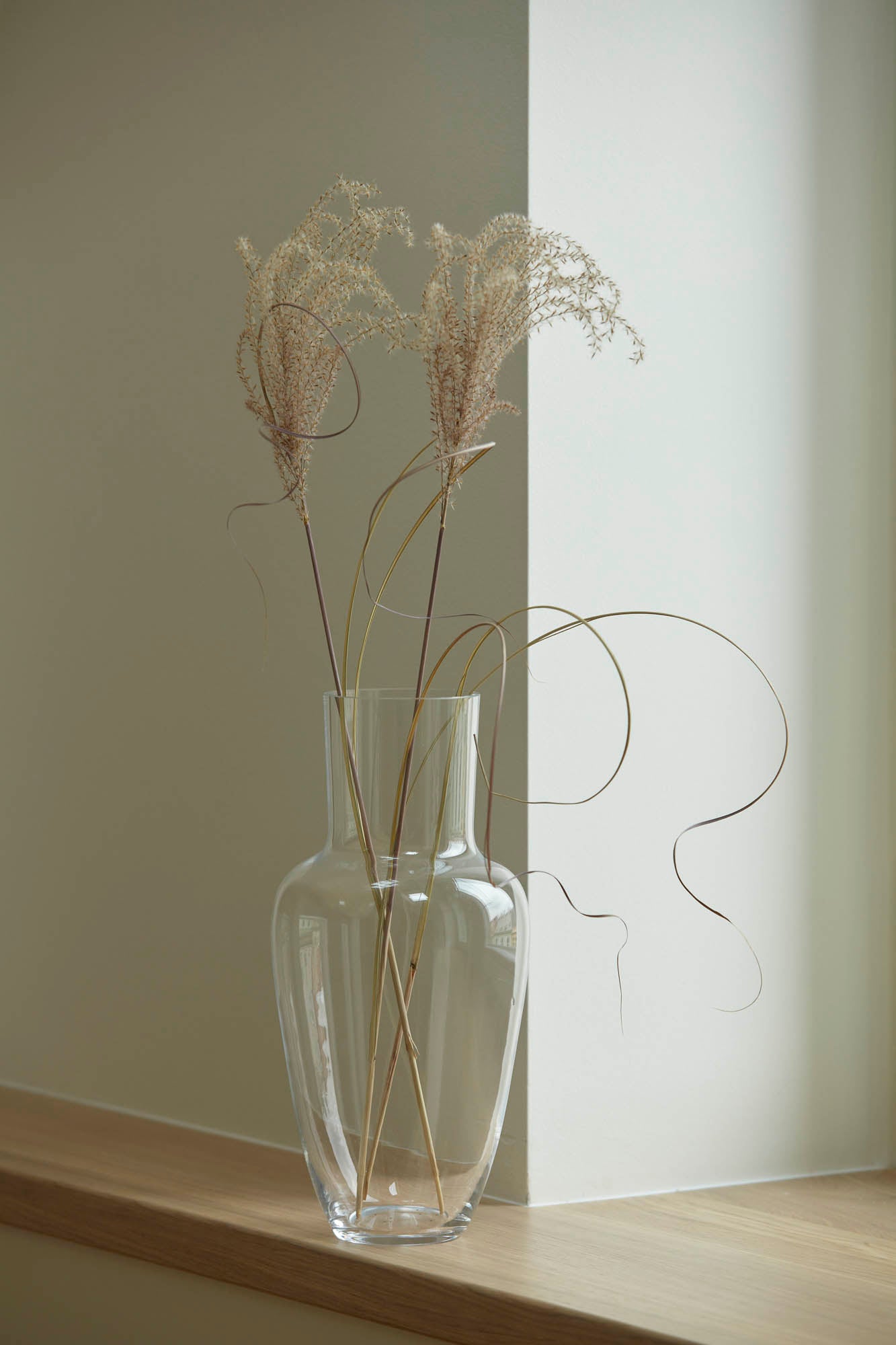
Material clarity can heighten the drama of atmospheric surfaces. The crystalline contours of Transparent Garden Vessel by František Jungvirt ($825.00) offer a glassy counterpoint—pure light next to smoky clay. Try a low arrangement of branches inside and place it near a saggar fired piece to let transparency and opacity converse. Explore the František Jungvirt collection to see how glass can frame a room’s tone.
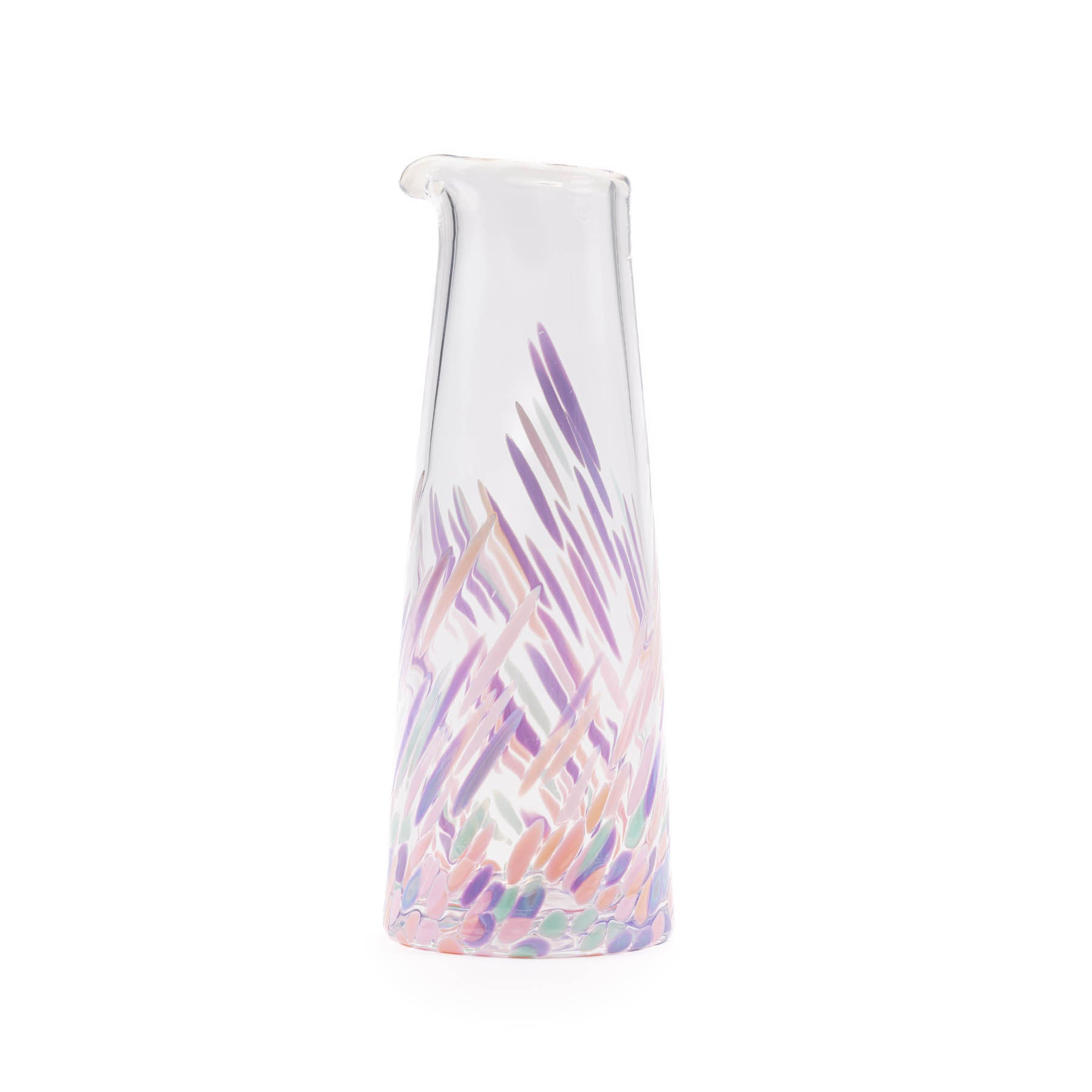
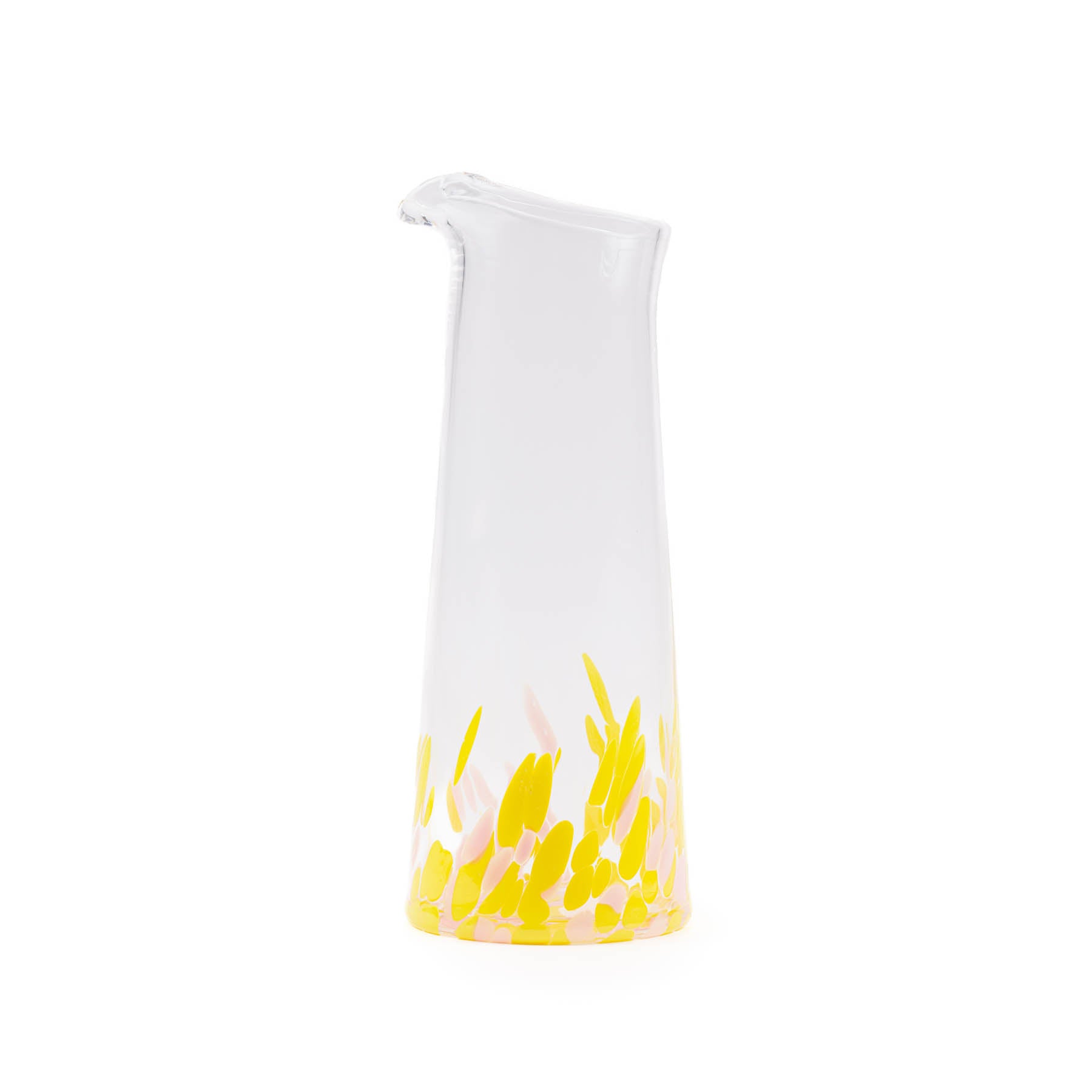
Color can be a companion to smoke. Confetti Carafe by Anna von Lipa ($214.00) adds jubilant sparkle to a quiet ceramic vignette, its joyful palette punctuating the serene neutrals common to smoke firing. On a dining table, this carafe brings convivial warmth without overpowering the refined subtlety of saggar fired pottery. Discover more in the Anna von Lipa collection.
For those drawn to gemstone clarity, Small Gema Vase by Moser ($1,179.00) offers precise facets that catch and refract daylight. Place it near a saggar fired vessel and watch the conversation unfold between cut light and smoke-born shade, a dialogue of precision and unpredictability.
Sculpture can anchor a setting with unmistakable intent. Parure 8 by Nadia Stieglitz ($2,800.00) feels like a wearable architecture for the wall, balancing mass and movement. Its presence complements the natural abstraction of atmospheric surfaces. Find more from this artist in the Nadia Stieglitz collection.
Complexity meets cadence in Septem by Marcela Cure ($8,250.00). This commanding work brings a choreographed rhythm that echoes the layered timing of a kiln firing—heat rise, soak, and cool. In a collection, it acts as a focal point, making space for quieter saggar pieces to hum around it. Explore the Marcela Cure collection for more statement works.
Playful balance finds a home in Tilt Bowl by Nate Cotterman ($375.00). The off-axis stance adds an easy dynamism to a shelf or table—think of it as a visual wink next to contemplative smoke textures. Find more glass forms that perform with light in the Nate Cotterman collection.
Dreamy atmospherics extend beyond clay. Clouds 01 by Caroline Desile ($778.00) floats a soft horizon into your space. Its gentle striations harmonize with saggar’s tonal gradients, creating a cohesive atmosphere across mediums. Paired thoughtfully, art and ceramics can create a room that breathes.
Finally, consider scent and flame. The sculptural scale of Grande Jill Candle (scented or unscented) by Dumae ($1,980.00) adds a luminous anchor to your arrangement. Candlelight plays beautifully across burnished surfaces, deepening contrasts and warming carbon-rich fields with a gentle glow.
How to Try Saggar Firing: A Thoughtful Path for Curious Makers
If the process calls to you, approach saggar firing with patience and care. Begin by exploring low-fire foil saggar methods in a well-ventilated, appropriate kiln environment, and always follow safety guidance from your kiln manufacturer. Work with a fine, smooth burnishable clay body to maximize surface clarity. Test a small range of materials—sawdust, leaves, and iron-bearing organics—and keep simple notes on how you prepared the surface, how you packed the saggar, and how you fired. Aim for incremental changes rather than big leaps so you can read what the fire has written.
Remember that some materials and solutions used by advanced artists, such as certain metal salts or ferric chloride, require strict safety protocols and should only be handled with proper knowledge and protective equipment. Equally, a good finish matters. After firing and cooling, consider a light hand-buffing with a microcrystalline wax recommended for art surfaces to gently protect and enrich the tonal range, especially if you’ve burnished with terra sigillata. Over time, these notes will become your personal map to the atmospheres you love.
Style Your Space: Curating Atmospheric Textures at Home
Atmospheric ceramics thrive when they’re given air and light. Display a saggar fired vessel where daylight shifts across its surface, and let your eye trace the story of smoke as it changes by the hour. Balance those organic, mineral tones with clarity and sparkle—glass is a natural partner. Try the luminous Transparent Garden Vessel by František Jungvirt alongside a smoke-fired piece to frame its softness with crystalline line. On a dining table, introduce color with Confetti Carafe by Anna von Lipa and ground the setting with a sculptural neutral like the Wood-Fired Porcelain Vessel 04.
Build vignettes that play with height and gesture. A rounded piece such as the Moon Jar 2 invites a taller counterform—consider pairing with Parure 8 on a nearby wall to echo curves with arcs. Let a distinctive silhouette like the Long Handle Bowl by Melina Xenaki extend the composition’s reach, and use the Tilt Bowl by Nate Cotterman to add a breezy sense of movement. For a meditative note, bring in Clouds 01, whose horizon-like gradients mirror the tonal breath of saggar surfaces.
Don’t forget evening ambience. The Grande Jill Candle by Dumae draws a gentle, warm field over burnished clay and smoke-toned surfaces, enhancing the subtle contrasts created in reduction firing. On a console or mantel, a trio—Distressed Sardinia Vessel, Sawdust-Fired Vase 49, and the jewel-like Small Gema Vase by Moser—creates a conversation between texture, smoke, and light that feels complete and considered.
As your collection grows, let each piece set the tempo for the next. Atmospheric work rewards slowness; the more time you spend with it, the more the surface reveals. Whether you’re drawn to the stoic mythology of Haniwa Warrior 93 by Noe Kuremoto or the couture folds of the Ruffles Vase by Faustine Telleschi, curating with intention will transform your rooms into places of quiet resonance.
Ready to explore saggar firing and its companions? Browse the makers who work in dialogue with atmosphere—Michelle Grimm for smoke-fired nuance, Lilith Rockett for wood-fired restraint, and cross-disciplinary visionaries like Marcela Cure, Nadia Stieglitz, František Jungvirt, Anna von Lipa, and Nate Cotterman. Each brings a unique lens to the play of surface and light that saggar lovers cherish.
Bring the poetry of fire home. Explore our full collection of atmospheric ceramics and companion pieces at Trove Gallery, and find the work that resonates with your space and story.